谋攻
The supreme skill is to take the enemy whole without fighting — beat their plans and alliances first; assaulting fortified strength is the worst option. Know both sides, and you are safe.
- What this chapter says
- Key lines
- Applied today
- Related stratagems
- Chapters that share ground with this one
What this chapter says
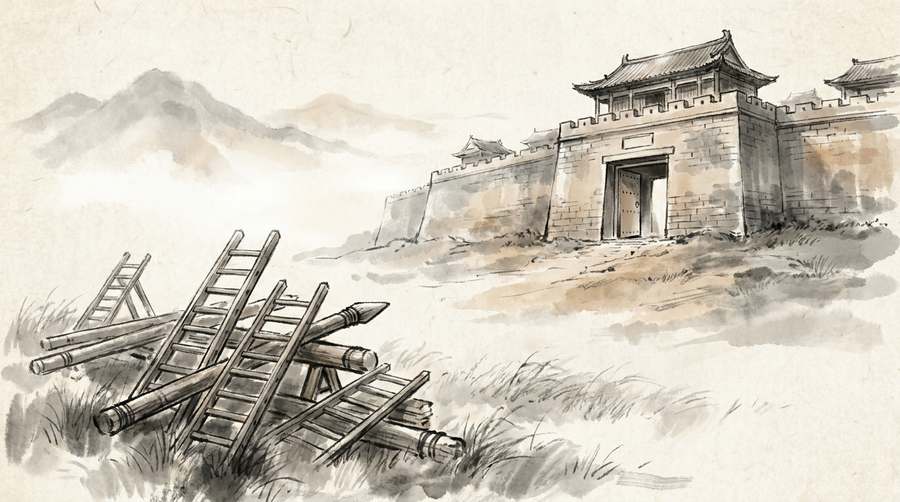
Here Sun Tzu ranks the ways to win. To break the enemy's resistance while leaving their country intact is best; to shatter and destroy is inferior. Hence the highest generalship balks the enemy's plans; the next best breaks up their alliances; only then attacking their army in the field; and worst of all, besieging walled cities — a slow, bloody last resort. Match method to the strength ratio: surround a tenfold-weaker foe, divide an enemy half your size, and if outmatched, be able to slip away. Above all comes self-knowledge paired with knowledge of the opponent — 'know the enemy and know yourself, and in a hundred battles you will never be in peril.' Ignorance of either side is the road to defeat.
Key lines
From 十一家注孫子, the Eleven Commentators edition. The Chinese is verbatim from that text; the English beneath each is ours.
- 曹操 未戰而敵自屈服。 Before a battle is fought, the enemy submits of himself.
- 杜牧 以計勝敵。 Beat the enemy by calculation.
- 陳皥 韓信用李左車之計,馳咫尺之書,不戰而下燕城也。 Han Xin took Li Zuoche's counsel, sent a letter a foot long, and took the walls of Yan without a battle.
- 孟氏 重廟勝也。 It puts the weight on victory decided in the ancestral temple.
- 王晳 兵貴伐謀,不務戰也。 War prizes attacking the plan; it does not busy itself with fighting.
- 何氏 後漢王霸討周建、蘇茂,旣戰歸營,賊復聚挑戰,霸堅卧不出。方饗士作倡樂,茂雨射營中,中霸前酒罇,霸安坐不動。軍吏曰:「茂已破,今易擊。」霸曰:「不然。茂客兵遠來,糧食不足,故挑戰,以徼一切之勝。今閉營休土,所謂不戰而屈人之兵,善之善也。」茂乃引退。 Illustrated with Wang Ba against Zhou Jian and Su Mao: Wang lay in camp and would not come out, feasting his men to music while arrows fell among them — one striking the wine jar in front of him — reasoning that Su Mao's men had come far and were short of food and were provoking a fight to force a quick decision. Su Mao withdrew.summary, not a translation
- 張預 明賞罰,信號令,完器械,練士卒,暴其所長,使敵從風而靡,則爲大善。若吳王黃池之會,晉人畏其有法而服之者是也。 Make rewards and punishments clear, orders trustworthy, weapons sound, troops drilled, and display your strengths so the enemy bends like grass before wind — that is the great good. As at King Wu's assembly at Huangchi, when the men of Jin, fearing his discipline, submitted.
- 曹操 敵始有謀,伐之易也。 Strike while their plan is still forming — then it breaks easily.
- 李筌 伐其始謀也。後漢宼恂圍高峻,峻遣謀臣皇甫文謁恂,辭禮不屈。恂斬之,報峻曰:「軍師無禮,已斬之。欲降,急降;不欲,固守。」峻卽日開壁而降。諸將曰:「敢問殺其使而降其城,何也?」恂曰:「皇甫文,峻之心腹,其取謀者。留之,則文得其計;殺之,則峻亡其膽,所謂上兵伐謀。」諸將曰:「非所知也。」 Illustrated with Kou Xun besieging Gao Jun: Kou executed Gao's envoy and strategist Huangfu Wen and sent word to surrender at once or hold out. Gao opened his walls the same day. Asked why killing the envoy brought the city over, Kou answered that Huangfu Wen was Gao's heart and his source of plans — spare him and Gao keeps his counsel; kill him and Gao loses his nerve. That is attacking the plan.summary, not a translation
- 杜牧 晉平公欲攻齊,使范昭往觀之,景公觴之。酒酣,范昭請君之罇酌。公曰:「寡人之罇進客。」范昭已飲,晏子徹罇更爲酌。范昭佯醉,不悅而起舞,謂太師曰:「能爲我奏成周之樂乎?吾爲舞之。」太師曰:「瞑臣不習。」范昭趨出。景公曰:「晉,大國也,來觀吾政。今子怒大國之使者,將奈何?」晏子曰:「觀范昭非陋於禮者,且欲慙於國,臣故不從也。」太師曰:「夫成周之樂,天子之樂也,惟人主舞之。今范昭人臣,而欲舞天子樂,臣故不爲也。」范昭歸,報晉平公曰:「齊未可伐。臣欲辱其君,晏子知之;臣欲犯其禮,太師識之。」仲尼曰:「不越罇俎之間,而折衝千里之外,晏子之謂也。」春秋時,秦伐晉,晉將趙盾禦之,上軍佐臾駢曰:「秦不能久,請深壘固軍以待之。」秦人欲戰,秦伯謂士會曰:「若何而戰?」對曰:「趙氏新出其屬曰臾駢,必實爲此謀,將以老我師也。趙有側室曰穿,晉君之壻也,有寵而弱,不在軍事,好勇而狂,且惡臾駢之佐上軍。若使輕者肆焉,其可。」秦軍掩晉上軍,趙穿追之不及,返,怒曰:「裹糧坐甲,固敵是求;敵至不擊,將何俟焉?」軍吏曰:「將有待也。」穿曰:「我不知謀,將獨出。」乃以其屬出。趙盾曰:「秦獲穿也,獲一卿矣!秦以勝歸,我何以報?」乃皆出戰,交綏而退。夫晏子之對,是敵人將謀伐我,我先伐其謀,故敵人不得而伐我。士會之對,是我將謀伐敵,敵人有謀拒我,乃伐其謀,敵人不得與我戰。斯二者,皆伐謀也。故敵欲謀我,伐其未形之謀;我若伐敵,敗其已成之計,固非止於一也。 Illustrated with Fan Zhao's embassy from Jin to Qi, where Yanzi and the music master quietly refused each of his tests — drinking from the ruler's own goblet, calling for the music of Zhou to dance to — so that Fan Zhao returned and reported Qi could not be attacked.summary, not a translation
- 孟氏 九攻九拒,是其謀也。 Nine ways of attack and nine of resistance — that is the plan.
- 杜佑 敵方設謀,欲舉衆師,伐而抑之,是其上。故太公云「善除患者,理於未生;善勝敵者,勝於無形」也。 The enemy is laying his plan and about to raise his host; to strike and suppress it then is best. Hence Taigong: 'He who is good at removing trouble deals with it before it arises; he who is good at beating an enemy beats him before it takes shape.'
- 梅堯臣 以智勝。 Win by wit.
- 王晳 以智謀屈人最爲上。 To make a man yield by wit and planning is the highest of all.
- 何氏 敵始謀攻我,我先攻之,易也。揣知敵人謀之趣向,因而加兵,攻其彼心之發也。 The enemy begins to plan an attack on us and we attack first — that is easy. Gauge the direction of his plan and bring force to bear on it, striking the plan at the moment it forms.
- 張預 敵始發謀,我從而攻之,彼必喪計而屈服,若晏子之沮范昭是也。或曰:伐謀者,用謀以伐人也,言以奇策祕算,取勝於不戰,兵之上也。 Attack the moment they begin to scheme and they lose the plan and submit — as Yanzi thwarted Fan Zhao. Others say 伐謀 means using a plan to attack a man: taking victory without battle by unexpected schemes and hidden calculation, which is the highest form of war.
- 曹操 交,將合也。 交 means: the armies are about to close.
- 李筌 伐其始交也。蘇秦約六國不事秦,而秦閉關十五年,不敢窺山東也。 Attack his alliances as they form. Su Qin bound six states not to serve Qin, and Qin shut its passes for fifteen years, not daring to look east of the mountains.
- 杜牧 非止將合而已,合之者,皆可伐也。張儀願獻秦地六百里於楚懷王,請絶齊交。隨何於黥布坐上殺楚使者,以絶項羽。曹公與韓遂交馬語,以疑馬超。高洋以蕭深明請和於梁,以疑侯景,終陷臺城。此皆伐交。權道變化,非一途也。 Not merely armies about to join — whatever is joined may be attacked. Zhang Yi offering Chu six hundred li of Qin land to break its alliance with Qi; Sui He killing Chu's envoy in front of Qing Bu to cut him off from Xiang Yu; Cao Cao talking horse-to-horse with Han Sui to make Ma Chao suspect him; Gao Yang using Xiao Shenming's peace overture to make Hou Jing doubt. All of these are attacking alliances, and the expedient takes more than one road.summary, not a translation
- 陳皥 或云敵已興師交合,伐而勝之,是其次也。若晉文公敵宋,攜離曹、衞也。 Some say: the enemy has already raised troops and closed with us, and to beat him then is the next best. As when Duke Wen of Jin faced Song and detached Cao and Wey from it.
- 孟氏 交合強國,敵不敢謀。 Ally with a strong state and the enemy dare not plan against you.
- 梅堯臣 以威勝。 Win by weight.
- 王晳 謂未能全屈敵謀,當且間其交,使之解散。彼交,則事鉅敵堅;彼不交,則事小敵脆也。 It means: unable to break the enemy's plan outright, at least drive a wedge into his alliances and break them up. If he has allies, the affair is large and the enemy solid; if he has none, the affair is small and the enemy brittle.
- 何氏 杜稱已上四事,乃親而離之之義也。伐交者,兵欲交合,設疑兵以懼之,使進退不得,因來屈服。旁鄰旣爲我援,敵不得不孤弱也。 Du's four cases above amount to 'befriend and divide them'. To attack alliances is: as the armies are about to join, show a feint that alarms him, so he can neither advance nor withdraw and comes over of himself. With the neighbours already on our side, the enemy cannot but be isolated and weak.
- 張預 兵將交戰,將合則伐之。《傳》曰:「先人有奪人之心。」謂兩軍將合,則先薄之,孫叔敖之敗晉師,厨人濮之破華氏是也。或曰:伐交者,用交以伐人也,言欲舉兵伐敵,先結鄰國爲掎角之勢,則我彊而敵弱。 The armies are about to engage; strike as they close. The Zuo Tradition says: 'To forestall a man is to seize his heart.' It means: as two armies are joining, press him first — Sunshu Ao's defeat of the Jin army, and the cook Pu's breaking of the Hua clan. Others say 伐交 means using alliances to attack: intending to raise troops against an enemy, first bind neighbouring states into a pincer, so we are strong and the enemy weak.
- 曹操 兵形已成也。 The shape of the fighting has already formed.
- 李筌 臨敵對陳,兵之下也。 To face the enemy in drawn-up ranks is the lowest form of war.
- 賈林 善於攻取,舉無遺策,又其次也。故太公曰:「爭勝於白刃之前者,非良將也。」 To be good at taking by attack, leaving no stratagem unused — that is next again. Hence Taigong: 'He who contends for victory at the edge of the naked blade is no good general.'
- 梅堯臣 以戰勝。 Win by battle.
- 王晳 戰者危事。 Battle is a perilous business.
- 張預 不能敗其始謀,破其將合,則犀利兵器以勝之。兵者,器械之總名也。太公曰:「必勝之道,器械爲寶。」 Unable to defeat his opening plan or break his forces as they close, one sharpens weapons to win. 兵 is the general name for arms and engines. Taigong said: 'In the way of certain victory, weapons are the treasure.'
- 曹操 敵國已收其外糧城守,攻之爲下政也。 The enemy state has already gathered in its outlying grain and is holding the walls; to attack then is the worst policy.
- 李筌 夫王師出境,敵則開壁送款,舉櫬轅門,百姓怡悅,政之上也。若頓兵堅城之下,師老卒惰,攻守勢殊,客主力倍,以此政之爲下也。 When the king's army crosses the border and the enemy opens his walls and sends terms, bearing the coffin to the gate, and the people are glad — that is policy at its best. To halt troops beneath strong walls until the army ages and the men slacken, with attack and defence unequal and the host spending double the defender's strength — that is policy at its worst.
- 杜佑 言攻城屠邑、政之下者,所害者多。 To say that storming cities and putting towns to the sword is the lowest policy is to say that it harms the most.
- 梅堯臣 費財役爲最下。 Spending treasure and working men to death is lowest of all.
- 王晳 士卒殺傷,城或未克。 The troops are killed and wounded, and the city may still not fall.
- 張預 夫攻城屠邑,不惟老師費財,兼亦所害者多,是爲攻之下者。 Storming cities and putting towns to the sword not only ages the army and spends the treasury, it also harms the most — hence it is the lowest form of attack.
- 李筌 量力而拒敵,有何危殆乎? Measure your strength before opposing him — where then is the danger?
- 杜牧 以我之政,料敵之政;以我之將,料敵之將;以我之衆,料敵之衆;以我之食,料敵之食;以我之地,料敵之地。校量已定,優劣短長皆先見之,然後兵起,故有百戰百勝也。 Measure my government against his, my general against his, my host against his, my supply against his, my ground against his. The reckoning settled and every strength and weakness seen in advance, only then raise troops — hence a hundred battles and a hundred victories.
- 孟氏 審知彼己強弱、利害之勢,雖百戰實無危殆也。 Know fully the strength and weakness, the advantage and harm, on both sides, and in a hundred battles there is truly no peril.
- 梅堯臣 彼己五者盡知之,故無敗。 Know all five factors on both sides, and there is no defeat.
- 王晳 殆,危也。謂校盡彼我之情,知勝而後戰,則百戰不危。 殆 means peril. Weigh both sides' circumstances exhaustively, know the victory, and only then fight — then in a hundred battles you are not imperilled.
- 張預 知彼知己者,攻守之謂也。知彼則可以攻,知己則可以守。攻是守之機,守是攻之策。苟能知之,雖百戰不危也。或曰:士會察楚師之不可敵,陳平料劉、項之長短,是知彼知己也。 Knowing him and knowing oneself is a matter of attack and defence. Know him and you may attack; know yourself and you may defend. Attack is the opportunity of defence; defence is the design of attack. Grasp this and in a hundred battles you are not imperilled. Some say: Shi Hui judged the Chu army not to be met, and Chen Ping weighed the strengths of Liu and Xiang — that is knowing him and knowing oneself.
Applied today
The strongest competitive win avoids a costly head-on war — outmaneuver through strategy and partnerships, and undercut a rival's plans and alliances before it ever comes to a bruising fight over the same customers.
Aim for the outcome that settles the conflict without a destructive fight, and never sit down without understanding the other side as thoroughly as your own position — that symmetry of knowledge is where safety lives.