军形
First make yourself impossible to beat; the chance to beat the enemy depends on them. The true victor has already won before fighting — securing the decisive advantage, then engaging as a formality.
- What this chapter says
- Key lines
- Applied today
- Related stratagems
- Chapters that share ground with this one
What this chapter says
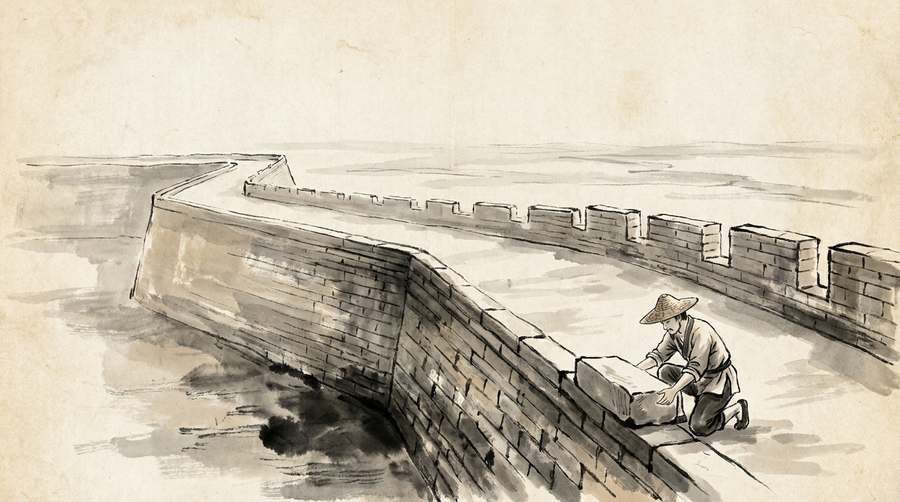
This chapter is about form, or disposition — the shape of your forces before the clash. The good fighters of old, Sun Tzu says, first put themselves beyond the possibility of defeat, and then waited for the enemy to give an opening. Your own invincibility is within your control; the opportunity to win depends on the enemy's mistakes, so you cannot manufacture victory, only be ready to seize it. The decisive point: the victorious army wins first and then seeks battle, while the doomed army fights first and hopes to find victory afterward. Winning is not a gamble taken in the fight; it is an arrangement completed beforehand, so that when battle comes the outcome is already settled — like water breaking through a dam that was built long before.
Key lines
From 十一家注孫子, the Eleven Commentators edition. The Chinese is verbatim from that text; the English beneath each is ours.
- 張預 所謂「知己」者也。 This is what is meant by 'knowing oneself'.
- 梅堯臣 藏形內治,伺其虛懈。 Hide your shape and put your own house in order, watching for his slackness.
- 張預 所謂「知彼」者也。 This is what is meant by 'knowing the enemy'.
- 曹操 有謀與無慮也。 The difference is having a plan, or having none.
- 李筌 計與不計也。是以薛公知黥布之必敗,田豐知魏武之必勝,是其義也。 It is the difference between reckoning and not reckoning. So Lord Xue knew Qing Bu must lose, and Tian Feng knew Emperor Wu of Wei must win — that is the sense.
- 杜牧 《管子》曰︰「天時、地利,其數多少,其要必出於計數。故凡攻伐之道,計必先定於內,然後兵出乎境。不明敵人之政,不能加也;不明敵人之積,不能約也;不明敵人之將,不見先軍;不明敵人之士,不見先陳。故以衆擊寡,以治擊亂,以富擊貧,以能擊不能,以教士練卒擊毆衆白徒,故能百戰百勝。」此則先勝而後求戰之義也。衞公李靖曰︰「夫將之上務,在於明察而衆和,謀深而慮遠,審於天時,稽乎人理。若不料其能,不達權變,及臨機對敵,方始趑趄,左顧右盼,計無所出,信任過說,一彼一此,進退狐疑,部伍狼藉,何異趣蒼生而赴湯火,驅牛羊而啗狼虎者乎?」此則先戰而後求勝之義也。 Quotes the Guanzi at length — that the reckoning must be settled at home before troops cross the border, and that without knowing the enemy's government, stores, general and men one cannot act — and takes this as the meaning of winning first and then seeking battle. Duke Wei of Wey is then cited.summary, not a translation
- 賈林 不知彼我之情,陳兵輕進,意雖求勝,而終自敗也。 Not knowing the state of either side, he draws up his troops and pushes lightly forward. He may mean to win, but in the end he beats himself.
- 梅堯臣 可勝而戰,戰則勝矣;未見可勝,勝可得乎? Fight when you can win, and fighting you win. If no way to win is yet in sight, can victory be had?
- 何氏 凡用兵,先定必勝之計,而後出軍。若不先謀,唯欲恃強,勝未必也。 In all use of arms, settle the plan of certain victory first and send out the army after. Plan first and rely only on strength, and victory is not assured.
- 張預 計謀先勝,然後興師,故以戰則克。《尉繚子》曰︰「兵不必勝,不可以言戰;攻不必拔,不可以言攻。」謂危事不可輕舉也。又曰︰「兵貴先勝於此,則勝彼矣;弗勝於此,則弗勝彼矣。」此之謂也。若趙充國常先計而後戰,亦是也。不謀而進,欲幸其成功,故以戰則敗。 Win in the planning first, then raise the army, so the battle is carried. The Wei Liaozi says: 'If the troops cannot be sure of winning, one may not speak of battle; if the attack cannot be sure of taking, one may not speak of attack' — a perilous business is not lightly begun. And again: 'War prizes winning here first; win here and you beat him there; fail here and you fail there.' Zhao Chongguo, who always reckoned before he fought, is a case of it. To advance without a plan, hoping for success, is why such a one is beaten.
- 李筌 兵得地者昌,失地者亡。地者,要害之地。秦軍敗趙,先據北山者勝;宋師伐燕,過大峴而勝,皆得其地也。 An army that holds the ground thrives; one that loses it perishes. By 'ground' is meant the commanding point. Qin beat Zhao by seizing the northern hills first; the Song army beat Yan by getting through the Daxian pass — both had their ground.
- 杜牧 不敗之地者,爲不可勝之計,使敵人必不能敗我也。不失敵人之敗者,言窺伺敵人可敗之形,不失毫髮也。 'Ground of no defeat' means making a plan that cannot be beaten, so the enemy simply cannot defeat us. 'Not losing the enemy's defeat' means watching for the shape of his defeat and not missing it by a hair.
- 梅堯臣 善候敵隙,我則常勝。 Watch well for the enemy's gap, and we win as a matter of course.
- 王晳 常爲不可勝,待敵可勝,不失其機。 Always be unbeatable, wait for the enemy to become beatable, and do not miss the moment.
- 何氏 自恃有備,則無患;常伺敵隙,則勝之不失也。立於不敗之地利也,言我常爲勝所。 Rely on your own readiness and there is no trouble; always watch for the enemy's gap and the victory is not lost. To stand on ground of no defeat is to hold the advantage — it means we are always in the place of winning.
- 張預 審吾法令,明吾賞罰,便吾器用,養吾武勇,是立於不敗之地也。我有節制,則彼將自衂,是不失敵之敗也。 Examine my laws and orders, clarify my rewards and punishments, make my equipment serviceable, nourish my men's courage — that is standing on ground of no defeat. Where I have discipline, he will break of himself — that is not losing the enemy's defeat.
Applied today
Secure your own position first — cash runway, a real moat, retention — so you cannot be beaten; then move when a rival gives an opening. Durable winners lock in the advantage before 'the battle,' not during it.
Build an unassailable base of skill and reputation so you can't be undermined; the chances to advance then come from openings others create. Be ready — you can't force the opening, only be prepared to take it.