虚实
Impose your will on the enemy instead of accepting theirs; be first to the field and rested. Like water, avoid their strength and strike their emptiness — and keep no fixed shape.
- What this chapter says
- Key lines
- Applied today
- Related stratagems
- Chapters that share ground with this one
What this chapter says
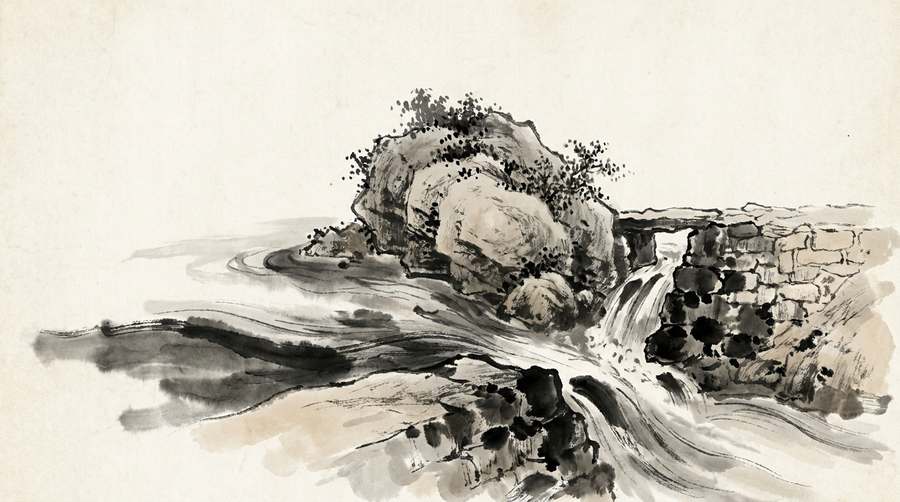
This is one of the most admired chapters, on 虚 (emptiness/weakness) and 实 (fullness/strength). The commander who reaches the field first and awaits the enemy is fresh; the one who arrives late and rushes to fight is worn out. So the skilled leader imposes his will on the enemy and does not let the enemy's will be imposed on him — luring, forcing, and tiring the opponent while staying in control. He concentrates his own force while dispersing the enemy's, so he is always strong where they are weak. Military tactics are like water: as water avoids heights and rushes to low ground, so an army avoids the enemy's strength and strikes his emptiness. And as water shapes its course to the terrain, the soldier shapes his victory to the enemy — 'there are no constant conditions': formlessness is the height of skill.
Key lines
From 十一家注孫子, the Eleven Commentators edition. The Chinese is verbatim from that text; the English beneath each is ours.
- 李筌 故能致人之勞,不致人之佚也。 So he can impose the toil on others and not have leisure imposed on him.
- 杜牧 致令敵來就我,我當蓄力待之,不就敵人,恐我勞也。後漢張步將費邑分遣其弟敢守巨里。耿弇進兵,先脅巨里,使多伐樹木,揚言以填坑壍。數日,有降者言︰邑聞弇欲攻巨里,謀來救之。弇乃嚴令軍中趨修攻具,宣勒諸部,後三日當悉力攻巨里城。陰緩生口,令得亡歸。歸者以弇期告邑。至日,果自將精兵三萬餘人來救之。弇喜謂諸將曰︰「吾修攻具者,欲誘致邑耳;今來,適其所求也。」卽分三千人守巨里,自引精兵上岡阪,乘高大破之,遂臨陳斬費邑。 Draw them onto you, husband your strength and wait — never go to them, lest the toil be ours. Illustrated at length with Geng Yan against Fei Yi: Geng threatened Juli, had timber ostentatiously felled as though to fill the moat, announced a date for the assault, then deliberately let prisoners escape to carry word of it — and destroyed the relief force that came on the day.
- 杜佑 言兩軍相遠,彊弱俱敵,彼可使歷險而來,我不可歷險而往;必能引致敵人,己不往從也。 It means: the two armies being far apart and evenly matched in strength, he can be made to cross difficult country to come, while we need not cross it to go. One must be able to draw the enemy on and not go over to him.
- 梅堯臣 能令敵來,則敵勞;我不往就,則我佚。 Make them come and they tire; refuse to go to them and you stay fresh.
- 王晳 致人者,以佚乘其勞;致於人者,以勞乘其佚。 To bring a man to you is to meet his toil with your ease; to be brought to him is to meet his ease with your toil.
- 何氏 令敵自來。 Make the enemy come of his own accord.
- 張預 致敵來戰,則彼勢常虛;不往赴戰,則我勢常實。此乃虛實彼我之術也。耿弇先逼巨里以誘致費邑,近之。 Draw the enemy on to fight and his position is always hollow; decline to go to him and ours is always solid. This is the art of the hollow and the solid between the two sides. Geng Yan pressing Juli first to lure Fei Yi out comes close to it.
- 梅堯臣 利也。 Advantage.
- 張預 水趨下則順,兵擊虛則利。 Water running downhill goes with the grain; troops striking emptiness go with advantage.
- 梅堯臣 應敵爲勢。 Configuration is made by responding to the enemy.
- 張預 敵有變動,故無常勢。 The enemy shifts and changes, hence there is no constant configuration.
- 梅堯臣 因地爲形。 Shape is made by the ground.
- 孟氏 兵有變化,地有方圓。 Armies have their changes; ground has its squares and rounds.
- 張預 地有高下,故無常形。 Ground has its heights and hollows, hence there is no constant shape.
Applied today
Compete where you're strong and the rival is thin, never head-on against their fortress. Set the terms so they react to you — and keep your strategy adaptable, with no rigid playbook a competitor can predict.
Arrive prepared and rested while the other side is rushed and reactive; concentrate your case on their weakest point rather than trading blows on their strongest, and never lock into a fixed position they can plan around.