用间
Foreknowledge wins wars, and it comes not from omens or guesswork but from people who know the enemy. Prize the converted double agent above all, and guard your sources of truth most closely.
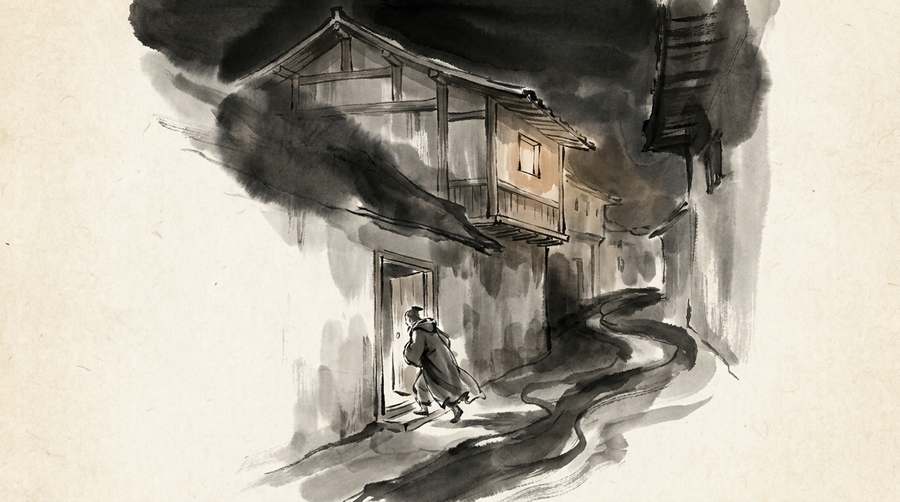
What this chapter says
Fittingly, the treatise that opened with calculation ends by grounding all calculation in real information. What lets the wise ruler and good general strike and conquer, achieving what ordinary men cannot, is foreknowledge — knowing the enemy's situation in advance. And this cannot be had from ghosts or spirits, from omens, or from any calculation; it must be obtained from people who know the enemy's dispositions. Sun Tzu names five kinds of agents — local, inward (turned officials), converted (double agents), doomed (fed false information to carry to the enemy), and surviving (who return with news) — and prizes the converted double agent most, for through him all the other four can be worked. Spies must be treated with the greatest intimacy, rewarded most generously, and shrouded in the deepest secrecy; only a wise, humane, and subtle leader can use them well. Great dynasties, he notes, have risen on the strength of a single well-placed agent.
Key lines
From 十一家注孫子, the Eleven Commentators edition. The Chinese is verbatim from that text; the English beneath each is ours.
- 李筌 爲間也。 It is the work of spies.
- 杜牧 知敵情也。 It is knowing the enemy's situation.
- 梅堯臣 主不妄動,動必勝人;將不苟功,功必出衆。所以者何也?在預知敵情也。 The ruler does not move at random, and moving he must beat men; the general does not take merit lightly, and his merit must stand out from the host. Why? It lies in knowing the enemy's state beforehand.
- 王晳 先知敵情,制勝如神也。 Knowing the enemy's state beforehand, he masters victory as though divine.
- 何氏 《周官》「士師掌邦諜」,蓋異國間伺之謂也。故兵家之有四機、二權,曰事機,曰智權,皆善用間諜者也。故能敵人動靜,我預知矣。韋孝寬爲驃騎大將軍,鎮玉壁。孝寬善於撫御,能得人心。所遣間諜入齊者,皆爲盡力;亦有齊人得孝寬金貨,遙通書疏。故齊之動靜,朝廷皆先知之。時有主帥許盆,孝寬委以心膂,令守一戍。盆乃以城東入。孝寬怒,遣諜取之。俄而斬首而還。其能致物情如此。又,李達爲都督義州、弘農等二十一防諸軍事,每厚撫境外之人,使爲間諜,敵中動靜,必先知之。至有事泄被誅戮者,亦不以爲悔,其得人心也如此。 Cites the Zhou offices, where the shishi had charge of state espionage, and the schemes and expedients of the strategists as the proper use of spies; then Wei Xiaokuan at Yubi, whose agents in Qi all worked wholeheartedly for him while men of Qi took his gold and sent word by letter, so that the court knew Qi's movements first. The case of the commander Xu Pen follows.summary, not a translation
- 張預 先知敵情,故動則勝人,功業卓然,超絶羣衆。 Knowing the enemy's state beforehand, he beats men whenever he moves, and his achievement stands out, far above the common run.
- 張預 視之不見,聽之不聞,不可以禱祀而取。 Look and it is not seen; listen and it is not heard; it cannot be got by sacrifice and prayer.
- 曹操 不可以禱祀而求,亦不可以事類而求也。 It cannot be sought by sacrifice and prayer, nor sought by analogy with like events.
- 李筌 不可取於鬼神象類,唯間者能知敵之情。 It cannot be taken from ghosts and spirits or from resemblances; only the spy can know the enemy's state.
- 杜牧 象者,類也。言不可以他事比類而求。 象 means likeness. It means one cannot seek it by analogy with other affairs.
- 梅堯臣 不可以卜筮知也,不可以象類求也。 It cannot be known by divination, nor sought by analogy.
- 張預 不可以事之相類者,擬象而求。 One cannot get it by taking things of a like kind and reasoning from the resemblance.
- 曹操 不可以事數度也。 It cannot be measured by counting and calculation.
- 李筌 度,數也。夫長短、闊狹、遠近、小大,卽可驗之於度數;人之情僞,度不能知也。 度 is measure. Long and short, wide and narrow, far and near, small and great can indeed be tested by measure and number; but the truth or falsity of men's minds, measure cannot know.
- 梅堯臣 不可以度數驗也,言先知之難也。 It cannot be verified by measure and number — which says how hard foreknowledge is.
- 張預 不可以度數推驗而知。 It cannot be known by inference from measure and number.
- 曹操 因人也。 It comes from men.
- 李筌 因間人也。 It comes from spies.
- 梅堯臣 鬼神之情,可以卜筮知;形氣之物,可以象類求;天地之理,可以度數驗。唯敵之情,必由間者而後知也。 What spirits feel, divination can reach; what has form, likeness can find; the order of heaven and earth, measurement can test. Only the enemy's situation must come from an agent.
- 張預 鬼神、象類、度數,皆不可以求,先知必因人而後知敵情也。 Ghosts and spirits, resemblances, measure and number — none can be sought; foreknowledge must come through men, and only then is the enemy's state known.
- 杜牧 受辭指蹤,在於卧內。 Their orders and their leads are given in the bedchamber — no one is closer.
- 杜佑 若不親撫,重以禄賞,則反爲敵用,洩我情實。 If they are not treated with close favour, and weighted with salary and reward, they will turn and be used by the enemy, and leak our true state.
- 梅堯臣 入幄受詞,最爲親近。 They enter the tent to receive their words — the closest of all.
- 王晳 以腹心親結之。 Bind them close as one's own heart and belly.
- 張預 三軍之士,然皆親撫,獨於間者以腹心相委,是最爲親密也。 All the men of the three armies are treated with kindness, but with the spy alone one entrusts one's heart and belly — this is the closest intimacy of all.
Applied today
Durable advantage comes from better information than rivals have — real customer research, honest market intelligence, candid internal feedback — gathered from actual people, not from dashboards or wishful assumptions. The insider view unlocks everything else.
Invest heavily in the channels that bring you true information, and protect the people willing to tell you hard truths. A decision is only ever as good as the intelligence beneath it — starve that, and no amount of planning saves you.