反间计
Turn the enemy's own eyes and ears against him. Feed false truth through his spies, buy his confidants, and sow suspicion between him and his ablest people — so he blinds and cripples himself, and you never lift a sword.
The principle
Every adversary relies on information and on trusted people; both are attack surfaces. The double-agent stratagem works the enemy's own network against him. You may feed his spies information you want him to believe, quietly turn his agents to serve you, or — most corrosively — plant the suspicion that his best advisers and generals are disloyal. A ruler who comes to distrust his most capable people will sideline or destroy them himself, doing damage no external attack could achieve. It costs little and leaves few fingerprints, because the enemy's ruin comes from inside his own camp. Its dark power is also its warning: the leader who acts on unverified whispers about his own people is the easiest of all to defeat.
Historical origin
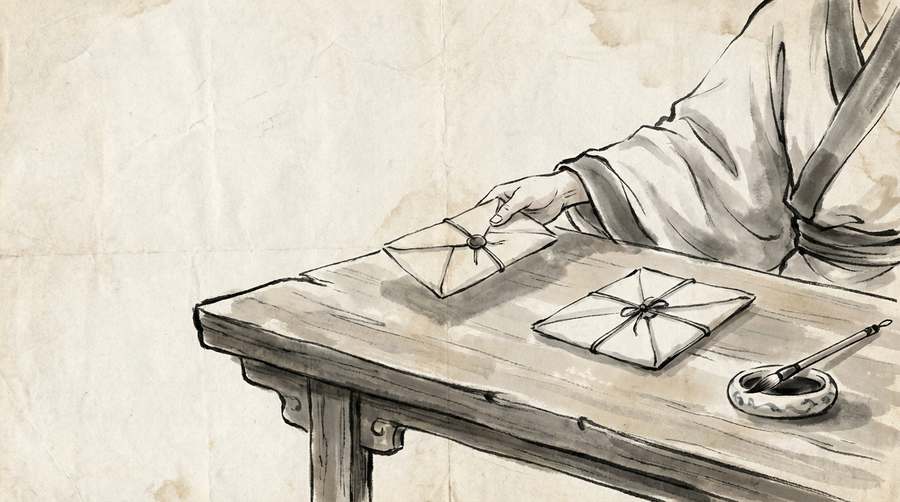
A decisive historical case is Chen Ping's campaign against Xiang Yu (204 BCE). Xiang Yu's greatest asset was his brilliant strategist Fan Zeng. Chen Ping, serving Liu Bang, spread lavish funds and rumours to suggest Fan Zeng and other officers were negotiating secretly with the enemy; he even staged a show of downgrading hospitality to Xiang Yu's envoys once he learned they were Fan Zeng's. The suspicious Xiang Yu began stripping Fan Zeng of authority. Insulted, the old adviser resigned and died on the road home — and Xiang Yu, having discarded his best mind, went on to lose the war. Recorded in the Records of the Grand Historian.
Applied today
Information a rival gathers about you is a channel you can feed. What you let a competitor 'discover' — a decoy priority, a feint at a market you won't enter — can steer their strategy into wasting resources where it doesn't hurt you.
The defensive lesson is the vital one: an organisation is wrecked from within when leaders act on unverified rumours about their own people. Insist on evidence before turning on a trusted colleague — distrust is the wedge rivals drive.
In practice
Invented scenarios showing this stratagem at work — illustrations, not reports of real events.
The quarter everyone improved
A prolific contributor had supplied good test items to the shared suite for eighteen months and was trusted accordingly. A later batch, still competent, was drawn from a public dataset several submitted models had trained on. Scores rose across the leaderboard that quarter and nobody examined a result everybody liked. It was eventually raised by the one team whose own model had not improved.
Use it Check the provenance of benchmark items and re-verify held-out sets — a rising leaderboard is the least examined result you will see.
The helpful tip-off
A well-regarded anonymous contributor supplied accurate indicators for months, building a reputation nobody questioned. One later batch was subtly wrong and sent a response team down a week-long dead end while something else proceeded. The value of the earlier accurate material had been to make the inaccurate batch credible.
Use it Corroborate intelligence independently no matter how reliable the source has been — trust earned is also trust spendable.
The consultant they suggested
The supplier helpfully recommended an independent consultant to run the evaluation, and the consultant was genuinely competent. His scoring model was sound, his questions were sharp, and four of the six weightings quietly favoured an architecture only one bidder offered. He was also paid a referral fee, which nobody asked about and which he was under no obligation to volunteer.
Use it Ask every adviser in writing who else pays them before work begins — competence and independence are separate questions.
In the treatise
The two works are separate books, roughly a thousand years apart. A chapter link is a reading aid grounded on the line quoted beneath it — not a derivation.