混水摸鱼
Confusion favours the alert. When a situation is muddled — a rival in turmoil, a market in flux, rules in transition — the calm operator who moves deliberately through the murk takes gains no one is guarding.
The principle
Order makes ownership clear — everyone can see what belongs to whom and who guards it. Disorder blurs that, and in the blur, attention scatters and defences lapse. This stratagem is composure amid chaos: while others are disoriented by the confusion, you keep your head, read the situation clearly, and reach for the openings the turmoil has created. You may exploit existing confusion or, more aggressively, deepen it — but the essence is that clarity of mind in murky water is itself the advantage. The line to watch is your own footing: the same murk that hides your move can hide the ground giving way beneath you.
Historical origin
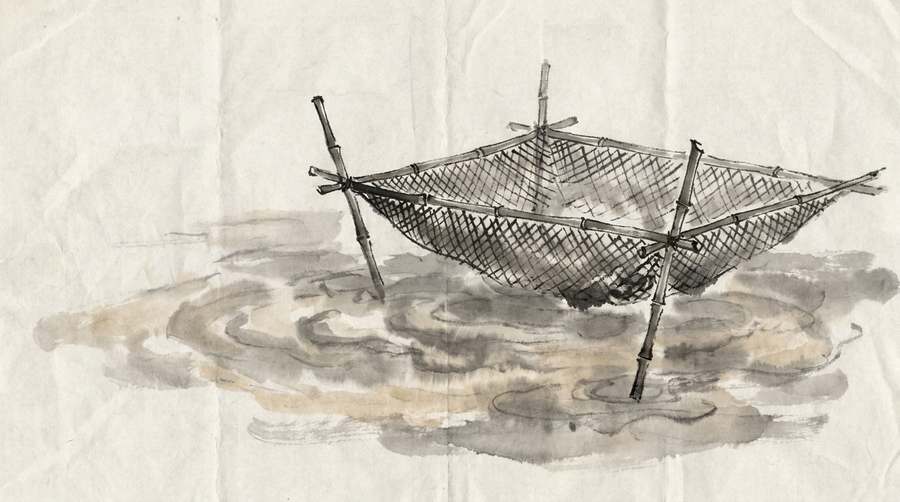
The phrase is proverbial — a fisher stirs the water so fish, blinded and disoriented, are caught by hand. As a stratagem it names the practice of profiting from disorder, a recurring pattern in the Warring States period, when smaller states repeatedly seized territory and advantage while larger powers were consumed by internal succession crises and factional strife. The essence is not the chaos itself but the discipline of staying clear-eyed within it.
Applied today
When an industry is thrown into disruption — a regulation change, a platform shift, an incumbent's collapse — the prepared player who understands the new rules first captures customers and talent while everyone else is still disoriented.
But keep your own footing. Acting decisively in chaos is powerful only if you actually see clearly; if you're as disoriented as everyone else, the murky water hides your own missteps too.
In practice
Invented scenarios showing this stratagem at work — illustrations, not reports of real events.
Approved at migration speed
Through a six-week migration, exception requests were approved quickly because during a migration everything is an exception. Four teams connected external model endpoints in that window, two of them to a provider with no agreement in place. Every approval was logged and every one read like all the others. Nobody had waived the process; the process had simply been running at migration speed.
Use it Hold approval standards fixed during disruption, and re-review anything cleared inside a change window once it closes.
Signed during the reshuffle
For six weeks nobody was quite sure who approved what. Three commitments were signed in that window which would not have survived an ordinary review: a long tenancy, an inflated tooling renewal, and a retainer with no defined scope. Each had a plausible sponsor and nobody acted improperly. The gap in the approval chain had simply made the abnormal look routine.
Use it Name an interim approver on day one of any reorganisation — ambiguity about authority is when weak commitments get signed.
The request during the outage
During a chaotic weekend cutover, an urgent message asked the help desk to reset access for a colleague locked out by the migration. It was plausible, because dozens of genuine versions of that request had already arrived. Confusion had temporarily made the abnormal look ordinary. The reset was granted in under four minutes.
Use it Tighten verification during disruption, not after — chaos is precisely when a false request looks routine.
Posting during someone else's bad day
Within an hour of a competitor's failure, three brands posted knowing jokes and a discount code. Engagement was excellent. Four months later one of the three had an outage of its own, and the same accounts reposted its old jokes back at it with the timestamps intact. The archive turned out to be the cheapest part of the campaign.
Use it Compete on your own merits during a rival's bad day — opportunism is archived, and the archive outlives the traffic.
In the treatise
The two works are separate books, roughly a thousand years apart. A chapter link is a reading aid grounded on the line quoted beneath it — not a derivation.