无中生有
Turn a fiction into a fact by first making the enemy dismiss it. Show something false until they learn to ignore it — then let the real thing arrive wearing the same shape, unopposed.
The principle
The move exploits how judgement adapts. Present an illusion — a false alarm, a phantom threat, an empty gesture — and let the enemy verify it as harmless. Their conclusion 'this is nothing' becomes a habit. Now substitute the real thing into the very same frame: because they have already filed this pattern under 'ignore,' the genuine act passes their guard. It runs false-false-true. The risk is a sharp opponent who keeps checking; used against someone who stops verifying, it is devastating.
Historical origin
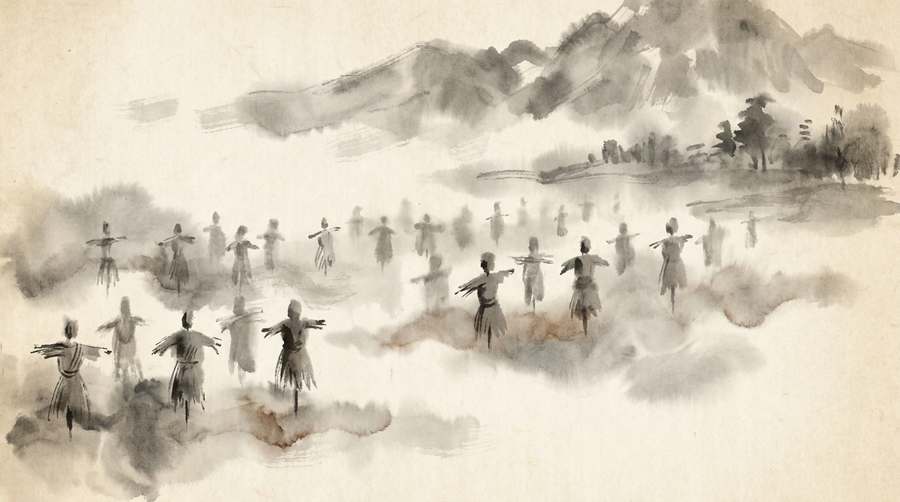
The textbook case is Zhang Xun's defence of Suiyang (757 CE) during the An Lushan rebellion. Short of arrows, Zhang Xun had straw figures dressed as soldiers lowered from the walls at night; the besiegers, thinking a sortie was coming, loosed thousands of arrows into them — arrows the defenders hauled back up, gaining a supply 'from nothing.' On later nights the enemy ignored the straw men — so Zhang Xun lowered real soldiers, who fell on the unguarded camp. Recorded in the New Book of Tang and the Zizhi Tongjian.
Applied today
Announce a bold-sounding initiative that quietly amounts to little; once the market files your announcements as hype, the one that's real lands without competitors mobilising against it.
Beware the reverse: someone who cries wolf to dull your reaction is training you to miss the real threat. When a source has been repeatedly, harmlessly wrong, verify anyway.
In practice
Invented scenarios showing this stratagem at work — illustrations, not reports of real events.
The confident citation
The summary named a study, a journal, a year and two authors, formatted exactly as a real reference. None of it existed. Everything around it was accurate, which is what made it survive review: the fabrication was surrounded by verifiable material and inherited its credibility from the neighbourhood it sat in.
Use it Verify the specific, checkable claims — a fabrication is easiest to spot at the citation, not in the prose.
The feature that was coming
Two weeks before the decision, the incumbent supplier circulated a roadmap slide promising the exact capability the challenger had been selling on. The buyer paused to wait for it. Eighteen months later it had not shipped and was no longer mentioned in reviews. The slide had cost an afternoon to produce and had bought a three-year renewal.
Use it Require a contractual delivery date and a remedy — a roadmap promise carrying neither is a delaying tactic, not a plan.
The breach that never happened
The extortion mail claimed a full customer database and attached four hundred records as proof. Half of them matched, which was enough to start a panic and an emergency board call. The sample had been assembled from an old marketing list traded publicly for years. There had been no intrusion at all. The claim was manufactured from material anyone could have obtained.
Use it Match a claimed sample against your own records before you believe, pay or announce — proof of theft must actually prove theft.
Winner of its own award
The badge on the packaging named a category, a year and a trophy. The scheme behind it had been registered by the brand's own agency eight months earlier and had attracted exactly one entrant. Everything stated was literally true. The credibility came from the shape of the thing, which shoppers recognised long before they read a word of it.
Use it Trace an award to its awarding body and its entrant list — a badge borrows authority from a format, not a jury.
In the treatise
The two works are separate books, roughly a thousand years apart. A chapter link is a reading aid grounded on the line quoted beneath it — not a derivation.