走为上
When the odds are hopeless and no plan can win, the highest move is to withdraw intact. Retreat is not defeat — it preserves your force, denies the enemy a decisive victory, and keeps every future option alive. To live and fight again is to win.
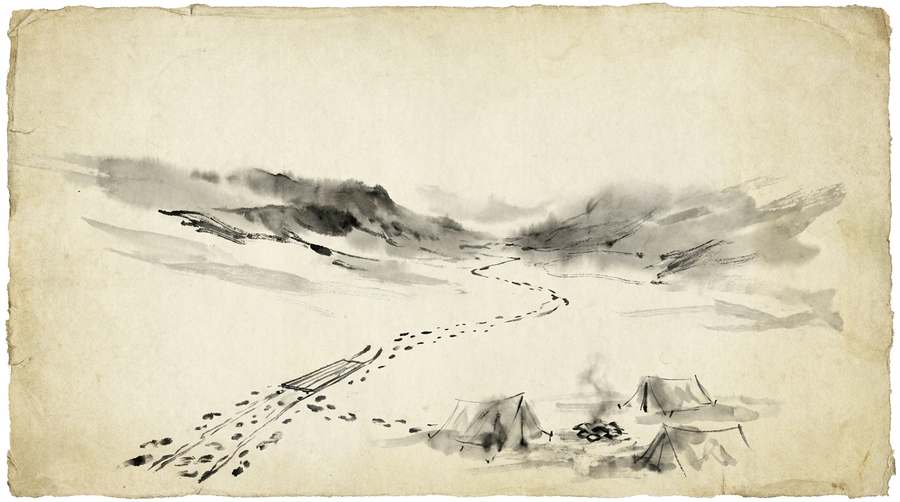
The principle
Ranked last of the thirty-six and the most famous, this is the wisdom that frames all the rest: when you genuinely cannot win, do not throw your strength away trying. Of the classic responses to a superior enemy — surrender, compromise, or retreat — surrender is total defeat and compromise is half-defeat, but retreat keeps you undefeated, because a force that escapes intact has lost a battle, not the war. The discipline is judgement and timing: recognising the truly unwinnable situation early, before pride or sunk cost traps you, and withdrawing in good order rather than in a rout. It is not cowardice but the refusal to be destroyed on unfavourable ground — trading space and face now for the chance to choose better ground later. The whole canon of stratagems ends here because the first duty of the strategist is to survive to be one.
Historical origin
A classic strategic retreat is Duke Wen of Jin at the Battle of Chengpu (632 BCE). Years earlier, as an exile, he had promised the ruler of Chu that if their armies ever met, he would 'withdraw three stages' (about ninety li) in gratitude. When the armies did meet, Duke Wen honoured the vow and pulled his forces back. The retreat cost him nothing in strength but won the moral high ground, lured the overconfident Chu commander into overextending his pursuit, and let Jin choose favourable ground — where it then turned and won a decisive victory. The withdrawal was not weakness; it was the setup. Recorded in the Zuo Zhuan.
Applied today
Knowing when to walk away is a core discipline: kill the losing project, exit the unwinnable market, end the deal that only gets worse. Resources pulled out intact are the seed of the next attempt; sunk-cost persistence just deepens the loss.
Withdrawing from a losing argument, a toxic situation, or a fight you can't win is strength, not surrender. Disengage in good order, keep your composure and your options, and choose the ground on which you next make your stand.
In practice
Invented scenarios showing this stratagem at work — illustrations, not reports of real events.
Four percent, every quarter
The assistant had been announced twice, rebuilt once, and was used by four percent of accounts, mostly to summarise the page they were already reading. Each quarter it received another cycle of work, because retiring it would confirm that the first announcement had been premature. It was eventually removed by a new head of product, who had never announced it.
Use it Set a retirement threshold at launch, so withdrawal becomes a scheduled decision rather than an admission by whoever is holding it.
The account they resigned
One client accounted for a fifth of revenue, most of the out-of-hours work and nearly every difficult conversation. Three attempts to reprice it failed. The firm gave notice and served out the remaining term properly. Two smaller clients absorbed the freed capacity within a quarter, at better margin, and the partners stopped arranging their weekends around one telephone.
Use it Resigning a customer is a strategic option, not a failure — count the capacity it frees before judging the lost revenue.
The project nobody would stop
Eighteen months in, the rebuild was later and less capable than the system it replaced. Everyone involved could see it. Nobody proposed stopping, because the person who did would be the one who wasted the eighteen months. It was eventually cancelled by someone new, who carried none of the history and therefore none of the cost of saying so.
Use it Withdrawing is a decision, not a defeat — judge from what remains ahead, not from what is already spent.
They stopped trying to clean it
Three days of forensic work had established what the intruder had touched, but not what he had left alone. Each additional hour bought a slightly better guess and no certainty. The team stopped, wrote the machine off, and rebuilt from a known-good image with rotated keys in an afternoon. The retreat cost far less than the certainty they had been trying to buy.
Use it When you cannot prove what was touched, rebuild from known-good — chasing certainty on a compromised host is the expensive path.
In the treatise
The two works are separate books, roughly a thousand years apart. A chapter link is a reading aid grounded on the line quoted beneath it — not a derivation.