欲擒故纵
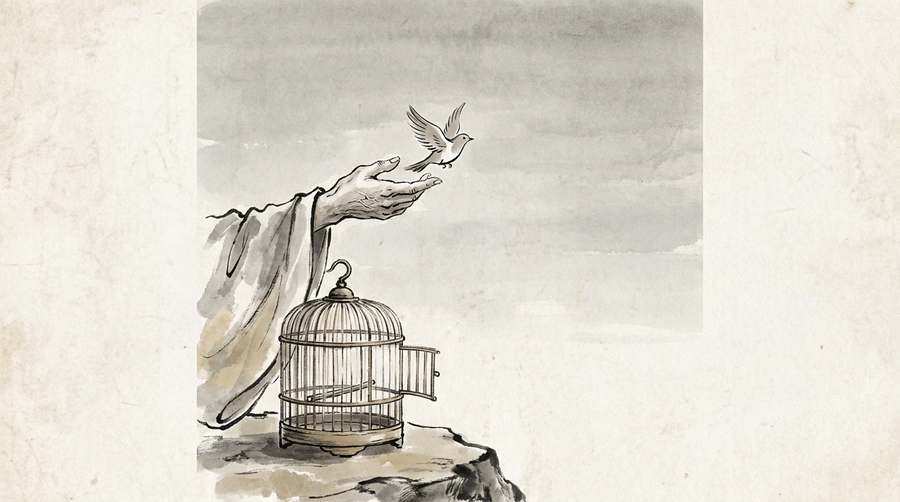
To hold something for good, first let it go. Cornered prey fights to the death; loosen the pressure, let the enemy feel free, and their resistance drains away — then take them when they no longer wish to fight.
The principle
Cornering an enemy converts them into the most dangerous version of themselves: someone with nothing to lose fights hardest. The stratagem is counter-intuitive — ease the pressure, leave a visible way out, let them run — because a fleeing enemy is disorganised, morale-broken, and no longer fighting for survival. You are not releasing them out of mercy but timing: you take them when capture costs least, or better, when they submit willingly because resistance feels pointless. The discipline is confidence — you must be sure you can retake them, or 'letting go' is just losing.
Historical origin
The classic illustration is Zhuge Liang's southern campaign (225 CE) against the tribal leader Meng Huo. Rather than crush him — which would have left the region seething with revolt — Zhuge Liang is famously said to have captured Meng Huo and released him seven times, until Meng Huo, beaten fairly again and again, submitted of his own will and the south stayed loyal. The campaign is historical; the vivid 'seven captures' detail is preserved in the Han Jin Chunqiu, cited in Pei Songzhi's annotations to the Records of the Three Kingdoms.
Applied today
When someone feels trapped, they dig in. Give them a face-saving exit and a sense of choice, and they'll come to the agreement willingly — a deal accepted freely holds; one extracted under a corner unravels.
To keep a talented person, loosen the leash rather than tighten it. Autonomy and a visible option to leave build loyalty; surveillance and golden handcuffs breed the resentment that makes them go.
In practice
Invented scenarios showing this stratagem at work — illustrations, not reports of real events.
The pilot nobody had to use
Two departments resisted the assistant and a director wanted mandated use with weekly reporting. The team gave both departments unrestricted access instead, with no targets and nothing to report, for six weeks. One department stopped after nine days and wrote down precisely why. The other built four workflows nobody had anticipated. Both outcomes were more useful than compliance would have been.
Use it Let a tool stay genuinely refusable during a pilot — mandated adoption produces usage figures and almost no information.
Watched, not evicted
Finding a foothold, the first instinct was to remove it. Instead the team moved the host into an isolated segment where the intruder could still act and nothing real could be reached, then watched for six hours. Two further accounts and a second entry route surfaced in that time. Immediate eviction would have closed one door and left both of the others.
Use it Where containment is genuinely safe, observing maps the full scope — but agree the cut-off and who calls it beforehand.
The curfew that stopped being fought
Eighteen months of negotiating the hour produced a nightly argument and no improvement in when anybody actually came home. The parents replaced the whole thing with one rule: a message on arrival, whenever that happened to be. The messages arrived. The hours, entirely unremarked upon, drifted earlier within a month, which nobody mentioned in case it stopped.
Use it Loosening a rule you cannot enforce can restore the information you actually wanted — choose visibility over unenforceable compliance.
The call that came back
After twenty minutes of firm resistance the household stopped arguing, thanked the retention agent and said they would decide once the contract had lapsed. No further pressure was applied that day. Eleven days later a better offer arrived by message, unprompted, valid for a week. The improvement had not come from the argument; it came from the account being genuinely about to leave.
Use it Recognise that leverage usually sits in your willingness to wait, not in how well you argue on the call.
The buyer who walked
A procurement lead reached an impasse over a licence uplift and ended the call without a counter-offer, saying only that the budget did not exist. No pressure was applied afterwards. Two weeks before the vendor quarter closed, a revised proposal arrived unprompted with the uplift removed. The concession came from the calendar, not from argument.
Use it Releasing pressure can be stronger than applying it — let the other side's own deadline do the negotiating.
In the treatise
The two works are separate books, roughly a thousand years apart. A chapter link is a reading aid grounded on the line quoted beneath it — not a derivation.