If your dog has just eaten chocolate, ring a vet or a poison line now and come back to this afterwards. Nothing below is a reason to wait, and none of it replaces someone who can see the animal.
What follows is about a disagreement between two respected poison services — one that every online chocolate calculator, including ours, quietly resolves in favour of one side without telling you it had a choice.
Two services, two units, two answers
Britain's Veterinary Poisons Information Service publishes a rule in grams of chocolate per kilogram of dog: treat above 3.5 g/kg for dark chocolate, above 14 g/kg for milk. It revised those figures in December 2014 on the basis of "over 700 cases where the dose of chocolate eaten was estimated or known", together with a review of original sources measuring theobromine content.
The line used almost everywhere else — Merck's veterinary manual, the ASPCA's poison centre, and every calculator built on them — is in milligrams of theobromine per kilogram of dog: signs from 20 mg/kg, severe effects around 40–50, seizures around 60.
Those are not the same rule in different clothes. To compare them you need to know how much theobromine is in the chocolate. The United States Department of Agriculture has measured that.
Converted, the two rules cross each other
USDA composition data, theobromine per 100 g: milk chocolate 205 mg, semisweet 486, dark 45–59% cacao 493, dark 60–69% 632, dark 70–85% 802.
Run VPIS's thresholds through those numbers and you get the theobromine dose VPIS is implicitly acting at:
| Chocolate | VPIS acts at | Which is, in theobromine | Calculators act at |
|---|---|---|---|
| Milk | 14 g/kg | 28.7 mg/kg | 20 mg/kg |
| Dark 45–59% | 3.5 g/kg | 17.3 mg/kg | 20 mg/kg |
| Dark 70–85% | 3.5 g/kg | 28.1 mg/kg | 20 mg/kg |
So VPIS is more relaxed than the calculators about milk chocolate — a 10 kg dog would need 140 g before VPIS says treat, against about 98 g on the 20 mg/kg rule — and stricter about the darkest bars.
Neither service is being careless. They are answering different questions. A UK vet on the phone wants to know whether this animal needs decontaminating tonight, and grams of a named product is what the owner on the other end can actually report. A toxicologist wants to know which dose produces which sign. Both are reasonable, and they do not produce the same number.
⚠️ The problem is a calculator that quotes one and cites the other. This produces a threshold that appears in no authority's guidance, leaving the reader no way to see the discrepancy.
"Dark chocolate" is not one substance
Look again at the USDA figures. Dark 45–59% is 493 mg per 100 g; dark 70–85% is 802. That is a 1.63× spread inside a single word, and every calculator that offers "dark chocolate" as one option is picking a point somewhere in it on your behalf.
For a 10 kg dog, at the 20 mg/kg threshold, that word is the difference between 40.6 g mattering and 24.9 g mattering. One is a large slab, the other is a few squares.
And the highest-theobromine thing in most kitchens is not a bar at all:
| Product | Theobromine / 100 g | Grams to reach 20 mg/kg in a 10 kg dog |
|---|---|---|
| White chocolate | 0 | — |
| Milk chocolate | 205 | 97.6 g |
| Dark 70–85% | 802 | 24.9 g |
| Baking chocolate, unsweetened | 1,300 | 15.4 g |
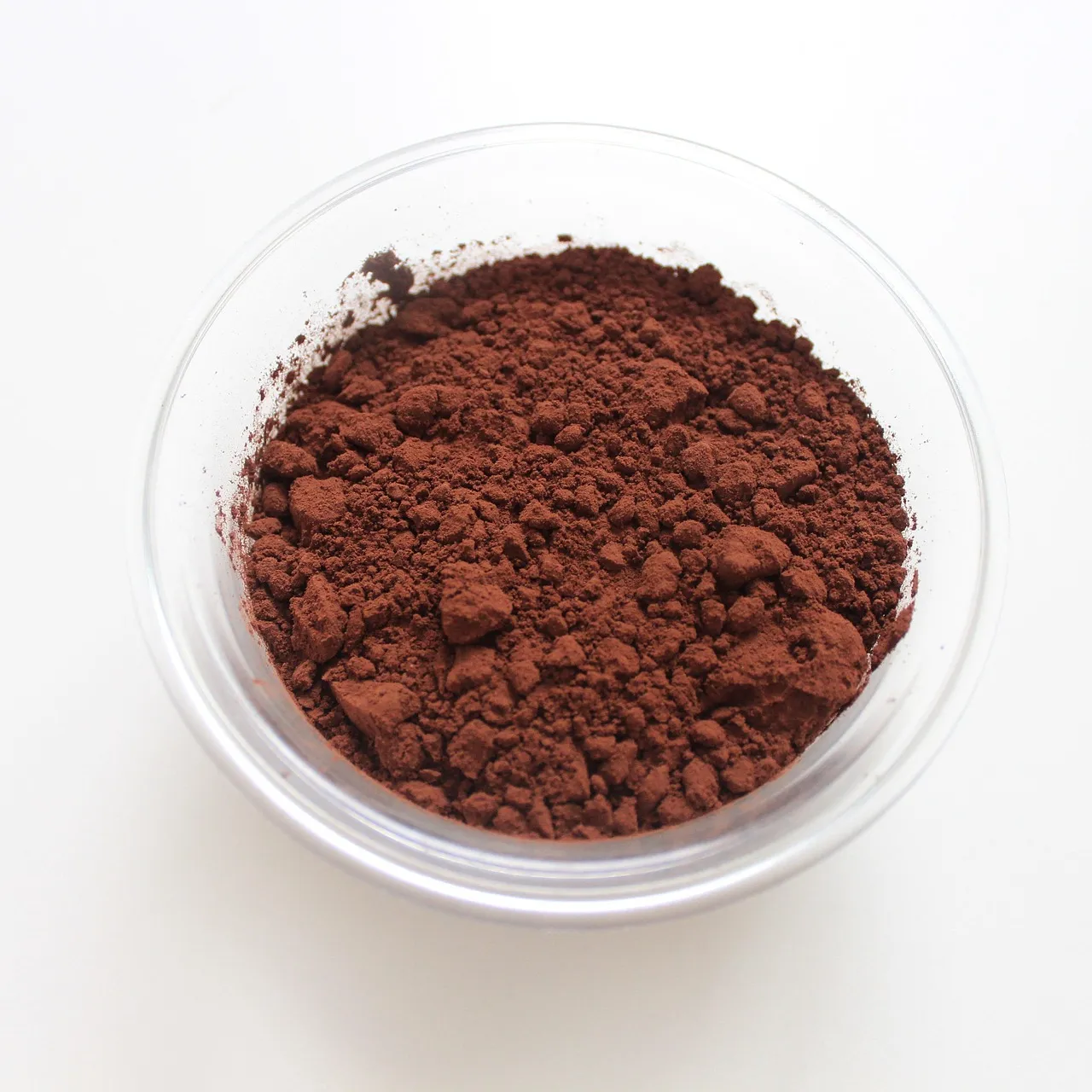
| Cocoa powder | 2,060 | 9.7 g |
| Cocoa powder, Dutch-process | 2,630 | 7.6 g |
Dutch-process cocoa carries 12.8 times the theobromine of milk chocolate by weight. Seven and a half grams — roughly a heaped teaspoon — reaches the threshold for a 10 kg dog. It sits in a tin in the baking cupboard, and nobody in the house thinks of it as chocolate.
Where the famous numbers do not come from
The 20 / 40 / 60 figures are usually assumed to rest on a controlled dosing study. There is one, and it says something else.
Gans and colleagues, in 1980, gave 33 dogs single oral doses of theobromine from 15 to 1,000 mg/kg. Deaths occurred at 300, 500 and 1,000 mg/kg — five times the level at which the clinical rule warns of seizures, and above.
⚠️ That does not make the clinical thresholds wrong. They are a different kind of number — the dose at which a vet should act, not the dose at which a dog dies. Setting the first far below the second is the entire point. But it does mean the widely repeated framing — that 60 mg/kg is where things get dangerous because a study showed it — is not what the study shows.
We looked for the original derivation of 20 / 40 / 60 and did not find one. Merck states the figures, the ASPCA's material states them, VPIS repeats them, and none of the three cites a source. To say it plainly: we could not find where these numbers come from, and we are not going to invent a provenance for them.
One number in the same secondary literature we are deliberately not repeating is a widely quoted lethal-dose figure of 100–200 mg/kg. It cannot be squared with deaths beginning at 300 in the only controlled study we could read, so we leave it out rather than pass it on.
The exposure nobody models
Gans's study had a second arm that almost never gets quoted. Ten dogs were given 75–150 mg/kg every day for 21 to 28 days. Seven died. Six of the ten showed fibrotic changes in the heart, confined to the right atrial appendage.
Every chocolate calculator on the internet, ours included, models a single event: this dog, this weight, this much chocolate, once. None of them models repeated exposure — which is the shape of the dog that keeps finding the same open tin, and the shape of the arm of the study where the dogs actually died.
That is not a defect a calculator can fix by adding a field. It is a reason not to treat a low single-dose reading as an all-clear if it is happening repeatedly.
What we changed on our own tool
Our dog chocolate toxicity calculator implements the ASPCA/Merck milligram rule — the 20 / 40 / 60 bands — and its page did not previously say so. It does now, along with which theobromine values it uses and where they come from.
Two of those values sit deliberately above the USDA figure: the tool treats baking chocolate as the liquid form rather than squares, and cocoa powder as the Dutch-process figure rather than natural. That biases it toward advising a vet sooner, which is the correct direction for a tool of this kind, and it should be a stated choice rather than an unexplained number.
Body weight is the denominator of the whole calculation and owners routinely guess it. If you are estimating, our pet ideal weight calculator and dog age calculator will at least get you to a defensible figure — but a real weight from real scales is worth more than any of this arithmetic.
Where this comes from, and what will date it
The VPIS thresholds and the basis of their 2014 revision were read from that service's own published note. The theobromine values are USDA FoodData Central. The dosing study is Gans and colleagues, Toxicology and Applied Pharmacology, 1980. Every conversion above is arithmetic on those figures and you can redo it.
We note two limits to this research. We could not establish the origin of the 20 / 40 / 60 thresholds, and have said so rather than dressed it up. We also did not find a separate ASEAN veterinary threshold; the bodies we checked use the same international guidance, so we have not manufactured a regional angle.
This dates if either service revises. VPIS's current figures have stood since 2014, and the milligram rule has stood longer than anyone can source.

View author profile → · Editorial policy