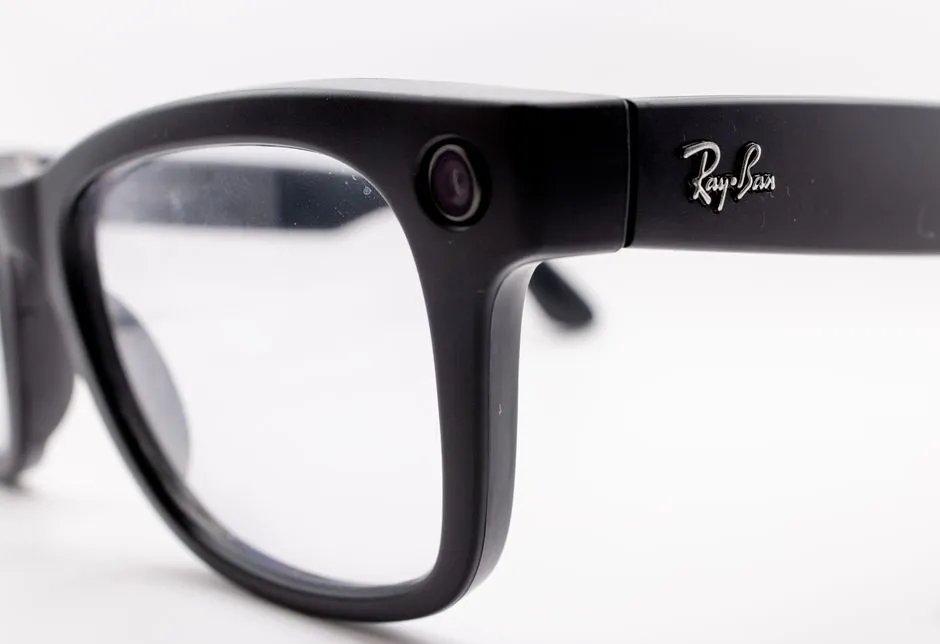
3 SEP 2026 — Meta's smart glasses ship with a capture light next to the camera, and some buyers cover or remove it before the device leaves the house. The company has now switched off the cameras on thousands of modified pairs, an enforcement action it puts at fewer than one in a thousand of all the glasses it has sold. Covering the light has stopped recordings since 2024 and reverses when the tape comes off. The new part is hardware-level detection of a light that has been drilled out, and the word bricked fits only that half.
What is known
A firmware update released on 7 July added detection for a capture LED that has been physically damaged or removed, not merely obscured. It applies retroactively across the Ray-Ban Meta, Oakley Meta and the cheaper Meta Glasses lines, including devices modified before the update shipped.
Alex Himel, Meta's vice president of augmented reality, said the camera "will now stop working if the light is covered during a recording." Meta told Semafor the enforcement reached fewer than 0.1 per cent of users and declined to give a number. More than seven million pairs of Ray-Ban Meta glasses have been sold.
Alongside the firmware change, Meta says it is removing content promoting LED-removal services from Facebook and Instagram, banning the accounts advertising them, and is prepared to pursue legal action against sellers operating outside its platforms.
Two different actions, one headline
Tape over the light trips a software check that has stopped recordings since 2024. Take the tape off and the camera returns. That is a lockout, and calling it bricking overstates it by a wide margin.
Drilling out the LED defeated that check, because the software could see an obstruction but not an absence. The July update reads the state of the component itself. On a device whose light has been destroyed there is no obstruction to remove, so the camera does not come back.
For an owner, that distinction is the whole story. One group can fix the problem by peeling tape off. The other is left with a pair of Bluetooth headphones and no repair short of new hardware.
The percentage is a rate, not a count
Fewer than one in a thousand sounds like a rounding error, and that is how it has been reported. Meta is dividing by every pair of glasses it has ever sold, which is the denominator that makes the action look smallest.
Against seven million pairs, that ceiling puts the affected devices in the low thousands. Meta will not say whether the real number is closer to one thousand or to seven, and the gap is the difference between a niche modification scene and an established market.
The account bans and takedowns suggest the second reading. Building hardware-level detection, applying it retroactively and threatening litigation against sellers would be a lot to aim at a handful of hobbyists.
This is the answer to a question we raised in August
When Meta closed an earlier bypass we argued that the LED was never the actual control. A bystander has to notice a small light, interpret it and decide to act within the seconds a recording takes. The enforceable control was always the software deciding whether the camera runs.
This week's action is that reading made concrete. Covert recording was not stopped by the indicator. It was stopped by Meta reaching into hardware people own and switching off a component. The LED is only the trigger condition for a remote capability.
The design is defensible for this problem and uncomfortable as a precedent. A remote mechanism that disables a camera when its privacy light has been destroyed can disable one for any condition the vendor later defines, on a device already paid for and carrying no subscription.
The next generation reportedly has no light
The Financial Times reported in July that Meta is prototyping devices internally described as super sensing, capturing continuous audio and photographs every few seconds to support an assistant that can answer questions about the wearer's day. Two are said to carry the codenames Aperol and Bellini, targeted at late 2026 or early 2027.
According to that reporting, executives do not want a light illuminated during operation, and the proposed handling is to extract metadata from the captured audio and images rather than retain the raw files. Meta has not confirmed any of it and the work is described as prototype.
If that is accurate, Meta is enforcing an indicator on the current glasses while designing the next generation without one, and the two positions are consistent. An indicator works for a device that records discrete clips a bystander might notice. It is meaningless for a device that is always capturing, because a light that is always on carries no signal.
What regulators have been reaching for instead
Rules aimed at these devices have converged on conduct and place rather than the product. New York State barred camera-equipped eyewear from 1,240 courthouses from 20 July. We reported that Norway's minister described a use rule that coverage turned into a ban, and that a pub chain banned filming with smart glasses rather than the glasses themselves.
These rules have an advantage that survives any hardware redesign. A rule about where a device may be worn or what may be recorded does not depend on an indicator light. A rule built around the light stops working the moment a product ships without one.
Which leaves the enforcement question sitting with the manufacturer, where this week's action found it. For a buyer, the point is not that Meta used the power responsibly. It is that the power exists, operates retroactively, and has no disclosed limits at the time of purchase.

View author profile → · Editorial policy