WATFORD, 11 AUG 2026 — Wetherspoon has told customers wearing Meta's camera glasses to switch the cameras off before coming in. More than 800 pubs are covered, and while headlines have called it a ban on smart glasses, the reality is more subtle.
What the chain issued is a filming rule. You may wear the glasses. You may not record with them.
What was actually said
The company's position rests on a house rule it says already existed. "The general code that applies in our pubs is that you can't film customers or employees without their permission," a spokesperson said. The glasses, in its view, "seem to breach this code, and common sense, by enabling surreptitious surveillance".
Wetherspoon compared the move to the way it already discourages people playing videos out loud — an intrusion on other people's space rather than a technology it objects to in principle.
| Widely reported as | What was issued | |
|---|---|---|
| Scope | Smart glasses banned | Filming banned; glasses permitted |
| Trigger | The device | The recording |
| Basis | New policy | Existing code on filming without consent |
| Enforcement | Refusal of entry | Customers asked to turn cameras off |
Why the distinction matters
A rule against a device can be enforced at the door. A rule against a behaviour has to be enforced continuously, by staff, against a device that is designed not to look like it is doing anything.
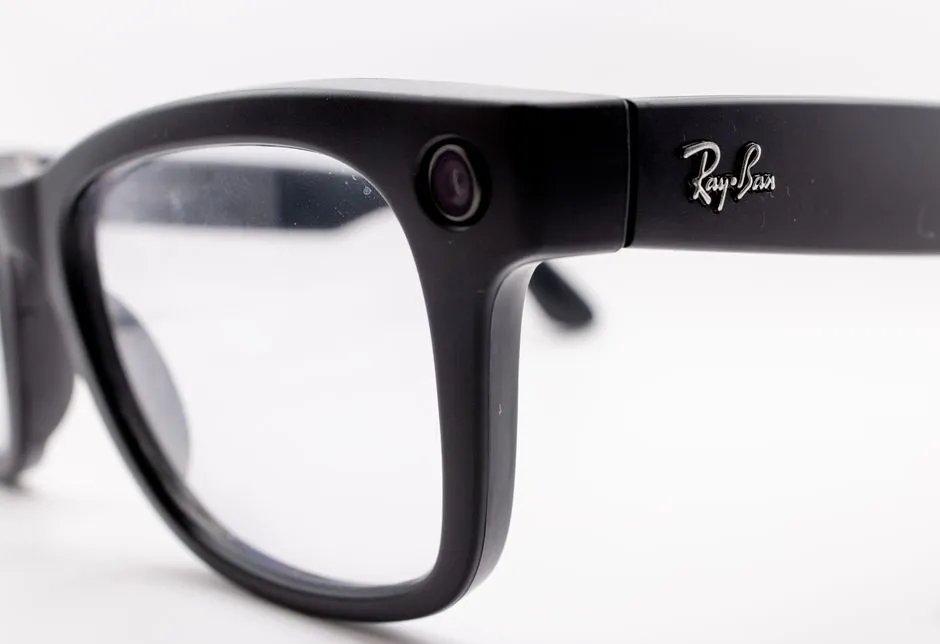
That is the whole problem with this product category. Ray-Ban Meta glasses look like Ray-Bans, which is the point of them. Recording is signalled by a small indicator light, and the honest question for any venue is whether a member of bar staff, at pace, in low light, across a busy room, is going to notice one.
So the policy is really a statement of expectation. It tells customers what the house considers acceptable and gives staff something to point at when somebody complains. It does not give them a detection method, and Wetherspoon has not claimed otherwise.
The consent problem does not belong to the wearer
The awkwardness in wearable cameras has never been mainly about the person wearing them. It is about everyone else.
A phone held up is a signal. People see it, and adjust — they move out of frame, they lower their voice, they ask what you are doing. All of the informal etiquette that governs being recorded in public depends on being able to tell that it is happening.
The glasses keep the recording capability but remove the visual signal, so people nearby lose the cue that would normally let them object. A pub sharpens the problem. Patrons are off-duty, conversations are meant to be private, and staff are a captive audience.
What a venue can actually do about it
Detection is impossible, so venues are left with procedural deterrents, not technical controls.
Signage does most of the work. A rule nobody has been told about is unenforceable in practice and awkward to raise in the moment; a notice at the door converts an accusation into a reminder, which is a much easier conversation for a staff member to have on a busy night.
A script matters as much as the sign. "Could you turn the camera off, please" is a request a member of staff can make without asserting that anything has been recorded, which is the part they cannot know. Anything stronger puts an employee in the position of accusing a customer on evidence they do not have.
And the complaint route is the one that will actually get used. Most of these situations will surface because another customer objects, not because staff spot an indicator light, so the useful preparation is deciding in advance what happens when somebody comes to the bar and says they think they are being filmed.
What this suggests about venue rules generally
Wetherspoon is a large, deliberately unglamorous chain, and that makes it a reasonable bellwether. This is not a members' club with a phone-free policy and a cloakroom to enforce it. It is the mainstream, and the mainstream has now written something down.
Expect the wording rather than the outcome to spread. "You may not record without permission" is a rule any venue already has in some form, is easy to defend, and does not require anybody to identify a product. It also survives the next device, which the ban-the-glasses framing would not.
The alternative — venues maintaining lists of prohibited hardware — fails the moment a manufacturer changes the frames.
If you own a pair
The practical reading is simple enough. In a venue that has said this, the camera is off, and the fact that nobody can tell whether you have complied is not a licence. That is what a code of conduct is: a rule that mostly works because people follow it, not because it is caught.
And do you know what the indicator light on your own pair looks like? Could you spot it on someone else from across a table? Most people have never checked.
What to watch
Whether other UK chains follow with the same wording, and whether any of them attempt something stronger than asking.
Whether Meta responds. A more conspicuous capture indicator is the obvious answer and a commercially unattractive one, since discretion is a large part of the appeal.
And whether this reaches employment ground rather than customer ground. Wetherspoon's statement covers filming employees as well as customers, and staff being recorded at work by members of the public is the version of this question with the least ambiguity and the most legal weight behind it.

View author profile → · Editorial policy