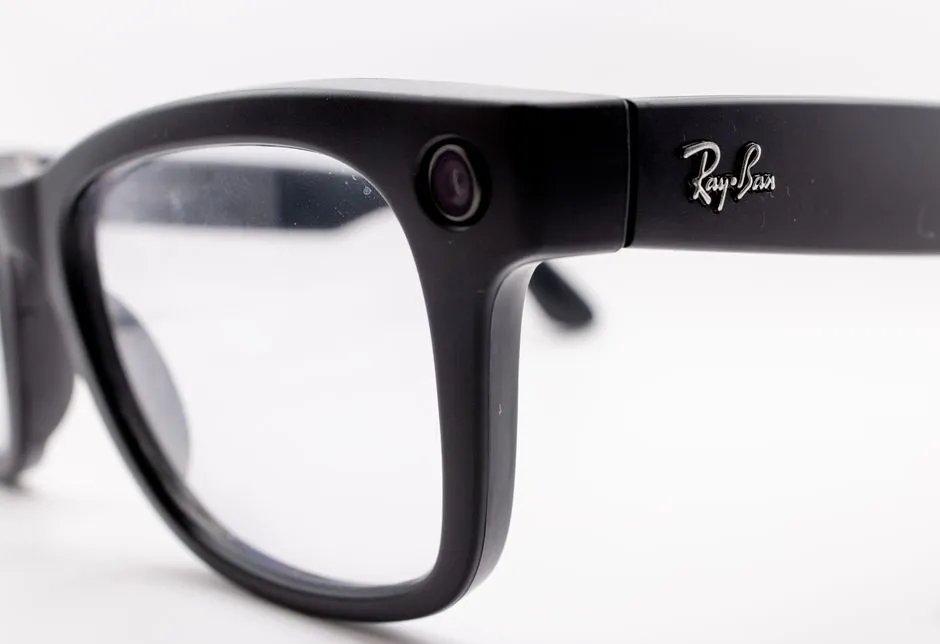
SINGAPORE, 29 AUG 2026 — Meta is pushing a software update that stops its smart glasses recording if the capture LED is covered mid-recording, closing a bypass that had become a small industry. The fix is correct and overdue. What it does not address is why bystanders miss the light in the first place, which was never about anyone covering it.
What the update changes
Meta's glasses already refused to start a recording with the LED obscured. The gap was in what happened after a recording started. A user could begin with the light visible, then cover it, and the recording would continue with no outward indication. That sequence has circulated widely enough to have generated tutorials and a market in cheap accessories designed to do exactly this.
Under the update, the camera stops if the light is covered while recording is in progress. Meta has previously disabled cameras when it detected physical damage to the LED, so the mechanism has precedent; what is new is applying it to obstruction rather than breakage, and applying it continuously rather than only at the moment of capture.
The bypass was the easy failure
Deliberate concealment is the failure mode that is straightforward to reason about. Someone wants to record covertly, they defeat the indicator, and the vendor closes the hole. There is a clear wrongdoer, a clear mechanism and a clear fix, and Meta has now applied it.
The difficult failure has nothing to do with tampering. A working LED on a pair of glasses is a few millimetres of light on a face, at conversational distance, competing with everything else in a person's visual field. To function as notice, the light has to be seen. The person then has to recognise it as a recording indicator rather than a charging light or a design flourish, and decide how to act. All of that has to happen in the few seconds the recording is in progress.
Most people will fail at the first step, and nothing in this update addresses that. It restores the indicator to working order, which was never a demanding standard.
The fix implies a new sensor behaviour
To stop a recording when the light is covered, the glasses need a capability they did not previously have: a way to know, continuously, whether the light is obstructed.
Meta has not described the detection method, and the plausible approaches — an optical sensor watching for reflected light from the LED, or a measurement of how the emitter behaves when something is pressed against it — both amount to sampling the state of the frame's surface throughout a recording. It is a modest addition, and it is still an addition, introduced in the name of privacy. That pattern is the thing to watch.
It also raises a practical question the announcement does not answer. Obstruction is a spectrum. A finger is unambiguous, a smear of sunscreen or rain on the frame is not, and a detector tuned to catch the first without falsely triggering on the second has to choose a threshold. Set it strictly and recordings will end for no reason a wearer can see; set it loosely and a partial cover will pass. Neither Meta nor the reporting has said where that line sits, and it determines whether the fix holds in ordinary conditions or only against a hand.
Consent that arrives after the fact
Every recording indicator assumes that notice comes early enough to let someone decide. In practice the notice arrives after the recording it was meant to inform.
By the time a bystander has noticed the light, understood it and decided to object, they have been recorded. Their only remedy is to ask the wearer to stop and delete the footage. That is a request rather than a right, and it depends entirely on the wearer's cooperation. A phone held up at arm's length is different. The posture itself is the notice, it is unmistakable from a distance, and it is visible before any useful recording has been made.
This is why the responses that have had practical effect have come from venues rather than vendors. Wetherspoon, the British pub chain, did not ban smart glasses at all — it banned filming with them, which shifts the question from what the device signals to what a person is permitted to do in a given space. Staff can enforce a rule about conduct. Nobody can enforce a rule about whether a light was noticed.
Where the regulation actually is
No jurisdiction in this region has tested the adequacy of a recording indicator, because the relevant laws predate these devices and address different problems.
Singapore's Personal Data Protection Act governs organisations collecting personal data, which does not obviously describe a private individual wearing glasses in a food court. Most regional privacy statutes are built on the same organisational scope. The provisions that do bite on individuals tend to be criminal ones aimed at voyeurism and harassment, which require intent and a specific kind of harm, and which say nothing about ambient recording of everyone in a room.
That leaves the question sitting where it has been sitting for three years: with the property owner, the employer and the venue. It is a poor place for it — enforcement is inconsistent, and it puts a barista in charge of a policy question — but it is the only layer with a workable mechanism.
What would count as a real fix
Three changes would move the burden off the bystander's attention, and Meta has committed to none of them.
An audible cue at the start of recording, of the kind several jurisdictions require of phone cameras, would be detectable without direct line of sight. Sizing and positioning the indicator to be legible at conversational distance would address perception rather than tampering. A hard cap on continuous recording duration would limit ambient always-on capture without preventing deliberate use.
Each of these has an obvious cost to the product. An audible cue is intrusive, a larger indicator is less attractive, and a duration cap removes a capability. Those are real trade-offs, and they are being weighed by the party that benefits from the current arrangement.
Meta has said it will keep working on making the capture LED alert bystanders reliably. That is the right objective, and Meta is the only party in a position to pursue it. This week's update is not that solution, and should not be read as one.

View author profile → · Editorial policy