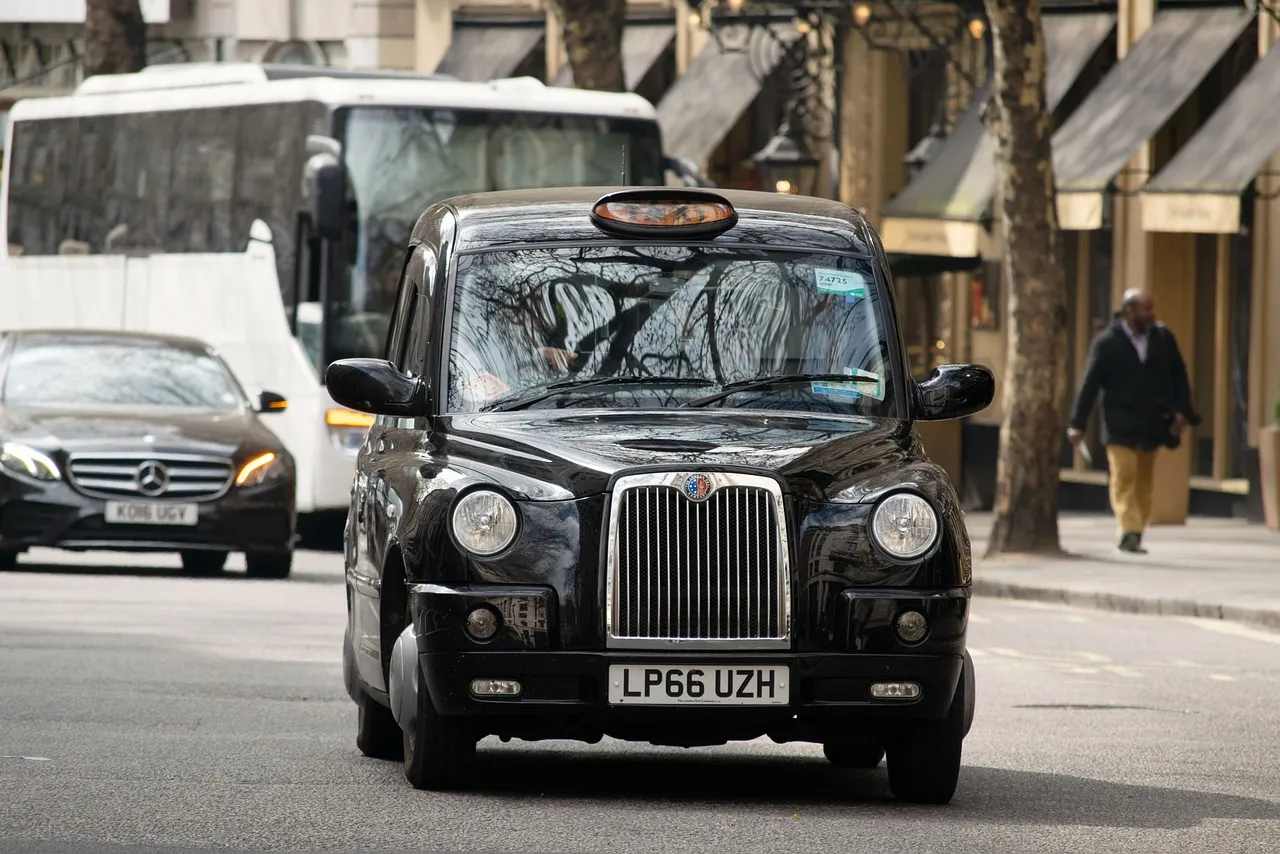
LONDON, 29 AUG 2026 — Commercial robotaxi services in London are now unlikely before 2027. The vehicles are not the constraint and neither is the software: Transport for London has not published the guidance that operators must satisfy to win approval.
Not one vehicle has been approved by the Driver and Vehicle Standards Agency.
What was supposed to happen this year
Uber and Wayve were preparing to launch self-driving rides in London over the summer, initially with human safety drivers on board. Waymo has been working through the safety approval process with the transport department and, according to its head of policy, is waiting on TfL's guidance before it can seek consent. Baidu has begun testing its own vehicles in the city with 2027 in view.
Three operators, three approaches to the technology, and the same blocker in front of all of them. That is the tell. When companies with different vehicles, different sensor stacks and different operating models all stall at the same point, the constraint is not in any of their engineering.
The difference between a rule and a rulebook
Britain has legislation for automated vehicles. What London does not yet have is the operational guidance telling an applicant what to demonstrate — the required safety case format, the evidence, the incident-reporting obligations, the insurance and the route restrictions.
An operator cannot build a compliant application against a document that does not exist. It can guess, and guessing costs a year if the guess is wrong, which is why serious applicants wait.
This is the ordinary and unglamorous way that technology deployment is actually paced in mature regulatory environments, and it is systematically under-reported because a missing document makes a poor headline compared with a milestone or a crash.
Nevada took the opposite approach
The contrast with the United States is instructive.
Nevada approved thousands of robotaxi permits in Clark County, a permissive posture that puts the burden of proof after deployment rather than before it. London is doing the reverse. Neither is obviously correct: the permissive route gets vehicles on the road and discovers problems in public, and the cautious route discovers nothing at all until it moves.
A permit is not a service. In Nevada, the same reporting carried a Tesla engineer's own view that the vehicles would not arrive at the scale the permits imply. Approval and operation are different milestones, and the announcements that travel are usually the first.
The same caution applies to European announcements generally. When Pony.ai and Uber announced 2,000 robotaxis across five European cities, one of them existed.
Four milestones, routinely conflated
Robotaxi coverage runs together several different events, and separating them makes almost every announcement in this sector easier to read.
First is a permit or licence to operate, which is a piece of paper. Next comes vehicle approval from the DVSA, a separate question about the machine itself. Third is a service launch with a safety driver aboard, which is a supervised trial whatever the press release calls it. Fourth is commercial service with nobody in the driving seat, the only milestone that demonstrates the technology works unaided.
London has none of the four. Nevada has a great many of the first. Tesla reached the fourth in Miami last year, launching rides with no safety monitor from day one. That was a milestone. Most announcements are not.
Applied to the London story, the summer launch that did not happen would have been the third milestone, with safety drivers aboard. The gap between where London is and a supervised trial is smaller than the coverage implies. The gap to a fully driverless service is much larger.
What the delay costs, and who bears it
The operators bear a capital cost. Vehicles, depots, mapping and staff have been positioned against a summer launch that did not happen, and that spend now sits idle for a further year with no revenue against it.
There is a second cost that falls on the regulator's own objective. Wayve is a British company, and a British firm that cannot deploy at home while its competitors accumulate operating hours in Phoenix, San Francisco and Las Vegas is disadvantaged in the one thing that matters in this industry, which is miles driven under supervision.
This is not an argument for waving the guidance through. But publishing it late is not a neutral act, and the cost of delay is real even though it never appears in an incident report.
The question this raises for cities in this region
London is the closest available preview of a decision Southeast Asian cities have in front of them, because it is a dense, heavily regulated, transit-rich market rather than a permissive American suburb.
London's operating environment is what makes it a preview for cities in this region. Nevada's permits cover wide roads, predictable grids and low pedestrian density. A robotaxi in central London contends with cyclists, bus lanes, roadworks, unmarked junctions and drivers who negotiate rather than signal — conditions that Bangkok, Manila, Jakarta and Ho Chi Minh City present in stronger form, alongside motorcycle traffic that has no European equivalent at all.
The regulatory question follows from that. A city choosing the permissive route imports a safety case built somewhere the traffic behaves differently. A city choosing the cautious route has to write the guidance itself, which is expensive in expertise that few transport authorities currently hold, and which is precisely the work TfL is visibly finding slow.
Neither path is free, and the London delay is worth watching here not as a failure but as a measurement of how long the careful option actually takes.
What to watch
The indicator to watch is publication of the TfL guidance. When it appears, look at whether it demands operating evidence that can only be accumulated somewhere else.
A safety case requiring a large number of supervised autonomous miles is reasonable on its face and, in a jurisdiction where no such miles can legally be driven, functions as a requirement to test somewhere else first. That would advantage the American operators over the British one, without anybody intending it.
After that, watch for a first DVSA vehicle approval, which is a separate process from TfL consent and has not happened for any applicant. Both are needed. Neither has a published date.

View author profile → · Editorial policy