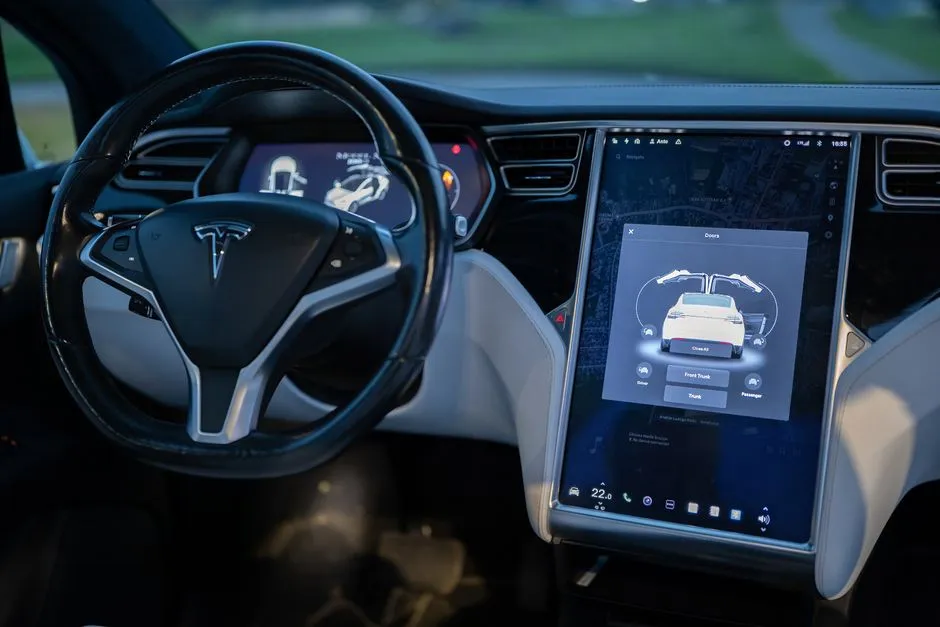
Tesla launched its Robotaxi service in Miami on 3 July 2026, and did so fully unsupervised from day one — no safety driver, no human monitor in the front seat — a detail confirmed within hours by Tesla's VP of AI Software, Ashok Elluswamy. It is the company's first market outside Texas to skip the supervised phase entirely, and its fifth operational Robotaxi market after Austin, the San Francisco Bay Area, Dallas and Houston. The launch is a real milestone for Tesla's autonomy program, but the way it happened is as notable as the fact of it: the rides run under Florida's permissive autonomous-vehicle rules rather than federal pre-approval, and they begin in exactly the weather conditions that federal regulators have been questioning for months.
What unsupervised operation from day one actually means
When Tesla launched in Austin in June 2025, every car carried a human safety monitor. Miami skipped that phase. The significance is regulatory as much as technical: Florida requires no autonomous-vehicle-specific state permit, which means the decision to take the human out of the car is Tesla's own risk judgment, not a regulator's certification. There is no state sign-off behind the monitor removal, and the only mandatory disclosure attached to these vehicles is the federal crash-reporting requirement under the National Highway Traffic Safety Administration's standing general order — a mechanism that surfaces incidents after they occur rather than validating safety beforehand.
That leaves Tesla's Robotaxi network running on a mix of trust settings across its markets: Miami, Dallas and Houston operate fully unsupervised; Austin runs a mix of unsupervised and monitored cars; and the Bay Area still requires a monitor in every vehicle. Miami's zone itself is modest — roughly 10 to 20 square miles by various estimates, across western Miami-Dade — covering areas such as West Miami, Doral and part of Coral Gables, but excluding downtown Miami, Miami Beach and airport terminal pickups. The service area is a beachhead, not the metro.
The weather test and the federal probe
Miami is the first place Tesla's Full Self-Driving system will operate commercially in a climate defined by sudden tropical downpours, heavy glare and high humidity — and that is not an incidental detail. In March 2026, NHTSA escalated its investigation into Tesla's FSD system to an engineering analysis, the final step before the agency can seek a recall, after finding, in the agency's account, that the camera-only system does not adequately detect or warn under degraded-visibility conditions such as glare and other low-visibility situations. Miami's weather turns that finding from a hypothetical into a live test.
It also sharpens the long-running technical debate between Tesla and its main rival. Tesla's approach is camera-only, on the argument that a vision system can drive the way a human does with their eyes. Waymo, by contrast, fuses cameras with radar and LiDAR, sensors that continue to return usable data in rain and glare where cameras degrade. Whether camera-only is sufficient in these conditions is precisely the question NHTSA has flagged, and Miami is where it will be answered in commercial operation rather than in a lab.
What Tesla has not published
The gap between the announcement and the evidence is the part worth weighing. Tesla has not disclosed a Miami fleet size, has published no per-mile safety data for any of its unsupervised cities, and has offered no independent certification behind removing the monitor. It has reported a series of crashes to NHTSA from its Austin operation, and independent analysis of that early data suggested a crash rate several times higher than the human average — a figure that is contested and not confirmed by Tesla, and that should be read as an early, disputed estimate rather than an established rate. Tesla's own position, stated repeatedly by Elon Musk, is that FSD has reached the safety threshold for driverless operation, that every additional city generates real-world data that refines the system, and that unsupervised operation will become common across the US in the second half of 2026. Both things are true at once: Tesla is expanding, and the public safety record for that expansion is not yet visible.
The scale gap behind the headline
Being first to run unsupervised is a genuine claim, but it sits alongside a scale that is smaller than the milestone implies. Bloomberg has estimated roughly 59 Tesla robotaxis operating across the entire US, and in Austin — the most mature market — the unsupervised portion of the fleet has been shrinking rather than growing, sliding from a peak of around 19 vehicles toward roughly 14 (Texas-wide, from about 25 toward 20), with riders reporting waits beyond 15 minutes and no cars available in more than a quarter of checks. Musk has told investors that safety validation, not mapping, is the limiting factor, and that broad expansion is being held back until a rewritten FSD v15 arrives, for which Tesla has given no public release date; he has also conceded the robotaxi business is unlikely to generate material revenue before 2027.
The Waymo comparison complicates the first-mover framing. Waymo has been carrying paying passengers in Miami since January 2026, is reported to run roughly 3,000 driverless vehicles nationally and complete more than 500,000 paid rides a week, and has published more operational and safety data than Tesla has released for unsupervised operation. Amazon's Zoox announced in March that it would begin testing robotaxis with riders in Miami, though it had not launched regular service by early July. So while Tesla is first to pull the monitor in Miami, it is not first to the city, and it is operating at a fraction of its rival's scale and disclosure.
Key Takeaways
Tesla launched its Robotaxi service in Miami on 3 July 2026 fully unsupervised from day one — no safety monitor — its first market outside Texas to skip the supervised phase, and its fifth overall (after Austin, the Bay Area, Dallas and Houston). The service covers a modest area of western Miami-Dade (roughly 10–20 square miles by various estimates).
The rides run under Florida's permissive AV framework, so removing the human monitor is Tesla's own risk decision rather than a regulator's certification; the only mandatory disclosure is federal crash reporting, which surfaces incidents after the fact.
Miami's tropical rain and glare directly implicate an active NHTSA engineering analysis (escalated March 2026) into whether Tesla's camera-only FSD adequately handles degraded visibility such as glare — the core of the long-running camera-only versus LiDAR/radar/camera-fusion debate with Waymo. Tesla publishes no per-mile safety data for unsupervised operation; an independent estimate of a several-times-higher Austin crash rate is contested and unconfirmed.
Behind the first-unsupervised headline, Tesla operates at small scale (Bloomberg estimates ~59 US robotaxis; Austin's unsupervised fleet has shrunk toward ~14) and trails Waymo, which has run in Miami since January with roughly 3,000 driverless vehicles nationally and more published safety data. Musk says broad expansion waits on FSD v15, for which Tesla has given no public release date.
Correction, 18 October 2026: An earlier version overstated Waymo's fleet (it is roughly 3,000 driverless vehicles), said Waymo uses safety monitors in new markets, said Zoox had expanded into Miami (it had announced testing there), gave Texas-wide rather than Austin fleet figures, and gave an expected FSD v15 date that Tesla has not announced. These have been corrected.

View author profile → · Editorial policy