MOUNTAIN VIEW, 13 AUG 2026 — Sundar Pichai announced on 11 August that the Gemini app has passed one billion monthly active users, the fourteenth Google product to reach that mark and, the company says, the fastest-growing in its 28 years.
The number Google did not give is how many of them pay.
The climb
The shape of the growth curve is more telling than its endpoint.
Those last two entries deserve a second look. Gemini took roughly two and a half months to go from 900 million to 950 million, then twenty days to add the next fifty million.
Either something changed in late July, or the milestone was announced when it crossed a round number rather than when the growth happened. The second is the ordinary explanation, and the timing supports it: the announcement landed the day before Google's Made by Google hardware event, where deeper Gemini integration across the Pixel 11 line was expected.
That does not make the billion false. It makes the acceleration an artefact of when companies choose to speak, which is worth remembering every time a curve appears to bend at exactly the moment somebody had a stage booked.
How people actually use it
The usage details, which almost nobody has picked up, are more revealing than the headline.
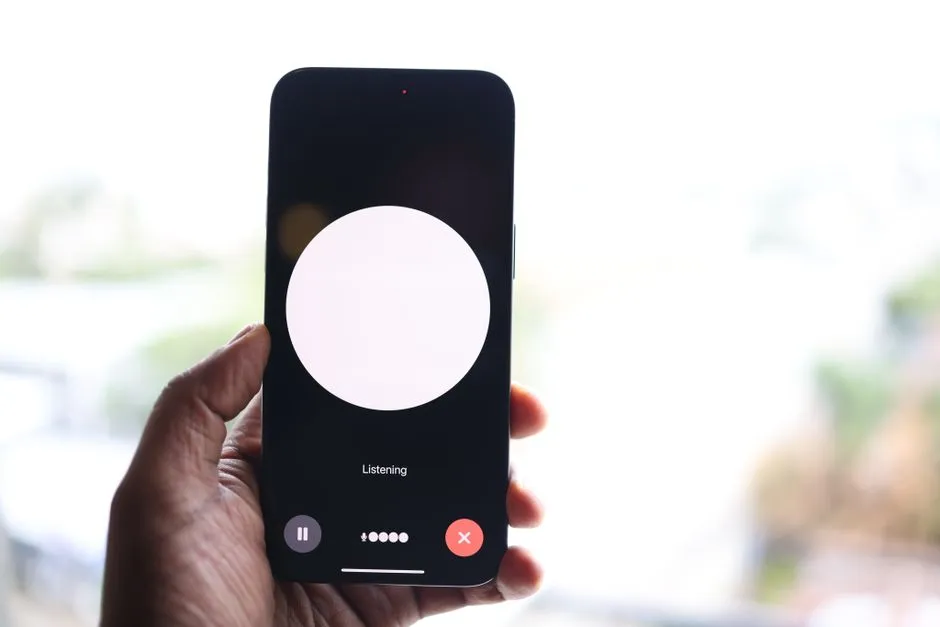
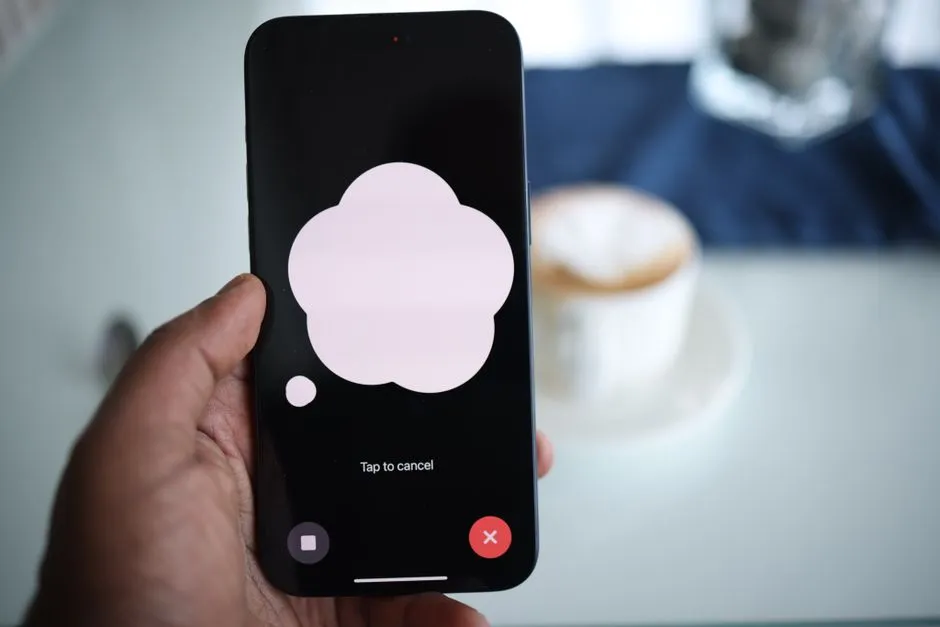
About 63 per cent of users interact with Gemini by voice. One interaction in five involves screen sharing or a live camera. The app generates more than 150 million images a day.
Nearly two thirds by voice is a striking figure for a product whose public image is a text box, and it points at a different product than the one usually discussed. A voice-first assistant used through a phone, frequently with the camera on, is much closer to the thing Google has been trying to build since 2016 than it is to a chatbot.
It also explains the distribution. Gemini reaches a billion because it is on Android, in the place a voice assistant already lived, replacing something people were already using. That is a different achievement from persuading a billion people to visit a website. Conflating the two overstates Google's accomplishment and understates the alternative.
The 150 million images a day is the number that should worry somebody. That is roughly 1,700 images every second, generated continuously, most of which will never be labelled as synthetic once they leave the app.
What the missing number means
Google published monthly active users and left out subscribers.
That is a choice, and it is a familiar one. Monthly actives is the metric a company leads with when engagement is the story and revenue is not yet. It is not evidence that the subscription business is weak — Google has never broken Gemini subscriptions out — but a billion users converting at even a low single-digit percentage would be a number worth saying, and it was not said.
Compare that to ChatGPT. ChatGPT crossed a billion weeks earlier from a standing start, without an operating system to be installed on, and OpenAI's revenue disclosure has been considerably more forthcoming. Two products at the same user scale with very different distribution and very different willingness to talk about money.
A reader deciding what to build on should ask which product is likely to still be free in two years — an answer that depends on numbers neither company has published.
What "fourteenth product" is doing
Google framed the milestone as its fourteenth product to reach a billion users. While true, the framing flatters the achievement by association.
The other thirteen are Search, Android, Chrome, YouTube, Gmail, Maps, Play and their siblings — products that reached a billion largely by being the default somewhere, on a device or in a browser Google already controlled. Being the fourteenth member of that club is partly a statement about how many billion-user surfaces Google can place something on.
That is not a criticism of Gemini, which people plainly use. It is a caution about what the comparison implies. When a company says a product grew faster than any of its predecessors, the sentence describes both demand and an unusually large distribution machine pointed at one thing.
It is better to read the billion-user figure as a ceiling test, not a demand signal. It shows Gemini can be delivered to a billion people. What it does not show is how many of them would go looking for it if it were not already there — and that is the number that decides whether this is a product or a feature.
The ASEAN read
A billion monthly users is a distribution fact and distribution is where regional differences show up.
Android's share across Southeast Asia is high — considerably higher than in the United States — which means Gemini's default placement matters more here than the global figure suggests. Voice-first usage compounds that: in markets where typing in a second language is a real friction, a competent voice assistant becomes the primary interface.
The open question is language coverage, and it is the one Google did not address. A billion users tells you nothing about how well the thing works in Bahasa Indonesia, Tagalog, Thai or Vietnamese, and the gap between "supported" and "good" is where regional assistants either find room or do not. Indonesia is building a 70-billion-parameter national model covering Javanese, Sundanese, Balinese and Batak precisely on the assumption that the gap is real.
What to be careful about
Monthly active users is the softest headline metric in technology. It counts a person who opened the app once in thirty days identically to one who uses it hourly, and for a product bundled into an operating system the boundary between using it and merely encountering it is unclear.
The figure also covers the Gemini app specifically, not Gemini in Search, Workspace or Android system features. That is the honest way to count it, and it means the headline understates total reach while the underlying engagement question stays unanswered.
A billion is still impressive, but it measures how many people the product touched, not how much they wanted it.
What to watch
Whether Google discloses subscriber numbers. At this scale, continued silence is itself information.
Whether the voice share holds as usage broadens. Sixty-three per cent is remarkable, and early adopters of a phone assistant are not a random sample of a billion people.
And whether the image number gets a provenance story. A hundred and fifty million synthetic images a day, at a moment when the EU is legislating disclosure for AI-generated content, is a compliance surface as much as a usage statistic.

View author profile → · Editorial policy