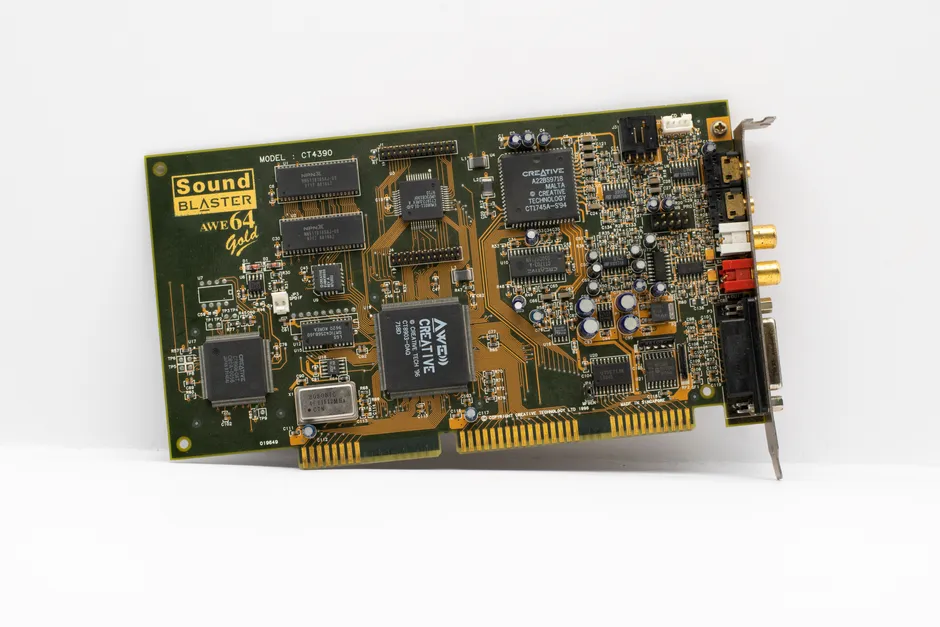
17 NOV 2026 — Two Sound Blaster control apps for Android have been taken off Google Play, and owners of the Sound Blaster Audigy 5/Rx sound card are being told to install a new driver, after flaws in Creative Labs software were reported through the Cyber Security Agency of Singapore (CSA). The agency's alert AL-2026-163, dated 16 November, lists five CVE identifiers, which also cover Creative Pebble speaker installers and two Windows drivers.
The fixes were coordinated under CSA's responsible vulnerability disclosure policy. The alert's timeline puts vendor disclosure on 10 June 2026, the patch on 8 October, and public release on 20 October. By our count, that is 120 days from report to fix. Four researchers are credited: Wu Haotian, Dayeon Kang, Julian Horoszkiewicz and Johan Francsics.
The three new 2026 identifiers, published by NVD on 16 November, all describe an attacker who is already on the Windows machine with a low-privilege account. The NVD scoring vectors also require the user to do something first. Two could let that attacker gain higher privileges, and the third can only cause a denial of service.
| Product | CVE (CSA score) | Issue type | What owners should do |
|---|---|---|---|
| Sound Blaster Command (Android app) | CVE-2020-15824 (8.8), CVE-2012-0754 (8.1) | Improper privilege management; out-of-bounds write | App removed from Google Play; no update listed |
| Sound Blaster X7 Control (Android app) | CVE-2012-0754 (8.1) | Out-of-bounds write | App removed from Google Play; no update listed |
| Creative Pebble V3, Nova, Pro, X and X Plus firmware installers | CVE-2026-67250 (7.3) | Malicious DLL loaded by a privileged program (privilege escalation) | Nothing; Creative Labs has updated the installers |
| Sound Blaster Audigy 5/Rx driver | CVE-2026-63245 (7.3) | Privilege escalation in Emupia2k.sys | Download and install the updated driver |
| Creative WDM Audio Driver (64-bit) 5.10.00.3807; Audigy 4 and Audigy 5/Rx | CVE-2026-63246 (5.0) | Kernel pool buffer overflow in ct0531fl.sys (denial of service) | Nothing for the WDM driver, which has been pulled from Windows Update |
The updated Audigy 5/Rx driver sits on Creative's support download page as the file SBA5_PCDRV_L11_3_01_0059H.exe. The alert says nothing about the Audigy 4, which is listed under the overflow, or about phones that still have either app installed. Both Play Store listing pages returned a "Not Found" error when we checked on 17 November.
Two identifiers from other vendors' software
CSA attaches the two oldest entries to Creative's Android packages, yet NVD's record for CVE-2020-15824 describes a script-cache privilege escalation in JetBrains Kotlin, published in August 2020. Its record for CVE-2012-0754 describes an Adobe Flash Player memory-corruption bug, published on 16 February 2012, which is 5,387 days or about 14.7 years before the alert. The 8.8 and 8.1 that CSA prints are the NVD base scores on those Kotlin and Flash records. CSA's wording for the Flash entry also speaks of a remote attacker, unlike the three new bugs.
Neither CSA nor Creative explains the connection. Our reading, unconfirmed by either party, is that the apps contained older third-party code carrying those known flaws.
This is the second CSA alert on Creative products in under six weeks. On 7 October the agency flagged a firmware-verification flaw and a Bluetooth authentication flaw in Sound Blaster Katana soundbars. The scores can be unpacked in our CVSS 3.1 calculator.

View author profile → · Editorial policy