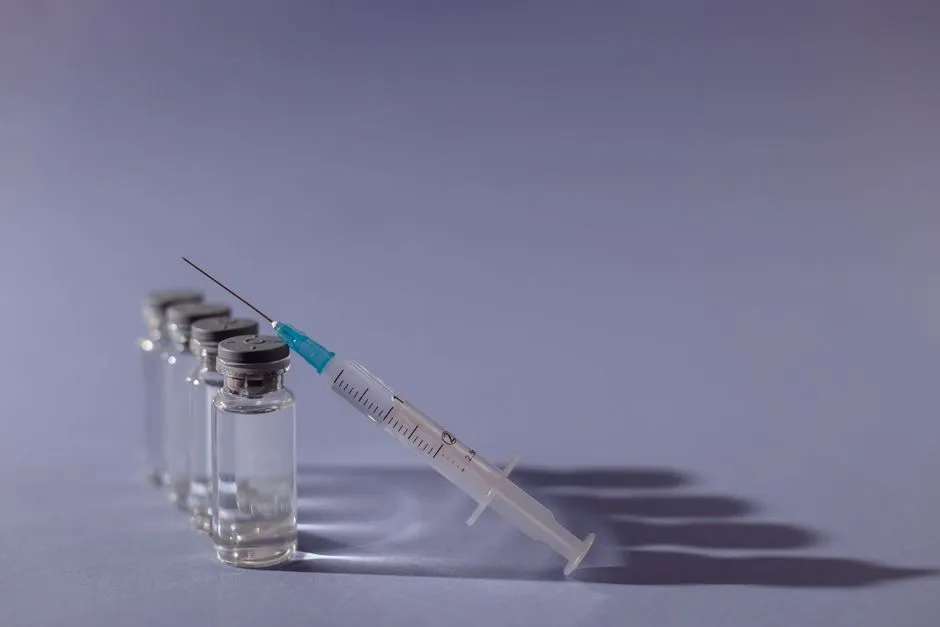
25 OCT 2026 — The first participant in a large vaccine trial against the Bundibugyo strain of Ebola was vaccinated in Bunia, in the Democratic Republic of the Congo (DRC), on 23 October. The trial, called Tumaini, is a Phase 2/3 study co-led by Congo's national biomedical research institute (INRB) and the University of Antwerp. It opens in the province that has carried most of the outbreak, and there is still no approved vaccine for this strain.
The first shot is not a Bundibugyo vaccine at all: it is Ervebo, a licensed vaccine against a different Ebola species, and the trial will test whether it protects. Two vaccines built for Bundibugyo are due to follow.
What started in Bunia on Friday
The Coalition for Epidemic Preparedness Innovations (CEPI), which funds the trial, said in a statement that the first participant was vaccinated in Bunia on 23 October. The World Health Organization's latest outbreak update, dated the same day, also records that first participants were enrolled there. Bunia is the capital of Ituri, the outbreak's epicentre.
Tumaini means "hope" in Swahili. WHO Director-General Tedros Adhanom Ghebreyesus announced the start on X, and AFP, in a report carried by Al Jazeera, quoted him as saying: "This trial will help us understand whether any of the vaccine candidates designed for Bundibugyo virus work."
How the trial is designed
Tumaini uses ring vaccination. When a case is confirmed, the people around that patient form a "ring", and those contacts are offered a place in the study. The trial registration (NCT07842107) defines a contact as someone who shared a household with the patient, visited them after symptoms began, or touched the patient's body or fluids without adequate protection, including at a funeral, within the previous 21 days.
Each contact is randomly assigned either a candidate vaccine or a comparator, which the registry names as a typhoid vaccine. On Day 29 they get the other one, so everyone enrolled is offered a candidate vaccine while neither participants nor investigators know who received which first. The main efficacy measure is confirmed, symptomatic Bundibugyo disease starting 10 to 29 days after vaccination.
It is also a platform trial, so new vaccines can join under the same protocol and weak ones can be dropped. Candidates are chosen by a WHO technical advisory group, and Congo's regulator approves each change to the protocol, CEPI said.
Why Ervebo goes first
Ervebo is licensed to prevent disease caused by Ebola virus, the species once called Zaire ebolavirus. Whether it protects against Bundibugyo is the open question, and the trial is designed to answer it. CEPI said two Bundibugyo-specific vaccines it funds are being prepared to enter "shortly": one from Moderna, and one from the University of Oxford working with the Serum Institute of India.
Dr Chikwe Ihekweazu, who heads WHO's Health Emergencies Programme, said in the CEPI statement that success "would be the first time we have clear evidence of vaccine efficacy against Bundibugyo virus".
An outbreak still growing
WHO said that as of 20 October the DRC had recorded 9,704 confirmed cases, including 4,687 deaths, across 66 health zones in eight provinces. Ituri alone accounted for 7,040 of those cases. WHO also called this the largest Ebola outbreak ever recorded in the country, whatever the virus species.
Many people are dying before they reach care. Of the 482 deaths reported since WHO's previous update on 8 October, 307 happened in communities and 175 in treatment centres. Contact tracing is also lagging: across six provinces, WHO said 79.7% of contacts were seen in the most recent 24 hours, against a required 95%.
The virus has also crossed borders. Kenya had nine cases, including one death, as of 20 October, all linked to a single imported case, and Nigeria confirmed an imported case in Abuja the same day. RECATOOLS reported on Kenya's second case on 16 October and on the DRC outbreak passing 7,000 cases in September. WHO continues to advise against travel or trade restrictions on affected countries.
Who can take part
The registry opens enrolment to contacts aged one year and older, limited for each vaccine to the ages it is approved for. CEPI's statement gives more specific limits. Valérie Briand, who leads research at Epicentre, one of the trial's partners, said pregnant women and children aged 12 and older will be included, and children from one year old can receive Ervebo.
"Children are among those hardest hit by the Ebola outbreak in certain regions, yet they have historically been under-represented in clinical research," she said. Talks are under way to include younger children for some candidates, she added.
What happens next
The registry estimates primary completion in April 2027. Until results arrive, the response still rests on finding cases early, isolating them, tracing contacts and safe burials, which WHO lists as the core of outbreak control because no approved vaccine or specific treatment exists for this strain.
Dr Richard Hatchett, CEPI's chief executive, put the cost of that gap plainly. "There is still no licensed vaccine against Bundibugyo virus, and the cost of that absence is being counted in the DRC every day, in lives lost and in health workers who go to work without protection," he said.
CEPI said Gavi, the Vaccine Alliance, has committed up to US$40 million towards manufacturing readiness, so that a working vaccine can be made at scale once approved.

View author profile → · Editorial policy