21 OCT 2026 — Women prescribed weight-loss injections through a UK app-based programme had lost an average of 16.1 kg by their six-month weigh-in, according to a study of 8,127 patients published in Nature Medicine on 16 October. Almost all of them were on tirzepatide, the drug sold as Mounjaro. The programme was run by two private companies, SheMed and eMed Healthcare UK, and employees of both are among the authors.
The study has no comparison group and covers women who paid for their treatment. It describes what happened inside one service. It cannot show that the digital format, rather than the drug, produced the results.
How the programme worked
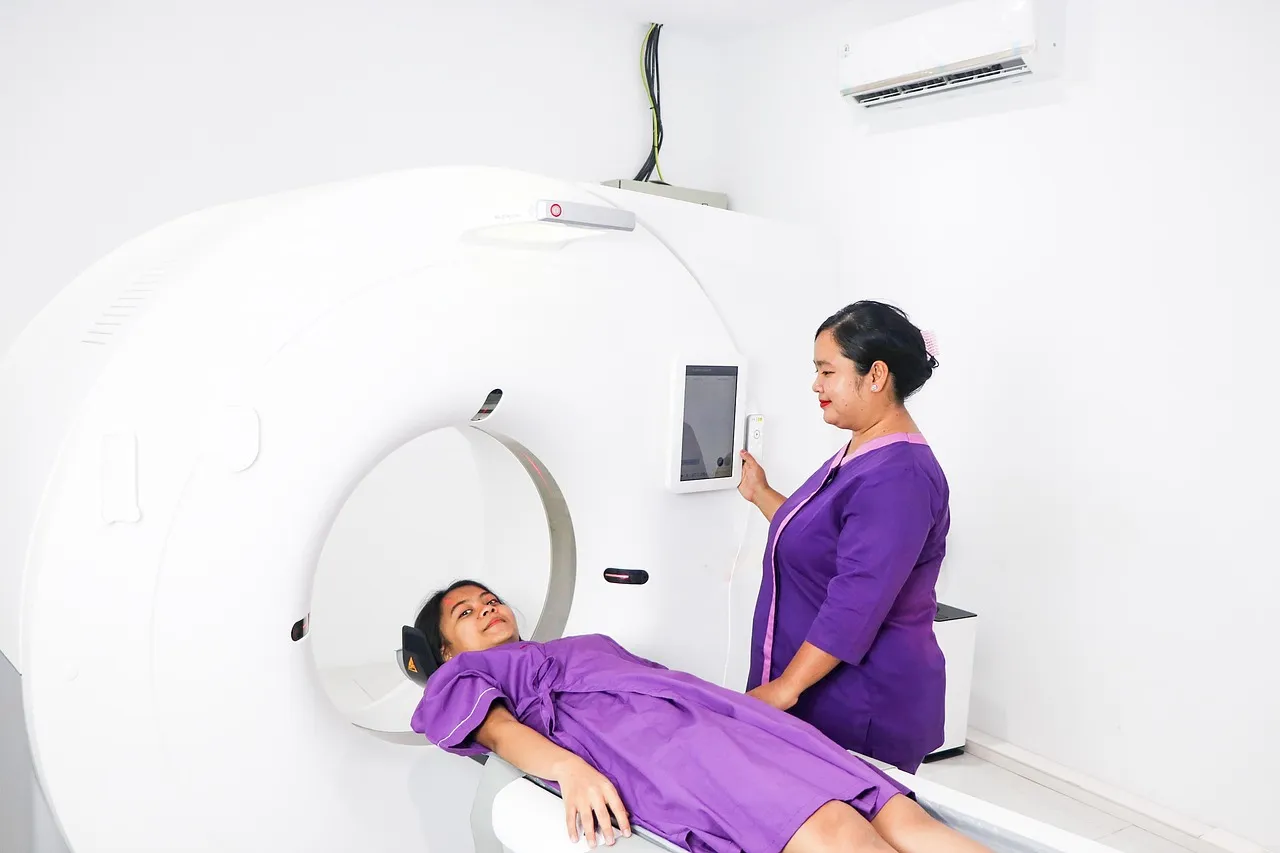
Recruitment ran online from late November 2024 to the end of January 2025. Nobody visited a clinic. Each woman confirmed her identity and weight on a supervised video call, then posted a finger-prick blood sample from home for baseline tests before any prescription was written.
After that, contact ran through a smartphone app. Participants logged their weight weekly, joined weekly video check-ins with trained proctors, and filled in a monthly questionnaire before a refill was approved. A clinician reviewed whether to raise the dose. Prescribing sat with UK-registered clinicians in a service operated by eMed Healthcare UK, overseen by a pool of 25 general practitioners.
Clinicians were told to hold the dose steady when a patient was already losing at least 2 kg a month. By six months the average tirzepatide dose was 9.5 mg a week, below the highest licensed doses.
Weight and blood results
Among the women weighed at six months, 96.1% had lost at least 5% of their starting weight, 53.5% at least 15% and 22.4% at least a fifth. Average body mass index fell from 38.4 to 32.5.
Blood sugar improved as well. In 6,245 women with paired tests, average HbA1c dropped by 3.3 mmol/mol, to 33.0. Of 155 who started with readings in the diabetes range, 131 had normal readings at six months, and 546 of 567 with prediabetes did too. Total cholesterol, LDL cholesterol and triglycerides all dropped. HDL, the so-called good cholesterol, fell slightly.
The authors compare these figures with the early months of the large drug trials. In the SURMOUNT-1 trial, which ran for 72 weeks, adults on the highest tirzepatide dose lost 20.9% of their body weight against 3.1% on placebo. The new study stops at six months, so it says nothing about whether the weight stays off.
Side effects and drop-outs
In all, 698 women stopped treatment within six months. Side effects of some kind were logged by 5,092 of the 8,127, or 62.7%. Among those, 7.7% rated their worst symptom as severe. Among women with side effects, those who used a supplied package of over-the-counter remedies and diet advice were less likely to stop than those who did not, 5.0% against 7.4%. Eleven women reported a pregnancy and stopped the drug at once. The study found no serious treatment-related adverse events.
The cohort was 88.0% white. Non-white women lost slightly less weight on average, 13.5% against 15.8%, and were more likely to discontinue. The authors say responses across ethnic groups need confirming in studies designed for that question.
Who ran it and who paid
The paper sets out its commercial ties. Its competing-interests statement says eMed Healthcare UK and SheMed co-operated the programme, that one author works for each company, and that corresponding author John Deanfield of University College London has received consulting fees from eMed as well as honoraria from drug makers including Novo Nordisk. The two company authors are credited with data curation and project administration. The authors have posted their analysis code publicly.
A donor-advised fund at The Chicago Community Trust paid for the research through a grant administered at UCL. The paper says the funder had no role in design or analysis.
Patients paid a fixed fee covering the drug, the blood tests and the app support, and the provider subsidised part of that cost during the study. "The subsidized pricing in our study may not be a sustainable, scalable commercial structure," the authors write.
What the study cannot show
The authors list the limits themselves. There is no control group, so the effect of the format cannot be separated from the effect of the drug. Women who pay for a structured programme may be more motivated than average, which could flatter both retention and weight loss. Medical histories were self-reported, height was self-reported, and weights came from the participants' own scales, with video checks. Blood pressure was not recorded.
The women were also mostly healthy apart from their weight. The paper warns against applying the findings to people with more serious obesity-related illness. Because the analysis used routine service data, UK guidance did not require a research ethics committee review, the paper says.
Private access and the NHS line
Eligibility for the programme started at a BMI of 30, or 27 with a weight-related condition. That is looser than the NHS rule. The National Institute for Health and Care Excellence recommends tirzepatide only when an adult's BMI is 35 or more and they have at least one weight-related condition, with lower thresholds for some ethnic groups, after finding that cost-effectiveness estimates for the broader group were above the range it considers acceptable. Our BMI calculator shows where a reading falls.
The authors say restricted access has pushed more people towards community and self-pay routes, and that evidence on digital care models remains limited. They call this one of the largest real-world evaluations of these drugs in women. It is also an evaluation run by the business being described, over six months.

View author profile → · Editorial policy