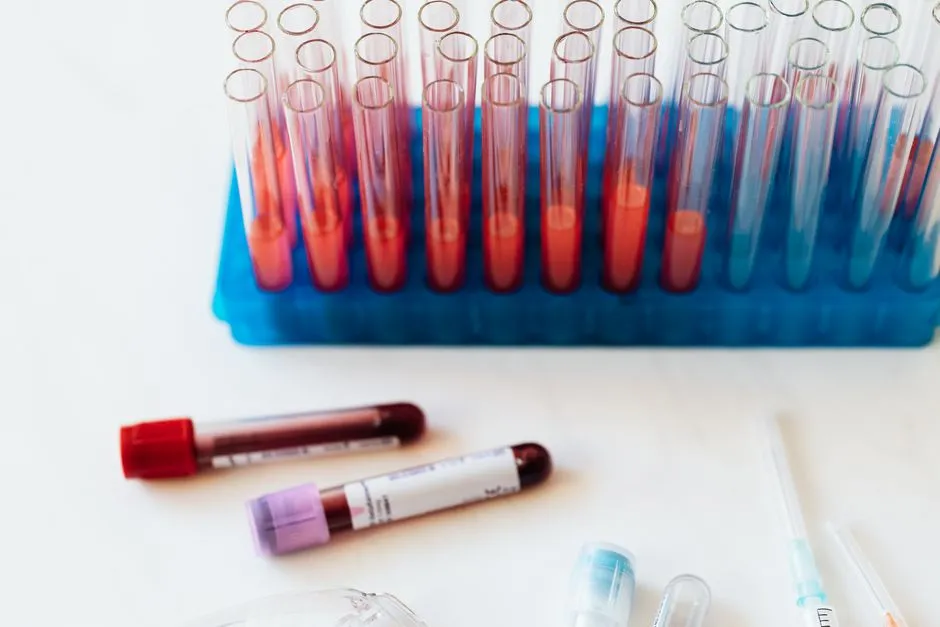
15 OCT 2026 — A study of more than 300 million laboratory tests from over a million women in the United States and Israel suggests menopause changes the body abruptly, not gradually. Published in Nature Medicine on 12 October, it found step-like shifts at the final menstrual period in tests of bone, liver, kidney, blood and fat metabolism, a pattern the authors call a "physiological cliff". Men of the same ages showed no such jumps. Some menopause specialists object to the term. One called it "potentially alarming" and said the study does not show the decline it implies.
How the study worked
The difficulty with studying menopause in large health records is that almost nobody's final period is written down. A 55-year-old in a dataset might be one year past menopause or ten, so averaging by age smears any sudden change into a slope.
The research team, led by systems biologist Uri Alon at Israel's Weizmann Institute of Science, borrowed an idea from astronomy, where a blurred image is sharpened by correcting for the telescope's known distortion. Here the known distortion is the spread of menopause ages, which in the US data has a median of 50 and a middle range of 45 to 53. Removing that blur let the team estimate how the average test result moves relative to the final period, without knowing any individual woman's date.
They applied it to two independent sources: the US National Health and Nutrition Examination Survey from 1999 to 2022, and records from Clalit, an Israeli insurer covering about half the country, for 1.3 million women aged 30 to 70.
What it found
In the US data, 52 of 90 tests showed a statistically significant jump in women at the final period. The largest were in reproductive hormones, as expected, but the jumps extended to liver tests, blood counts, kidney function, bone markers, lipids and blood concentration. The size of each jump correlated closely between the American and Israeli datasets. A few tests showed no jump, including free thyroid hormones and folate.
Most jumps moved toward higher disease risk. Iron and red blood cell measures were the exceptions, and improved, probably because menstrual bleeding stops. According to the journal's summary, hormonal changes started well before menopause. Anti-Müllerian hormone and oestradiol began falling rapidly about 15 and 12 years beforehand, and follicle-stimulating hormone rose about 14 years before. That is earlier than the three-to-seven-year window usually described.
Hormone therapy and the jumps
Among women reporting current menopausal hormone therapy, many jumps were smaller, especially for bone, liver and kidney measures. One inflammatory marker, C-reactive protein, was higher, which the authors link to oral oestrogen's effect on the liver.
Why specialists are cautious
The design limits the conclusions the study can draw. Professor Martha Hickey, head of menopause services at the Women's Hospital in Victoria, Australia, told the Australian Science Media Centre that "describing this as a 'physiological cliff' is potentially alarming for women and implies a dramatic physical and mental decline, which this study does not demonstrate." She noted that the study is retrospective and cross-sectional, which ranks as low-level evidence, and that blood tests are usually ordered for a clinical reason, which may tilt the data toward women with health problems.
Her sharpest criticism was about hormone therapy. Because the 9 per cent who used it were not randomly assigned, healthier women may simply be more likely to take it. "These findings do not support the use of MHT to prevent chronic disease," she said, pointing to randomised trials that have not shown such benefits. The authors make a similar point, writing that the effects of hormone therapy "need to be tested by prospective randomized trials". Professor Andrew Shelling of the University of Auckland said the results "should be viewed as hypothesis-generating rather than conclusive."
What it means for readers
The study is a population average, not a forecast for any one woman, and it does not change treatment guidance. The practical message is timing. If many routine test results shift around the final period, that is a sensible moment for a check-up that looks at bone health, cholesterol and kidney function. Readers curious about one of those measures can see how kidney function is estimated from a blood test with our eGFR calculator. Earlier research we covered linked menopause before 45 from surgery or cancer treatment to a higher risk of death, another reason the timing of menopause deserves attention in routine care.

View author profile → · Editorial policy