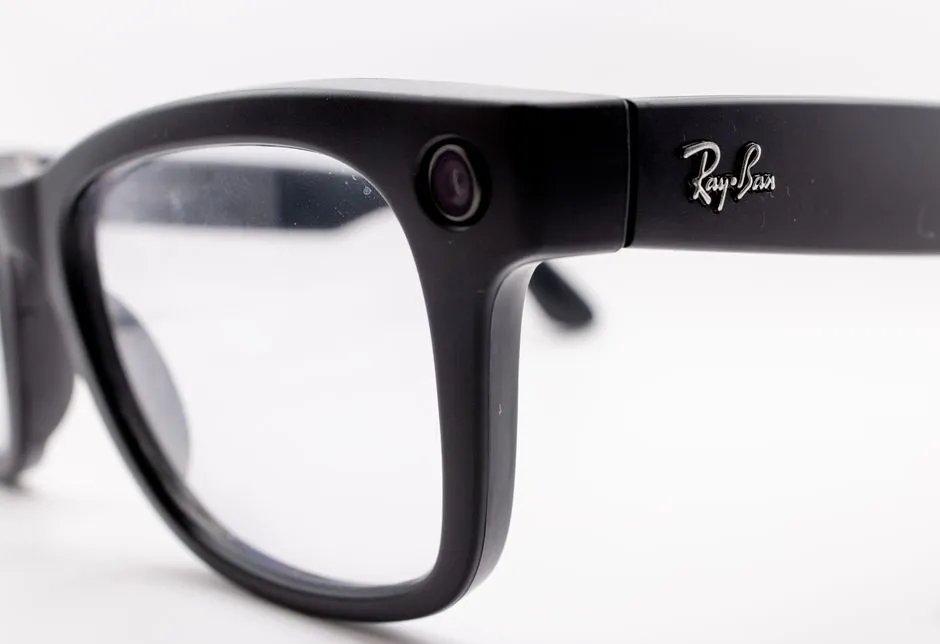
TRENTON, 30 AUG 2026 — A New Jersey bill would require driverless commercial vehicles to carry a camera system plus two further sensing modalities. It is being reported as a Tesla ban. The text names no company and no sensing technology.
What the bill says
Senate bill S1677 would require a fully autonomous vehicle to be equipped with crash-avoidance systems including a camera system and two distinct sensing modalities capable of detecting and tracking obstacles in the event of camera failure.
The drafting is deliberately technology-agnostic. It names no lidar, no radar and no vendor. What it requires is redundancy: two independent ways of seeing the world that keep working when the primary one stops.
The bill also establishes a three-year pilot programme, under which a company must complete at least 50,000 miles of supervised testing with a safety driver before removing that driver. That requirement has received almost no coverage and is the operational gate.
Why the distinction is not pedantry
A statute that named Tesla, or that mandated a specific technology such as lidar, would be legally more fragile.
Technology mandates age badly, because they freeze a snapshot of what the state believed in the drafting year, and they invite challenge from anyone who meets the safety objective by another route. A performance requirement — two independent modalities, functioning on camera failure — survives the arrival of a sensing technology nobody has thought of.
It also changes what a company can do about it. Tesla cannot argue that a technology-neutral redundancy requirement targets it unfairly; it can only argue that cameras alone provide sufficient redundancy, which is the substantive question and the one it would rather litigate anyway.
The practical effect follows anyway, as a consequence of the rule rather than its stated purpose. Waymo and Zoox already run cameras, lidar and radar together and would qualify as drafted. Tesla's camera-only approach would not.
Two jurisdictions, two ways of not approving anything
The contrast with London's approach to robotaxi regulation is instructive.
We reported that London's robotaxis are late because Transport for London has not written the rules: no guidance, no applications, no approvals, and operators waiting on a document. New Jersey is doing the opposite — writing a specific technical requirement before anyone deploys, which tells applicants exactly what to build.
Neither has put a driverless commercial vehicle on the road. But an operator can act on New Jersey's draft today and can do nothing with London's silence, and that difference is worth more than the content of either rule.
The permissive end of the spectrum is Nevada, which approved thousands of robotaxi permits and put the burden of proof after deployment. Three approaches, three jurisdictions, and no settled view of which produces the safest roads.
The engineering argument the bill takes a side on
The bill takes a side in a technical disagreement, resolving it by statute rather than by evidence.
The camera-only position is that vision is sufficient because humans drive on vision alone, and that a single well-understood modality with enough training data beats several modalities that must be reconciled with each other. Sensor fusion introduces its own failure modes: disagreement between sensors has to be arbitrated, and the arbitration logic is itself a source of error.
The multi-modality position is about failure rather than accuracy. Cameras degrade in fog, in direct low sun, and in the specific conditions where a lidar or radar return does not. Redundancy is not a claim that three sensors see better than one; it is a claim that they fail differently.
A legislature choosing multi-modality is judging that independent failure modes matter more than peak perception quality. That is a policy call rather than an evidence-based finding, because the comparative safety data that could settle the question does not yet exist.
The 50,000-mile gate is the harder requirement
A sensor mandate can be met with a purchase order. Fifty thousand supervised miles can only be met with time.
At a realistic testing tempo that is months of operation per vehicle class, in the jurisdiction, before commercial service begins. It is also the requirement most likely to shape which companies bother. Whether an operator with fleets already accumulating supervised miles elsewhere can count them is the detail that decides how binding the gate is.
That question is worth more attention than the sensor clause, and it has received none.
What this means for this region
Southeast Asian regulators drafting autonomous vehicle rules now have three templates and should notice which one is cheapest to administer.
A performance requirement of the New Jersey kind can be written by a transport ministry without deep autonomy expertise, because it specifies redundancy rather than adjudicating a safety case. London's approach requires a regulator capable of assessing a safety case, which is expertise most transport authorities do not hold and cannot quickly hire. Nevada's requires the political appetite to let deployment run ahead of evidence.
For a regulator with limited technical capacity and dense, unpredictable traffic — which describes most of this region — the redundancy-plus-supervised-miles structure is the most administrable of the three. It is also the most conservative. That is a trade a government should make knowingly rather than by default.

View author profile → · Editorial policy