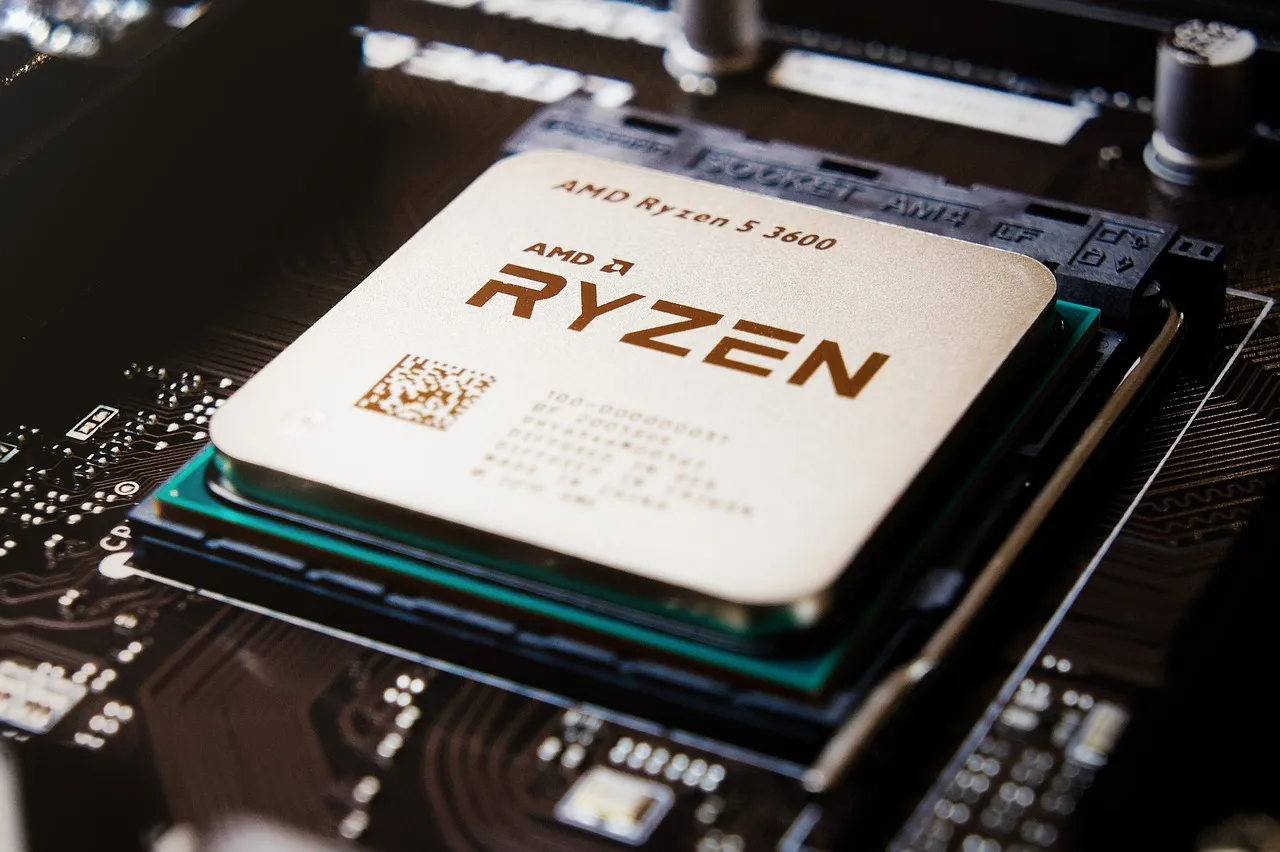
SANTA CLARA, 27 AUG 2026 — AMD's share of x86 client processor shipments reached 30.3 per cent in the second quarter, against Intel's 69.7, the first time it has passed thirty. A year earlier it held 23.9 per cent.
The 30.3 per cent figure is accurate, and the category it measures — the x86 market — is no longer the entire PC market.
What was measured
Mercury Research puts AMD at 30.3 per cent of x86 client shipments for the quarter, up from 29.6 in the first quarter and 23.9 in the same quarter last year — a gain of 6.4 percentage points over twelve months.
Split by segment, AMD took 34.9 per cent of desktop, up 1.8 points sequentially, and 28.9 per cent of mobile, up 0.6.
Thirty per cent of what
The measurement covers the split between AMD and Intel. It excludes Arm processors entirely, which means Apple's silicon and Qualcomm's Snapdragon parts are not in the denominator.
Those are not a rounding error. Apple ships every Mac on its own Arm designs, and Windows machines on Snapdragon have moved from curiosity to a shipping category. AMD's share of all personal computer processors shipped is therefore meaningfully below 30.3 per cent, and no headline has said so.
This is the usual hazard of a market-share statistic. The number's meaning depends on the boundary drawn around it, and this boundary was set when x86 was the only option.
The denominator is the actual story
Follow that thought and the framing inverts. AMD has taken a larger share of a category that is itself losing ground.
Apple's move to its own silicon removed a substantial block of machines from x86 permanently, and the company has just put its first 2nm chip into a US$899 desktop — a mainstream price for a leading-edge part. Qualcomm continues to push Arm Windows laptops. Neither appears anywhere in this quarter's headline figure.
AMD is beating Intel by a widening margin in their decades-long contest. At the same time, that contest is for a share of a market Arm is quietly shrinking.
For AMD, winning is still much better than losing. For anyone reading this as a statement about the processor market as a whole, it is a description of one bracket in a tournament that added another.
Desktop is not where the volume is
The segment split rewards a closer look, because the larger number is attached to the smaller market.
AMD's strongest position is desktop at 34.9 per cent. Desktop is also the smaller and slower-growing part of the client business, and it contains the self-build and enthusiast buyers among whom AMD has been the preferred choice for years — a real constituency, and not the one that moves industry share.
Mobile at 28.9 per cent is the harder and more consequential figure. Notebooks are the volume, and share there is won through design wins with manufacturers that are negotiated years ahead and locked into product cycles. Gaining 0.6 points in a quarter in that segment represents considerably more commercial work than gaining 1.8 in desktop.
The sequential gains tell the same story from the other side. The number moving fastest is in the segment that matters least.
How AMD got here was a manufacturing decision
The cause of the share shift is less about processor design than about manufacturing.
Intel manufactures its own chips. AMD does not, and has not since it separated its fabrication business more than fifteen years ago, buying leading-edge capacity from TSMC instead. For most of the preceding decade that looked like a weakness, because Intel's manufacturing lead was the industry's most reliable advantage.
When that lead faltered, the relationship inverted. AMD's access to the best available process became an advantage it did not have to build, and one it shares with everybody else willing to pay for the same capacity — which is why leading-edge wafer pricing now matters to its cost structure as much as its own engineering does. Samsung has been raising prices on advanced nodes in exactly this market.
A share chart between these two companies therefore partly reflects who had the better foundry position at the time, which is a variable neither fully controls.
The segment nobody reported is the one with the money
Client processors are the visible market. Server processors are the profitable one, and the reason has changed.
A data centre CPU used to be judged on how much work it did itself. In a machine built around accelerators it is increasingly judged on how well it keeps them fed — scheduling, moving data, deciding what runs next — which is why Nvidia designed its own host processor for that role rather than buying one.
This is a threat to both companies in this quarter's chart. Every AI system shipped with a vendor-designed host is a server socket neither Intel nor AMD sold, and those sockets carry far higher prices than the notebook parts that move client share.
A record client share is worth having, and it offers no defence if the fastest-growing part of the market decides to design its own.
Units are not revenue
Shipment share counts processors, not money, and the two diverge whenever the mix does.
A company gaining share in lower-priced parts and a company gaining it in premium ones produce identical movements in a unit-share chart and very different results in an income statement. A unit-share figure makes no distinction between them.
Reporting around this quarter has noted the two companies diverging on volume and on price, which is a hint that the mix is doing something, and neither the direction nor the magnitude is established in the public numbers. Anyone reading unit share as a proxy for commercial position is making an assumption the data does not support.
The figures that would settle it — average selling price by segment, and the revenue share that follows — arrive with results rather than with market-share notes, and get far less attention.
What it means from here
For buyers in this region the practical consequence is mild and real. A competitive x86 market is a buyer's market, and it has been a long time since the last one.
Two credible suppliers competing for notebook design wins produces better pricing and faster refresh cycles than one incumbent with a comfortable majority. That benefit reaches a corporate fleet purchase more directly than any benchmark does.
The longer question is which instruction set the fleet runs at all. Organisations standardising on Windows laptops today are making a choice that used to be automatic and is not any more, and the relevant comparison is no longer Intel against AMD. It is x86 against Arm, on battery life, on software compatibility, and on what the applications people actually use are compiled for.
That comparison is absent from this quarter's headline, which is precisely the point.

View author profile → · Editorial policy