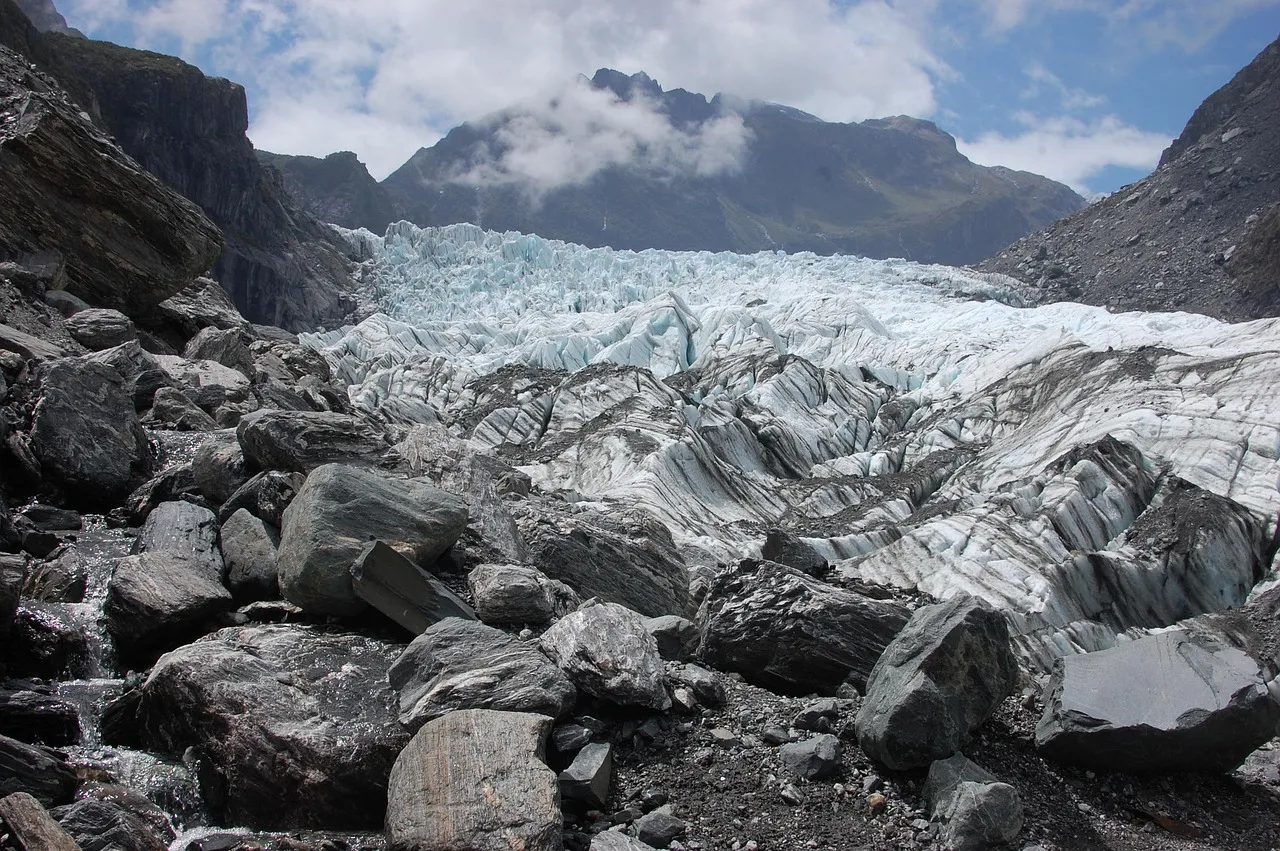
3 OCT 2026 — In many places, Precambrian rock sits directly under far younger Cambrian layers, leaving a long gap in the geological record. Geologists call it the Great Unconformity. One leading explanation is that Snowball Earth ice sheets, roughly 720 to 635 million years ago, scraped kilometres of rock off the continents. A paper published in Science on 1 October argues that some of the evidence for that erosion may instead record cold.
The evidence at issue
Geologists reconstruct how deep a rock once lay by measuring when it cooled through certain temperatures, a method called thermochronology. Because rocks cool as they rise towards the surface, a cooling signal is usually read as burial ending or erosion stripping away the overlying rock. In 2018, a study in PNAS by Keller and colleagues proposed that Snowball glaciers removed a global average of three to five vertical kilometres of crust, enough to explain the Great Unconformity.
What the new paper argues
The authors, Rebecca Flowers and Robert Anderson of the University of Colorado Boulder and Francis Macdonald of the University of California, Berkeley, point out that glaciation also cools the crust directly by holding its surface at 0°C or well below. During the Snowball glaciations, they write, those conditions lasted long enough to cool the entire crustal column.
Their thermal models suggest the cold substantially altered the thermochronometers in the upper quarter to half of the crust. That "refrigeration," with little or no erosion at the same time, may have left a cooling signal mimicking up to 3 to 5 kilometres of glacial erosion, the paper's abstract says. That is the same range Keller's team proposed for erosion.
A long-running argument
The unconformity draws attention partly because it lies just below the first appearance of all major animal groups in the fossil record. In a 2022 PNAS exchange, Flowers and Macdonald argued that existing thermochronological data do not constrain how much rock Snowball glaciers removed. In February, a PNAS study of rocks in North China, led by Zhan, concluded that the most substantial cooling below the unconformity there happened between about 2.1 and 1.6 billion years ago, and attributed it to plate tectonics rather than Snowball glaciation.
The new paper does not say glaciers removed no rock. It argues something narrower: a cooling record from that period cannot be read as erosion alone, because cold left a similar mark.
Beyond Snowball Earth
The authors say the effect extends to thermochronology in other climate events. Any long spell of extreme surface cold could leave a signal that looks like erosion, which matters wherever the method is used to date when mountains rose or landscapes wore down.
What has not been tested
The argument rests on thermal modelling of the crust under Cryogenian conditions. The abstract reports no new rock measurements, and the paper's full text was not available to us, so the model's assumptions about how long and how deep the cold reached cannot be checked here. Keller's case also drew on zircon chemistry and other evidence besides cooling histories, which the refrigeration argument does not directly address.

View author profile → · Editorial policy