26 OCT 2026 — Human fossils dug up in northern China between 1976 and 1979, and filed under several different labels since, came from Denisovans, according to a study of ancient proteins published in Nature on 21 October. Fu Qiaomei's team at Beijing's Institute of Vertebrate Paleontology and Paleoanthropology (IVPP), working with Xing Song and other researchers, found a protein variant seen only in Denisovans in two bones from Xujiayao, a site in the Nihewan Basin dated to between about 199,000 and 138,000 years ago.
The team then went further. Using Xujiayao as a fixed reference point, it drew up a list of skull, jaw and tooth traits it says Denisovans share, and argued that most archaic human fossils of the same age in East Asia belong to the same lineage. That second claim rests on anatomy, not on molecules, and the paper is open about the difference.
What the proteins showed
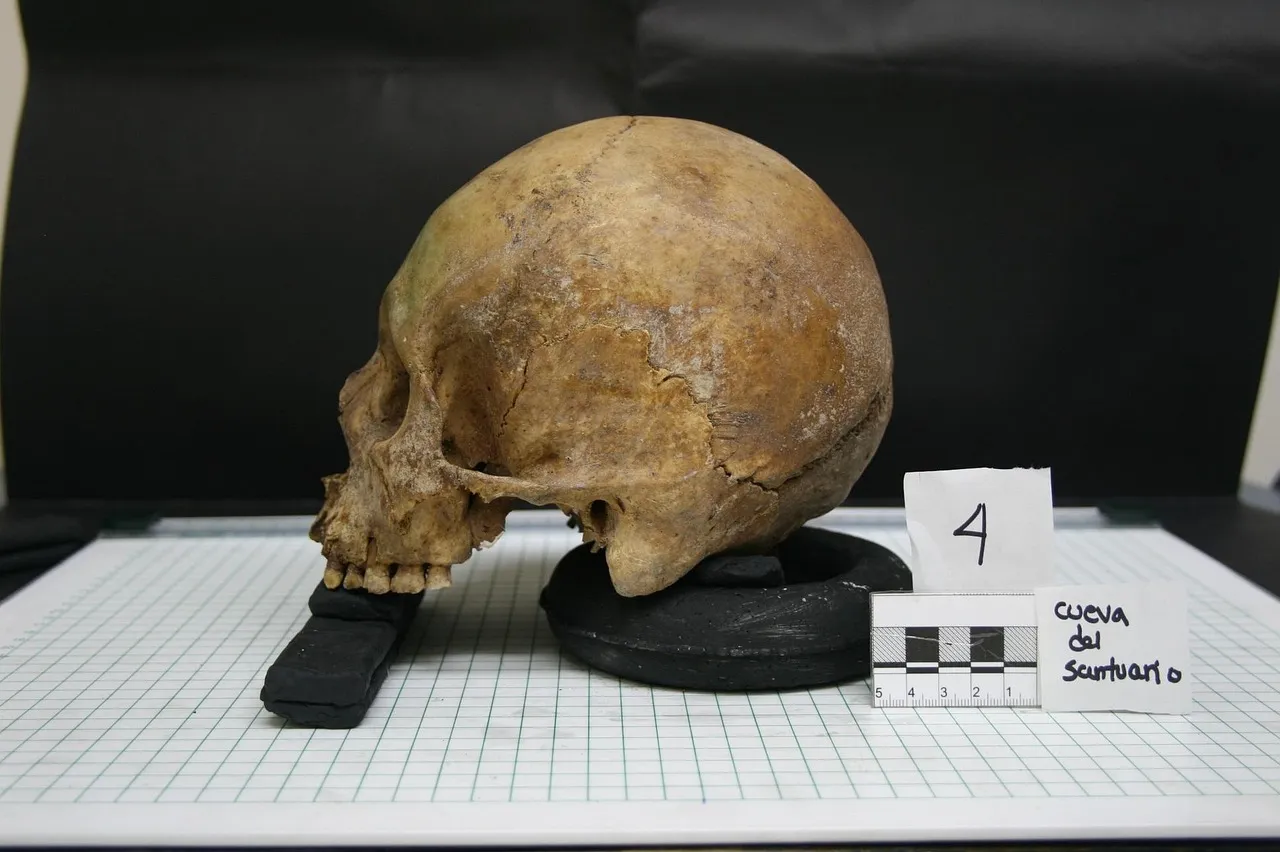
The researchers drilled small amounts of bone powder from two specimens, a parietal bone from the individual known as Xujiayao 6 and a lower jaw from Xujiayao 14. After discarding likely contamination and anything a second search program could not confirm, the researchers kept 18 proteins they judged original to the fossils.
Both specimens carried a change in the collagen protein COL1A2 at position 996, where Neanderthals and living humans have arginine and every Denisovan sampled so far has lysine. According to the paper, the variant "strongly supported their affiliation with the Denisovan lineage". A family tree built from 2,074 amino acid positions across eight proteins placed both Xujiayao samples in one group with Denisova 3 and other Denisovan individuals, with a posterior probability above 99%.
Proteins were the only realistic route. The IVPP's own release, in Chinese, says that after more than 100,000 years in the ground, extracting ancient DNA from the fossils was "close to hopeless" (our translation).
Why Xujiayao was worth settling
Few sites of this period in East Asia match it. The excavations yielded 20 hominin fossils, which the institute says represent at least 16 individuals of different ages, along with stone tools dominated by scrapers and spheroids and plenty of animal bones, all from a clear sequence of layers.
Its identity has never been agreed. Earlier work assigned the fossils to Neanderthals, to early or archaic Homo sapiens, or simply to "archaic Homo". More recently, the very large braincase of Xujiayao 6, about 1,700 ml, made it the type specimen of a proposed species, Homo juluensis. The new paper notes that the whole spread, from 1,120 ml in other East Asian fossils of the period to 1,800 ml in that proposed species, sits inside the range recorded for modern humans, 1,090 to 1,880 ml. It reads the difference as variation within one population.
A checklist for spotting Denisovans
Until now, Denisovans have been known mostly from their genes and from a handful of fragments. The institute says its team built a scoring system of about 200 non-metric traits covering the skull, jaw and teeth, and compared Xujiayao and the Harbin skull, already linked to Denisovans by molecular work, with Homo erectus, Neanderthals and early modern humans.
The resulting profile includes both old and later traits. Denisovans kept a thick skull vault and a low, wide braincase, features reminiscent of Homo erectus, alongside a strongly arched temporal bone more like later humans. The traits the authors treat as distinctive include a low skull with almost parallel side walls seen from behind, a massive brow ridge, a flat cheek region and only a slight forward jut of the face.
Xujiayao has no face. The facial description draws on other fossils, including Harbin, Jinniushan, Hualongdong and Dali.
Stretching across East Asia
When the team set that profile against other East Asian fossils of similar age, including Jinniushan, Dali, Hualongdong and Xuchang, it found the same combination of traits, though spread unevenly across individual specimens. On that basis the authors assign most of them to the Denisovans. The institute says this extends their known range to "almost the whole of the East Asian mainland" (our translation).
Combining fossil and molecular evidence, the paper argues that Denisovans may have been present in East Asia from at least 300,000 until 45,000 years ago. It also counts a lone molar from Cobra Cave in northern Laos, assigned earlier because it resembles the Xiahe jaw, as support for a population spread across Siberia, East Asia and Southeast Asia.
What the evidence does not show
The molecular result covers Xujiayao alone. Jinniushan, Dali, Hualongdong and the rest join the Denisovans on shape, and none of them was tested for proteins in this study.
Even within the Denisovan branch, the proteins could not sort individuals into finer groups, because the samples shared no informative variant beyond COL1A2-996K. The authors write that they "can therefore only determine the Xujiayao hominins to belong to a late Middle Pleistocene East Asian Denisovan population, without further grouping".
The Neanderthal comparison also has a hypothesis attached. East Asian Denisovans resemble early Neanderthals and African and European Homo heidelbergensis more than late Neanderthals. The authors suggest that interbreeding, with modern humans or with local archaic groups, may have changed how later Neanderthals looked as well as their DNA.
Part of a run of protein studies
The paper is the latest of several from the same laboratory. In September, the Chinese Academy of Sciences announced that Fu's team had used the same COL1A2 variant to identify five Denisovan remains at Bianfu Cave in Yunnan, among them the first Denisovan radius, a forearm bone.
The IVPP calls the Xujiayao work the first framework for recognising Denisovans from their own anatomy since the group was named from a Siberian finger bone 16 years ago. If other teams accept the checklist, fossils that once needed a lucky protein sample could be argued over on their shape alone.

View author profile → · Editorial policy