
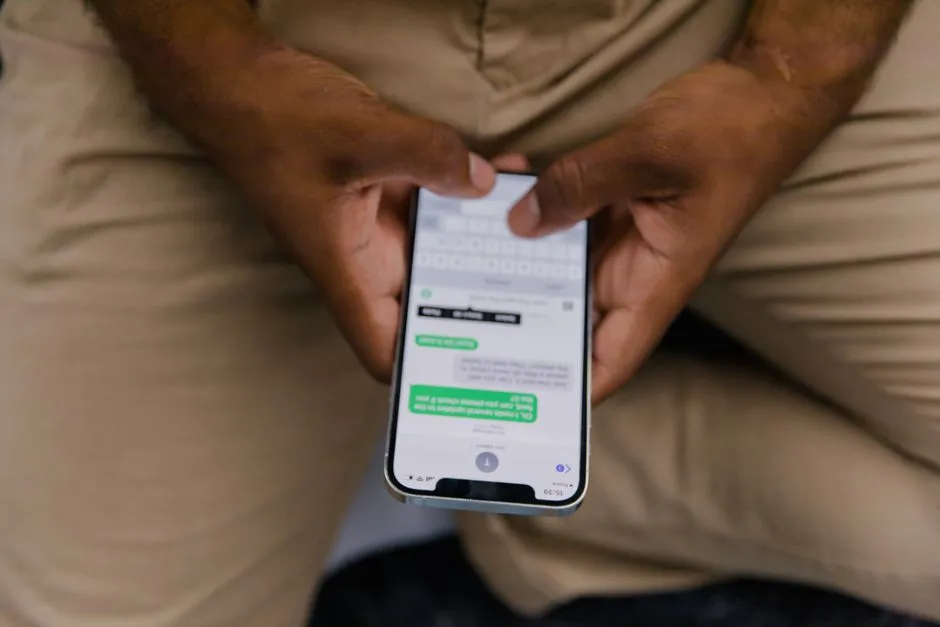
15 OCT 2026 — Singapore's Government Technology Agency (GovTech) and Google DeepMind have built an AI model that reads conversations on a user's phone and warns them when a chat starts to look like a scam. It runs entirely on the device, so neither the government nor Google can see the messages. It is not yet available to the public, and nobody has said which apps will carry it.
Digital Development and Information Minister Josephine Teo announced the project on 14 October in her opening address at Singapore International Cyber Week. She made the case with an example from earlier this year. A seasoned professional joined what looked like a video meeting with Prime Minister Lawrence Wong and other officials, all deepfakes, and transferred nearly five million Singapore dollars.
A local model for local scams
According to Google DeepMind's announcement, the team fine-tuned Gemma, Google's lightweight model, on local scam conversations: impersonations of public institutions, banks and local figures, along with trending regional schemes. The reasoning is that generic models struggle with locally specific deception.
DeepMind puts the stakes in figures. It says scams account for more than half of Singapore's reported crimes and more than S$4 billion in losses since 2019. It adds that social-engineering scams, where the victim is manipulated through a convincing conversation before any money is asked for, now make up as much as 80 per cent of losses.
How it is meant to work
Most scam filtering scans messages on a cloud server, which end-to-end encrypted messaging prevents. This model runs on the handset instead, in two steps to save battery. A small classifier screens incoming messages first. If something looks suspicious, the fine-tuned Gemma model reads a larger slice of the conversation and either confirms the threat or dismisses it as a false alarm. On a confirmation, the phone warns the user to pause before sending money or details.
Google said the model is meant for Android devices, CNA reported, and that details on how users can install it will come later. DeepMind says the model will only access conversations with the user's consent, under the terms of whichever app deploys it, and that rollout will be "carefully phased".
The privacy design
The governance choices are unusually explicit. Fine-tuning took place inside a GCP environment managed by GovTech, which DeepMind calls a sovereign sandbox. Training used anonymised data drawn from scam reports and intelligence feeds, with private and personally identifiable information excluded. The model was tested against synthetic dialogues and local text collections.
"Fighting scams shouldn't mean sacrificing personal privacy," said Mark Chen, GovTech's director of trust and safety. Mrs Teo put the same case in policy terms: "If our devices can recognise signs of manipulation early, we can help potential victims avoid financial or credential loss, while keeping their personal messages on their devices."
Part of a joined-up defence
Mrs Teo framed the model as one link in a chain. A victim might first meet a scammer on social media, move to a messaging app, take a phone call and then transfer money through a bank. No single defender sees all of it. "We must also connect our defences so that a single signal detected in one part of the ecosystem can trigger action elsewhere," she said. She cited the Scam Analytics and Tactical Intervention System run by GovTech and the Singapore Police Force, which she said assesses more than 600,000 websites a day and disrupts about 20,000 malicious ones a month. The same speech set out Singapore's quantum-safe migration timeline.
Questions still to answer
The announcement leaves the practical questions open. It does not say which apps will host the model, how often it will flag innocent chats, or whether iPhone users will get anything comparable. DeepMind says it hopes to share more soon and to explore similar deployments in other countries. Until then, the principle is the useful part. Catching fraud need not mean handing over private conversations.