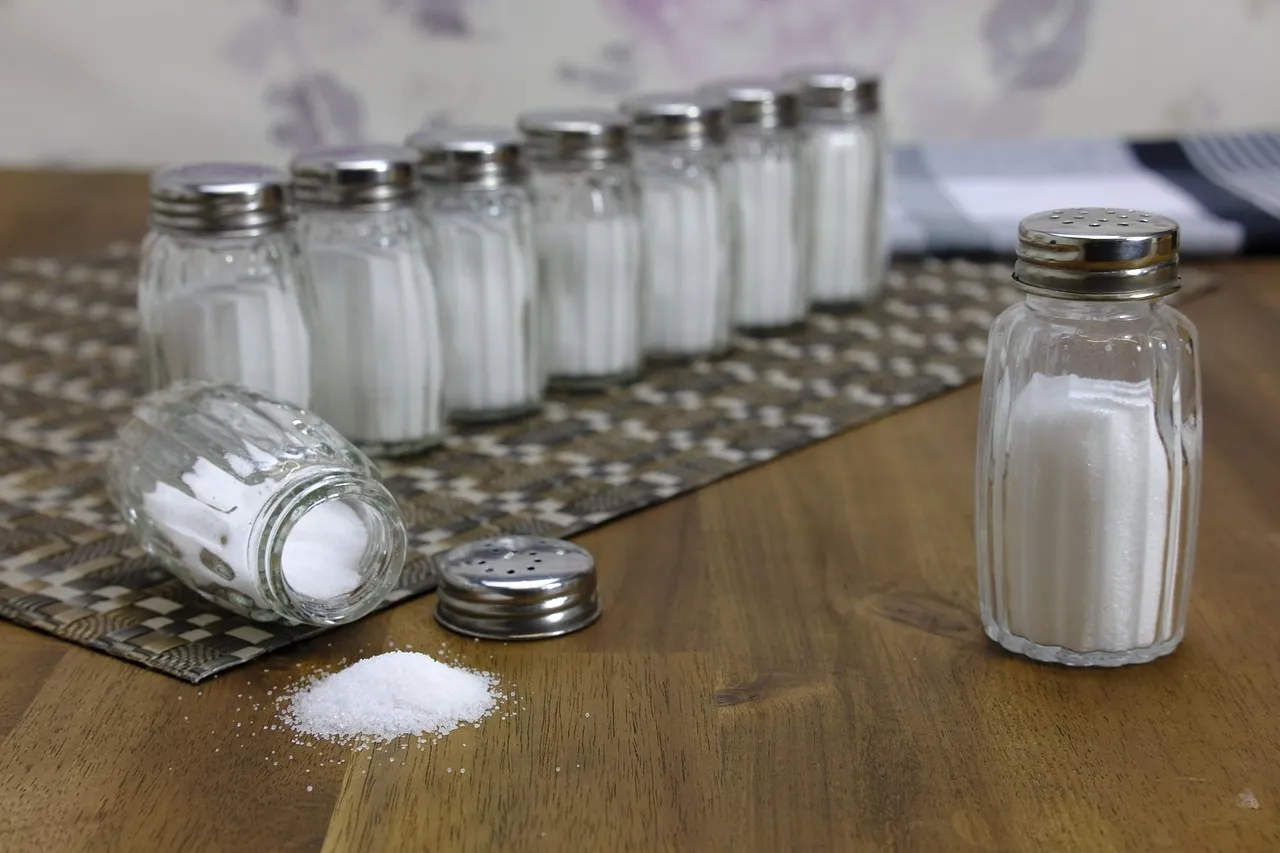
6 NOV 2026 — Replacing ordinary salt with a blend that is one-quarter potassium chloride could prevent 2.96 million deaths a year from heart and kidney disease worldwide, according to a modelling study of 193 countries published in Nature Health on 4 November. Seven of the 13 authors work in Sydney, for UNSW and The George Institute for Global Health. They put the figure at 14.6% of the world's annual deaths from cardiovascular and chronic kidney disease. The estimate is a projection from a model. No trial has tested a worldwide switch, and the authors say one would take decades.
The model assumes all adults aged 25 and over switch to a salt of 75% sodium chloride and 25% potassium chloride, the mix with the strongest trial evidence behind it. Less sodium and more potassium both lower blood pressure, and the model follows that fall in blood pressure through to strokes, heart disease and kidney disease. Beyond the 2.96 million deaths, it projects 10.17 million fewer new cases and 69.43 million disability-adjusted life years saved each year. Those totals are net of deaths the model expects the extra potassium to cause in people with advanced kidney disease.
China dominates the result. Its 1,082,666 projected deaths averted make up 36.55% of the global total in the paper's source data. India follows, then Indonesia, with 167,519 deaths averted a year. By our arithmetic that is roughly one in every 18 deaths the switch would prevent worldwide (2.96 million divided by 167,519). Indonesia ranks above the United States (104,787), yet the country table in the institute's media release lists China, India and the US and leaves Indonesia out. Vietnam is eighth, at 54,585.
Where South-east Asia sits in the model
The paper's figure data give each country's results in bands rather than single numbers. The table below copies those bands for every ASEAN member, China, Japan and South Korea, and adds the two partial scenarios the authors modelled: switching only the salt people add at home, and switching only the salt in processed and restaurant food.
| Country | Deaths averted a year, all salt switched | Share of national heart and kidney deaths averted: all salt | Home salt only | Processed and restaurant salt only |
|---|---|---|---|---|
| China | 500,000+ | 18% or more | 12–14% | 10–12% |
| Indonesia | 150,000–250,000 | 18% or more | 14–16% | 8–10% |
| Vietnam | 50,000–100,000 | 18% or more | 12–14% | 8–10% |
| Japan | 50,000–100,000 | 14–16% | 4–6% | 10–12% |
| Philippines | 10,000–50,000 | 18% or more | 12–14% | 8–10% |
| Malaysia | 10,000–50,000 | 18% or more | 12–14% | 8–10% |
| Myanmar | 10,000–50,000 | 18% or more | 12–14% | 8–10% |
| Thailand | 10,000–50,000 | 16–18% | 10–12% | 6–8% |
| South Korea | 10,000–50,000 | 16–18% | 8–10% | 10–12% |
| Cambodia | 5,000–10,000 | 16–18% | 10–12% | 6–8% |
| Laos | 1,000–5,000 | 18% or more | 12–14% | 8–10% |
| Singapore | 1,000–5,000 | 16–18% | 2–4% | 14–16% |
| Timor-Leste | 500–1,000 | 18% or more | 12–14% | 8–10% |
| Brunei | 0–500 | 18% or more | 8–10% | 12–14% |
In every ASEAN member the full switch would avert at least 16% of heart and kidney deaths, against 14.6% worldwide. In nine of the 11, switching home salt alone does more than switching the salt in bought food. Singapore and Brunei are the two ASEAN members where the pattern turns over, as it does in Japan and South Korea. In Singapore, switching home salt alone would avert 2–4% of these deaths, while switching the salt in processed and restaurant food would avert 14–16%.
The paper's supplementary tables give Singapore's cardiovascular deaths by sex. Adding the women's and men's medians, our arithmetic, gives about 153 cardiovascular deaths a year prevented by the home-salt switch and about 930 by the processed-food switch, a ratio of roughly six to one. Medians do not strictly add, so treat both totals as approximate.
That split rests on an assumption. The model does not measure how much of each country's salt is added at home. It estimates the share from a regression on gross domestic product, so richer economies are assigned more salt from bought food. The authors write that data on this split are scarce and call the comparison between the two strategies "somewhat uncertain".
Who the swap could harm
Potassium can build up in the blood of people whose kidneys cannot clear it, a condition called hyperkalaemia. The model counts this risk among the 239 million adults it estimates have stage 3 to 5 chronic kidney disease. A full switch would prevent 0.75 million cardiovascular deaths a year in that group, by lowering blood pressure, and might cause 0.10 million deaths from hyperkalaemia. That is 7.5 prevented for each one caused, by our division; the paper puts it as more than seven. For Singapore's kidney patients the supplement gives 356 prevented against 46 caused.
The authors argue the harm figure is too high because the model assumes nobody with advanced kidney disease could be kept away from the new salt. In their words, "the magnitude of the projected harm is likely to have been substantially overestimated as a consequence." They also note that the harm has never been shown in trials.
The World Health Organization's guideline on lower-sodium salt substitutes, issued on 27 January 2025, already draws that line. Its conditional recommendation applies to adults in general populations, "excluding individuals with kidney impairments or with other circumstances or conditions that might compromise potassium excretion", and does not cover pregnant women or children. Vivek Jha, a nephrologist at the institute in India who is not among the paper's authors, said in the release: "People with serious kidney disease and those taking medications that significantly raise blood potassium levels need to take precautions."
Limits the authors set out
The inputs come mostly from the Global Burden of Disease study for 2021, and the authors say the data may not reflect each country's present position. Evidence on how potassium affects blood pressure in people without hypertension is thinner than the evidence for sodium, and the projected gains fell when the modelled potassium effect was reduced. Seven sensitivity tests on the full switch gave between 2.02 million and 2.72 million deaths averted. Half replacement gave 1.72 million.
The two partial scenarios also do not add up to the full switch. Home salt alone gives 1.85 million and bought food alone 1.56 million, which sum to 3.41 million, more than the 2.96 million for both together. The supplement says the blood-pressure effect is capped in the model, and a joint switch reaches that cap sooner.
Price is a practical barrier. The paper cites a price for potassium-enriched salt that is on average double the price of ordinary salt.
Bruce Neal, the institute's senior professorial fellow and a joint supervisor of the study, said in the release: "While a global shift from regular salt to a potassium-enriched substitute is aspirational, this is a starting point to get countries thinking about the opportunity".
The institute is already pressing the case in the region. On 2 November it said it had supported a panel in Hanoi where four of Vietnam's medical and nutrition bodies put their names to a consensus statement on cutting sodium, raising potassium intake, iodising salt and front-of-pack labelling.

View author profile → · Editorial policy