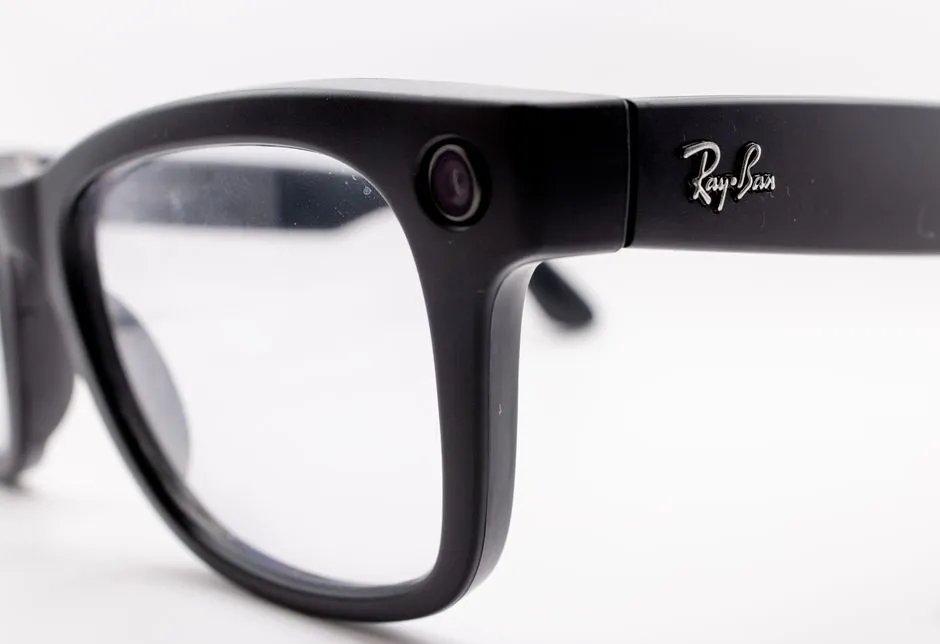
MOUNTAIN VIEW, 15 AUG 2026 — The Pixel Watch 5 will tell you about your blood pressure and your insulin resistance. It measures neither.
Google announced the watch on 12 August at US$399, shipping on 20 August. Its two new health features are both the main selling point and the most carefully worded claim in the launch. The watch offers to track patterns and trends in blood pressure and insulin resistance — words that carry more regulatory weight than medical precision.
What the watch actually does
| What it is not | What it is | |
|---|---|---|
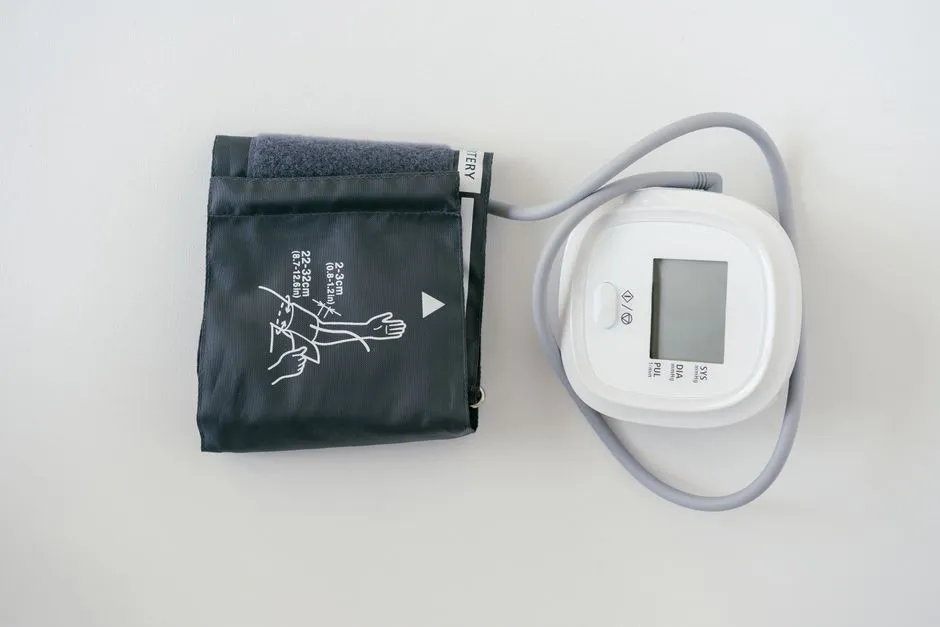
| Blood pressure | Not a cuff reading | Pulse and motion patterns run through an algorithm, returning one trend point roughly monthly |
| Insulin resistance | Not a glucose test | A model reading about a month of heart rhythm, sleep and movement, estimating how efficiently the body handles energy |
Neither feature takes a measurement of the thing it is named after. Both infer a direction of travel from signals a wrist sensor can already collect, over a window long enough that the output is a trend rather than a reading.
This distinction is not a criticism. Inferring a useful signal from cheap, continuous data is a hard engineering problem, and a monthly trend line that flags a change is a different tool from a one-off reading. Precision still matters: the features are named for conditions normally measured with a cuff or a blood test, and the watch replaces neither.
Insulin resistance is the more significant of the two
Blood pressure estimation from wearables has been attempted repeatedly. Insulin resistance on a consumer wrist device is new, and it points at something that matters here more than in most markets.
Insulin resistance is the condition that precedes type 2 diabetes, often by years, and it is usually invisible until a blood test finds it. Southeast Asia carries a heavy and rising diabetes burden, and does so at lower body-mass thresholds than Western reference ranges assume — a pattern documented well enough that several regional health authorities use lower cut-offs for screening.
A device that can flag a worsening trend early, especially in a population that develops the condition at lower body-mass thresholds, could be useful. Its utility depends on the estimate being good enough to act on, and that has not been publicly established.
The regulator has not agreed
The features are not cleared by the United States Food and Drug Administration — a fact most coverage has treated as a footnote.
The insulin resistance feature launches in Europe, where a CE mark and cooperative regulators allow it to ship. In the United States it waits on the FDA, with trend readouts rolling out behind disclaimers. The features are not exclusive to the new watch either — blood pressure and insulin trends are slated for the Pixel Watch 3, 4 and 5 and the Fitbit Air this autumn.
A device shipping a health inference in one jurisdiction while the same inference waits for clearance in another is not unusual, and it is not wrongdoing. The result is that a feature's availability on your wrist says more about a local regulatory regime than about the underlying evidence. The two are easy to confuse when a new metric simply appears in an app update.
Which is where this gets regional
Google's rollout list for the wider Pixel launch names Malaysia and Singapore alongside the United States, United Kingdom, Canada, Australia, Japan and India.
Both have their own medical-device regimes, and both draw the line in roughly the same place: software that diagnoses, treats or monitors a condition is regulated, while software offering general wellness information is not. A monthly trend estimate that names a clinical condition sits close to that line, and which side it falls on is a decision for the local authority rather than for the marketing copy.
For a user here, this means a feature might appear on time, late, or not at all, and it might show up without the clinical framing used elsewhere. None of those outcomes says anything about the accuracy of the underlying estimate. Do not read local availability as validation, and do not read local absence as a verdict.
How to use a number like this
If you own one of these watches, treat the trend as a prompt rather than a finding.
A worsening insulin-resistance trend is a reason to have an actual blood test, which is cheap, widely available across the region and definitive in a way a wrist estimate is not. A stable trend is not evidence that you are fine, because a model reading heart rhythm and sleep can be wrong in both directions and has no visibility of the things that would change the answer.
The most dangerous outcome is a false reassurance. A person with a family history, meaning to get tested, might see a flat trend line on their watch and decide not to bother. That is a worse result than having no feature at all, and it is a risk a fine-print disclaimer does not fix.
The rest of the launch
The watch arrives alongside four phones — the Pixel 11 at US$899, the 11 Pro at US$1,099, the 11 Pro XL at US$1,299 and the 11 Pro Fold at US$1,899 — plus a US$30 Pixel Tag tracker with ultra-wideband and a year of battery.
All the phones run the Tensor G6. Google claims it delivers 20 per cent better power efficiency, 25 per cent faster browsing and 15 per cent faster app loading than the G5, with tensor processing units 50 per cent more powerful. These are vendor figures on unstated workloads.
The watch also adds sleep breathing quality monitoring with minute-by-minute blood oxygen, and a readiness score. Agent features for groceries, ride booking and business calls launch in the United States first.
What we could not establish
The accuracy of either health estimate. No published validation study, sensitivity or specificity figures, or comparison against cuff measurement and standard insulin-resistance testing was available, and Google has not stated the error range on either output.
It also remains to be seen whether the features will be offered in Malaysia or Singapore, and under what classification. Other open questions include the precise wording of the disclaimers, the populations used to train and validate the models — critical for a metric with known ethnic variation — the FDA submission status and expected timing, and whether the monthly cadence is a clinical choice or a confidence-driven one.
What to watch
Whether validation data is published. A wrist-based insulin-resistance estimate is a substantial claim, and until somebody outside Google can check it against blood work, it is an interesting product feature rather than a screening tool.
Whether regional regulators classify it. A ruling from Singapore's or Malaysia's authority would be the first real test of where a named-condition trend estimate sits between wellness and medical device in this region.
Finally, whether clinicians here start seeing patients who arrive with a watch reading. That is the point at which the feature stops being a specification and starts changing consultations, for better or worse.

View author profile → · Editorial policy