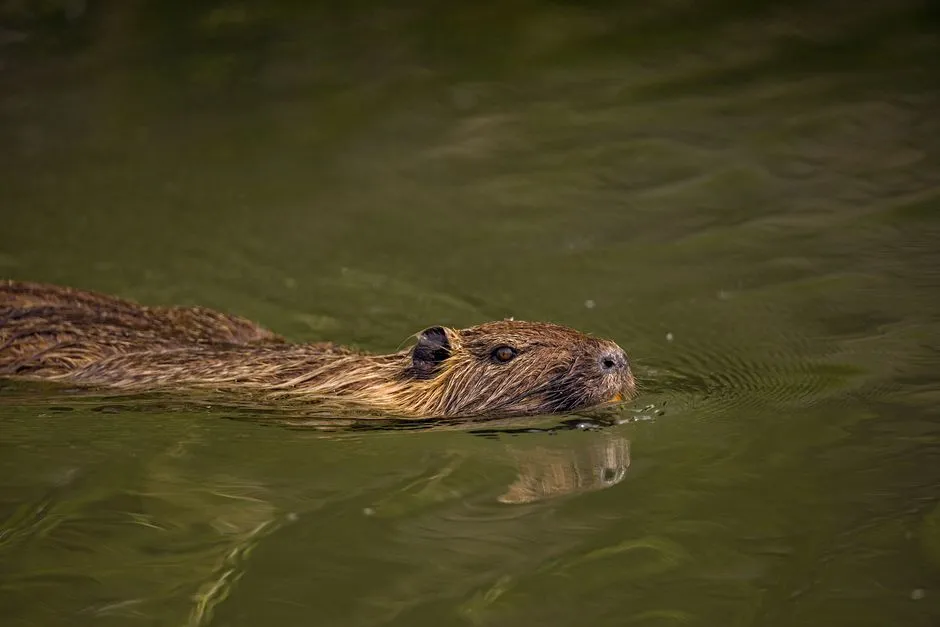
30 SEP 2026 — A nearly complete fossil from north-east China shows a mammal that swam with webbed feet like a platypus and steered with a flattened, tapering tail like a coypu, a South American rodent. It also appears to have replaced some teeth more than once, unlike living mammals.
The animal, named Dongoconodon platycauda, lived in what is now Liaoning province during the Early Cretaceous. The description was published in Nature Communications on 28 September.
The fossil
The skeleton was collected in 2016 at Changzigou, near Lingyuan in Liaoning, from rocks of the Jiufotang Formation. The paper dates those rocks to about 120 million years ago. The specimen is almost complete, missing only the bones of the left forearm and upper arm, and is kept at the Inner Mongolia Museum of Natural History in Hohhot.
The name honours the palaeontologist Junshe Dong. Platycauda means "flat tail". The authors are based at institutions including Yunnan University and Nanjing University in China and the Carnegie Museum of Natural History in the United States.
Built for water
Its hands and feet are broad and long compared with its limbs, with bones that let the fingers and toes spread apart. Several finger bones have small flanges where, in a platypus, the webbing attaches. The authors conclude the feet were webbed and did most of the work of pushing the animal through water.
The tail is not a platypus paddle. Its bones are flattened near the base and middle, then narrow to a point, matching the nutria, or coypu, which uses its tail to steer and stay stable rather than to push. A statistical comparison with nine semiaquatic species placed Dongoconodon among them.
That combination, platypus-style propulsion with a coypu-style tail, differs from the three other semiaquatic Mesozoic animals the authors compared it with.
Teeth that kept coming
Most living mammals have two sets of teeth, milk teeth and adult teeth. That pattern is called diphyodonty and has long been treated as a defining mammal trait, tied to precise chewing and to growth that stops at adulthood. Reptiles replace their teeth repeatedly throughout life.
Dongoconodon appears to have had more than two generations of teeth at some positions in all four tooth types. The authors say it is the only mammal they know of with that pattern across the whole set. Its jaws and front teeth suggest it ate meat, and they link the repeated replacement to that diet and way of life.
Is it the first swimmer?
Coverage of the discovery, citing a Nanjing University press release, calls it the earliest confirmed swimming member of the mammal crown group, the lineage that includes all living mammals. Some reports distinguish it from the Jurassic Castorocauda, a swimmer that sits just outside that group.
The paper itself is more careful. It notes that two other eutriconodonts from China, Liaoconodon and Yanoconodon, have also been interpreted as semiaquatic, and says only that Dongoconodon swam differently from them. The coverage also gives the age as about 125 million years, while the paper says about 120 million.
A clue about the ear
The fossil also preserves part of the ear. A strip of cartilage that once linked the jaw to the middle-ear bones barely touches the jaw, which the authors read as support for the idea that it detached from the jaw before it detached from the ear. Their broader point is that the defining mammal traits, from tooth replacement to the separate middle ear, did not arrive as a single package.

View author profile → · Editorial policy