1 OCT 2026 — How much Antarctica will add to the oceans is one of the biggest unknowns in sea-level forecasts. A study published in Nature Geoscience on 30 September narrows it, finding that the continent will very likely lose more ice than it gains this century even if the world cuts emissions sharply. Under very high emissions, the ice sheet could add up to 25.4 centimetres to global sea level by 2100.
The result also weighs in on a long-running disagreement among ice-sheet models over whether extra snowfall in a warmer climate could offset ice lost to a warming ocean. It finds that it cannot.
Why Antarctica is hard to forecast
A projection of Antarctica's contribution starts with an emissions scenario. Climate models turn that into ocean and air temperatures, and ice-sheet models then work out what those temperatures do to the floating ice shelves and to ice sliding over the bedrock beneath. Each stage feeds the next, so differences multiply.
The paper notes that in the main international comparison of ice-sheet models, projections for 2100 under very high emissions ranged from Antarctica lowering sea level by more than 7 centimetres to raising it by more than 40.
How the team narrowed it down
Researchers from institutions in Hong Kong, Australia, New Zealand and the United States trained a machine-learning model on that archive of simulations. It mapped each result to the assumptions behind it, and could then produce in a fraction of a second what took the original models days.
That let them run millions of combinations and keep only the ones that matched satellite measurements since 2002, which weigh the ice sheet through tiny changes in Earth's gravity. "Only scenarios that were able to match what the satellites have seen since 2002 made the cut," the researchers wrote in The Conversation.
What the surviving scenarios say
The study estimates at least a 0.92 probability that Antarctica is committed to net ice loss this century, even under aggressive emission cuts, including a path consistent with limiting warming to 1.5°C. Higher emissions very likely mean more loss by 2100.
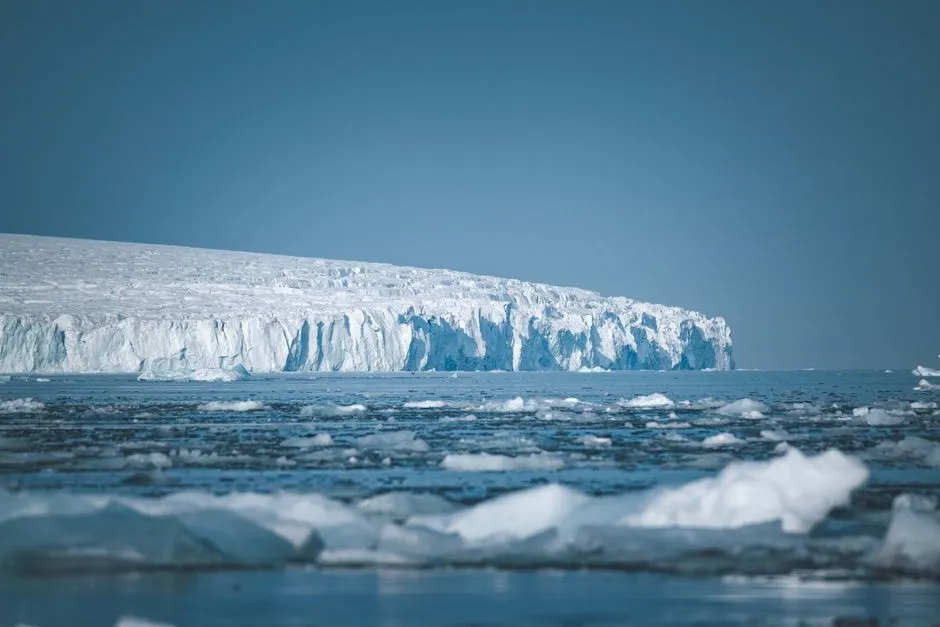
The upper estimate comes from a cascade the authors see under very high emissions. Warmer water thins floating ice shelves until they break up, and once they are gone the glaciers behind them speed up towards the sea. That is how the 95th-percentile figure reaches 25.4 centimetres; the median in the same scenario is 15.7.
The team tested more than 20 physical assumptions. Forecasts would sharpen most, the authors say, with a better grasp of how ice shelves react to a warming ocean and how ice slides over bedrock, along with how fast the ocean and air around Antarctica warm.
What is still missing
The archive models leave out some processes, including ice cracking and breaking and changes in the lakes and rivers under the ice, so the machine-learning model cannot learn about them. "Our study is far from the final word," the authors write.
What it means for coasts
Antarctica is only one source of sea-level rise, alongside Greenland, mountain glaciers and warming seawater. For low-lying coastal cities, including many in Southeast Asia, the finding narrows one of the largest uncertainties planners face and points toward more rise rather than less.

View author profile → · Editorial policy