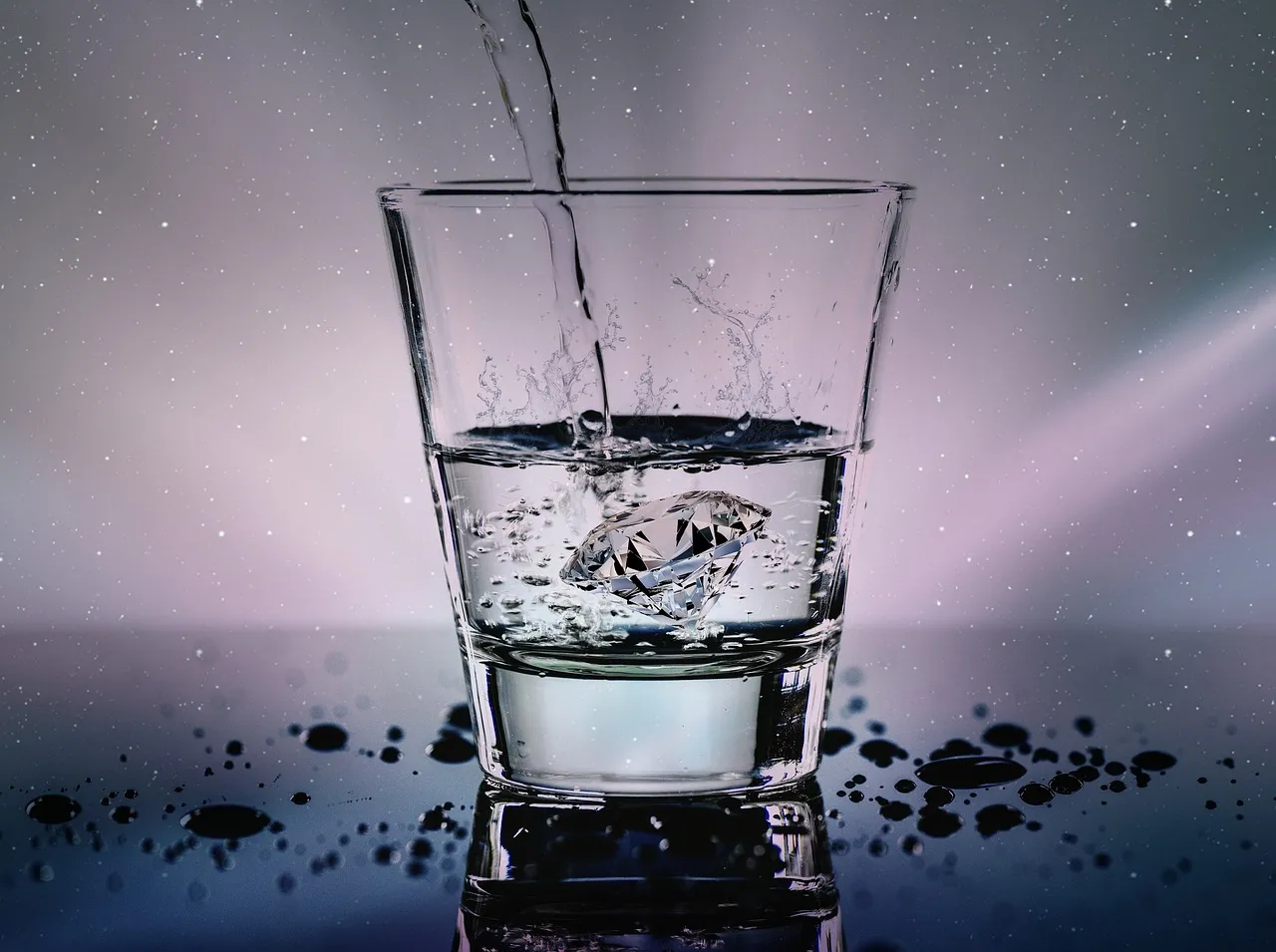
"Eight glasses of water a day" is wellness gospel, printed on posters and repeated by trainers. But as settled science, it isn't. When a physiologist went looking for the studies behind "8 × 8" (eight eight-ounce glasses), he came back empty-handed.
Drink when you are thirsty and with meals. The rule itself is a slogan with no evidence trail behind it, and once you have seen where it came from you can stop counting glasses.
This is the fourth guide in our formula-pedigree series, after the BMI, BMR and TDEE guide, the heart-rate zones guide, and the 90-minute sleep-cycle guide. Same house rule: trace a popular formula to its source and mark where it is honest. We run a water intake calculator too, so it faces the same test.
The 8×8 rule has no birth certificate
The debunking is old and has not been overturned. In 2002 the physiologist Heinz Valtin published an invited review in the American Journal of Physiology asking, in effect, whether anyone could show their work. He concluded bluntly: "No scientific studies were found in support of 8 × 8." Surveys of fluid intake across thousands of healthy adults, he wrote, strongly suggested such large amounts are not needed.
So where did the number come from? Valtin offered a plausible origin, framed carefully as a hypothesis rather than a proven lineage: an old Food and Nutrition Board recommendation of roughly one millilitre of water for each calorie of food eaten. For a typical adult diet that lands near two to two-and-a-half litres a day, close enough to eight glasses to pass for the same advice.
The catch sits in the very next sentence of that recommendation: "most of this quantity is contained in prepared foods." That qualifier, Valtin suggested, got dropped along the way. With that qualifier, the figure describes total water from all sources, food included. Without it, the same number becomes a demand to drink that much water on top of meals. A missing footnote created a chore.
No primary source we could verify pins the rule to a specific year or founding document. Valtin himself could not. The mechanism is documented; an exact origin date is folklore, and we will not invent one.
What the nutrition authorities actually publish
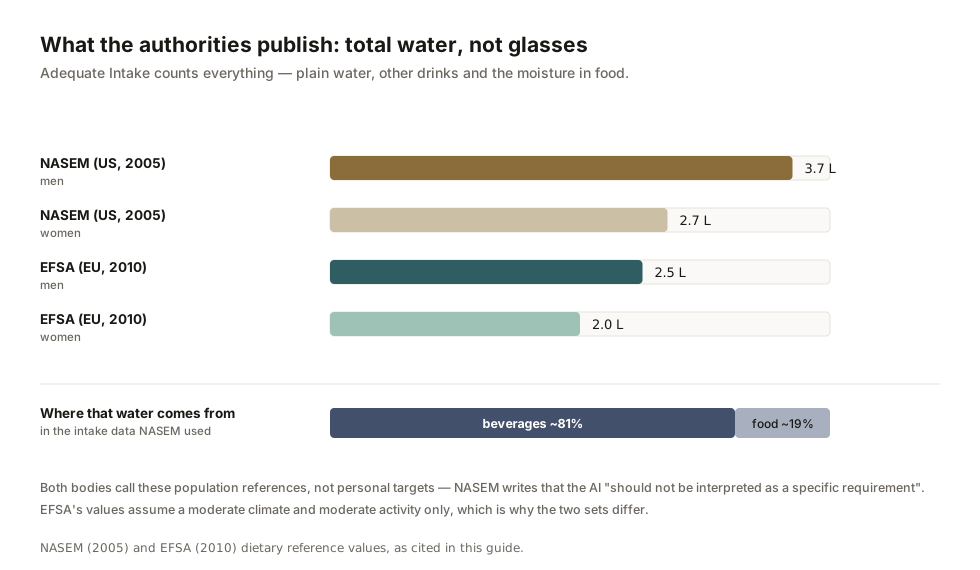
Real reference numbers exist, but they are not tidy slogans. Two of the most cited bodies, the US National Academies (NASEM, formerly the Institute of Medicine) and the European Food Safety Authority (EFSA), both publish an Adequate Intake for total water, counting everything: plain water, other drinks, and the moisture in food.
| Total-water Adequate Intake | NASEM (US, 2005) | EFSA (EU, 2010) |
|---|---|---|
| Men, per day | 3.7 L (about 125 fl oz) | 2.5 L |
| Women, per day | 2.7 L (about 91 fl oz) | 2.0 L |
| What it includes | All beverages + food moisture | All beverages + food moisture |
| Scope assumed | Broad US intake survey data | Moderate climate, moderate activity (PAL 1.6) only |
| Is it a personal target? | No, a population reference | No, a population reference |
The gap between NASEM's 3.7 litres and EFSA's 2.5 is a matter of scope, not a dispute over human needs. EFSA's values apply only to moderate temperature and moderate physical activity; NASEM's figure comes from what large populations were observed to consume, across more climate and habit.
Two lines from the NASEM report do more work than any specific number. On whether the figure is a rule to hit: because a wide range of intakes is compatible with normal hydration, "the AI should not be interpreted as a specific requirement." On how most people manage it: fluid intake "driven by the combination of thirst and the consumption of beverages at meals, allows maintenance of hydration status and total body water at normal levels." For a healthy person, thirst plus drinking with meals is the system working as designed.
Where the water comes from matters too. In the intake data NASEM used, beverages supplied about 81 percent of total water and food the rest. The soup, fruit, rice and yoghurt on your plate quietly do a fifth of the job, which the eight-glasses framing ignores.
Coffee counts. So does tea.
The myth that caffeinated drinks do not count because of a diuretic effect is wrong at ordinary intakes.
Valtin addressed it in the same 2002 review: caffeinated drinks "should indeed count toward the daily fluid intake in the vast majority of persons." The UK's NHS puts it plainly. Water, lower-fat milk and sugar-free drinks, "including tea and coffee, all count". The US CDC agrees that unsweetened coffee and tea contribute, and notes that moderate caffeine, up to about 400 mg a day (roughly two to three cups of coffee), fits a healthy diet for most adults.
Caffeine's diuretic effect at the doses in a normal cup is too small to cancel out the water the drink delivers. Your morning coffee and afternoon tea are part of your hydration, not a debt against it — by volume a brewed cup is mostly the water it was made with, the proportion our coffee-to-water ratio calculator works out for a given brew method. How long the caffeine itself lingers is a separate question from hydration, and our caffeine half-life calculator traces how a stated dose falls away over the hours after the cup. Sweetened versions add sugar, a separate issue.
When you need more
The population averages apply to ordinary conditions; several situations, named in the primary sources, increase fluid needs.
Heat and hard activity. EFSA is explicit that its numbers hold only for moderate temperature and moderate activity, so a hot, humid day of outdoor work in Singapore or Kuala Lumpur sits outside that assumption as sweat losses climb. The NHS advises drinking more in a hot environment and during long activity, so a moderate-climate reference is a floor for active tropical life, not a ceiling.
Pregnancy and breastfeeding. NASEM sets a higher total-water AI of roughly 3.0 litres in pregnancy and about 3.8 litres during lactation. EFSA frames the same idea as increments: about 300 mL a day more in pregnancy, around 700 mL a day more while breastfeeding.
Illness. The NHS lists illness and recovery among reasons to drink more.
The "more is always better" idea is its own myth. NASEM set no upper intake level for water, but flagged that acute water toxicity has occurred when people drink large quantities fast, beyond the kidney's excretion rate of roughly 0.7 to 1.0 litres per hour. Valtin described the same danger as water intoxication: a dilution of blood sodium (hyponatremia) that has caused confusion and, in severe cases, death. Forcing a large target on a schedule is the behaviour to avoid.
Singapore uses the folk unit, responsibly
Singapore's own Health Promotion Board, through HealthHub, still speaks in glasses: "Aim for 6-8 glasses, about 2 litres of fluids daily, unless your doctor says otherwise." Not eight; six to eight, tied to a litre figure, with a medical override attached.
The HPB version is defensible because of the context it provides. Its nutrition pages note that the roughly two-litre guide includes all fluid, food moisture included, the very caveat Valtin says went missing from the slogan. It also hands you a check that beats any calculator: you should urinate several times a day, and your urine should be pale and close to odour-free; dark and strong-smelling means drink more. And it lists exercise, perspiration, pregnancy, breastfeeding, illness, age, body size and the weather as reasons individual needs vary. That is the folk unit used well, where the bare "8 glasses, no exceptions" poster strips off everything that made it safe.
Our own calculator, honestly
We run a water intake calculator, and it does not use the NASEM or EFSA method. It scales to body weight: a baseline near 0.033 litres per kilogram (33 mL/kg), times an activity factor from 1.0 to 1.5 and a climate factor adding 25 percent for tropical conditions. Pregnancy and breastfeeding add a flat 0.3 or 0.7 litres, mirroring the EFSA increments. It then splits the result roughly 80 percent drinks, 20 percent food, near the NASEM ratio.
The per-kilogram baseline is a fitness-industry convention, not a NASEM or EFSA figure. It gives a personalised-feeling estimate that usually lands in a sensible range (a 70 kg sedentary adult in a temperate climate comes out near 2.3 litres), but it gets there by a different road than the authorities travel.
We corrected the tool's copy on 21 July 2026 to say exactly this. Its formula-source label now reads: "Weight-based heuristic (0.033 L/kg) with activity and climate multipliers — a fitness convention, not a NASEM/EFSA equation; reference values differ (see our hydration guide)." The in-tool guidance now cites HPB's 6–8 glasses figure rather than the inflated numbers it carried before. Use the calculator as a rough personalised nudge, and the NASEM, EFSA and HPB figures when you want the authority values.
When this stops being general advice
The guidance above is for healthy adults with normally functioning kidneys. This is a critical qualifier. NASEM could decline to set an upper limit only because healthy kidneys excrete the excess; the safety case rests on organ function that some readers cannot assume.
If you have chronic kidney disease, heart failure, or any condition for which fluid is restricted, your daily target is a clinical decision, often lower than any general figure here. We will not print a number for those situations; the right one comes from your own clinician, which is why HealthHub attaches "unless your doctor says otherwise" to its glasses figure. If a doctor has given you a fluid target, that target supersedes any guidance in this article.
Frequently asked questions
Do I really need eight glasses of water a day?
Not as a fixed rule. No primary study supports the 8×8 figure, and it originally meant total water including food, not eight glasses to drink on top of meals. Most healthy adults stay hydrated by drinking to thirst and with meals, per NASEM.
Does coffee or tea count toward my daily fluid?
Yes. The NHS says tea and coffee count, the CDC agrees that unsweetened coffee and tea contribute, and Valtin's review found caffeinated drinks should count for most people. The diuretic effect at normal doses is too small to undo the fluid in the cup.
How much water should I drink in Singapore's climate?
HPB suggests 6–8 glasses (about 2 litres) of fluid daily for adults, unless a doctor advises otherwise, and notes that tropical humidity and heavy sweating raise the need. The simplest self-check is urine colour: pale and near odourless means enough.
Can you drink too much water?
Yes, though uncommon. Drinking large amounts very fast, beyond the kidney's excretion ceiling of roughly 0.7 to 1.0 litres per hour, can dilute blood sodium and cause hyponatremia, rarely with fatal results. Drink to thirst rather than to a stopwatch.
This guide is general information, not medical advice, and does not diagnose any condition. If you have kidney disease, heart failure, another fluid-restricted condition, or you are pregnant, follow the fluid guidance your own clinician gives you.
- Valtin H., "Drink at least eight glasses of water a day." Really? Am J Physiol 2002 (PMID 12376390) (accessed 21 Jul 2026)
- No scientific evidence for "8 glasses a day" — Dartmouth Medical School release on Valtin 2002 (accessed 21 Jul 2026)
- Dietary Reference Intakes for Water (Ch. 4) — NASEM (IOM), 2005 (accessed 21 Jul 2026)
- Scientific Opinion on Dietary Reference Values for Water — EFSA, 2010 (accessed 21 Jul 2026)
- About Water and Healthier Drinks — CDC (accessed 21 Jul 2026)
- Water, drinks and hydration — NHS (accessed 21 Jul 2026)
- Dehydration: Risk, Symptoms and Prevention — HealthHub (SG HPB) (accessed 21 Jul 2026)
- The Best Refreshment — HealthHub (SG HPB) (accessed 21 Jul 2026)

View author profile → · Editorial policy