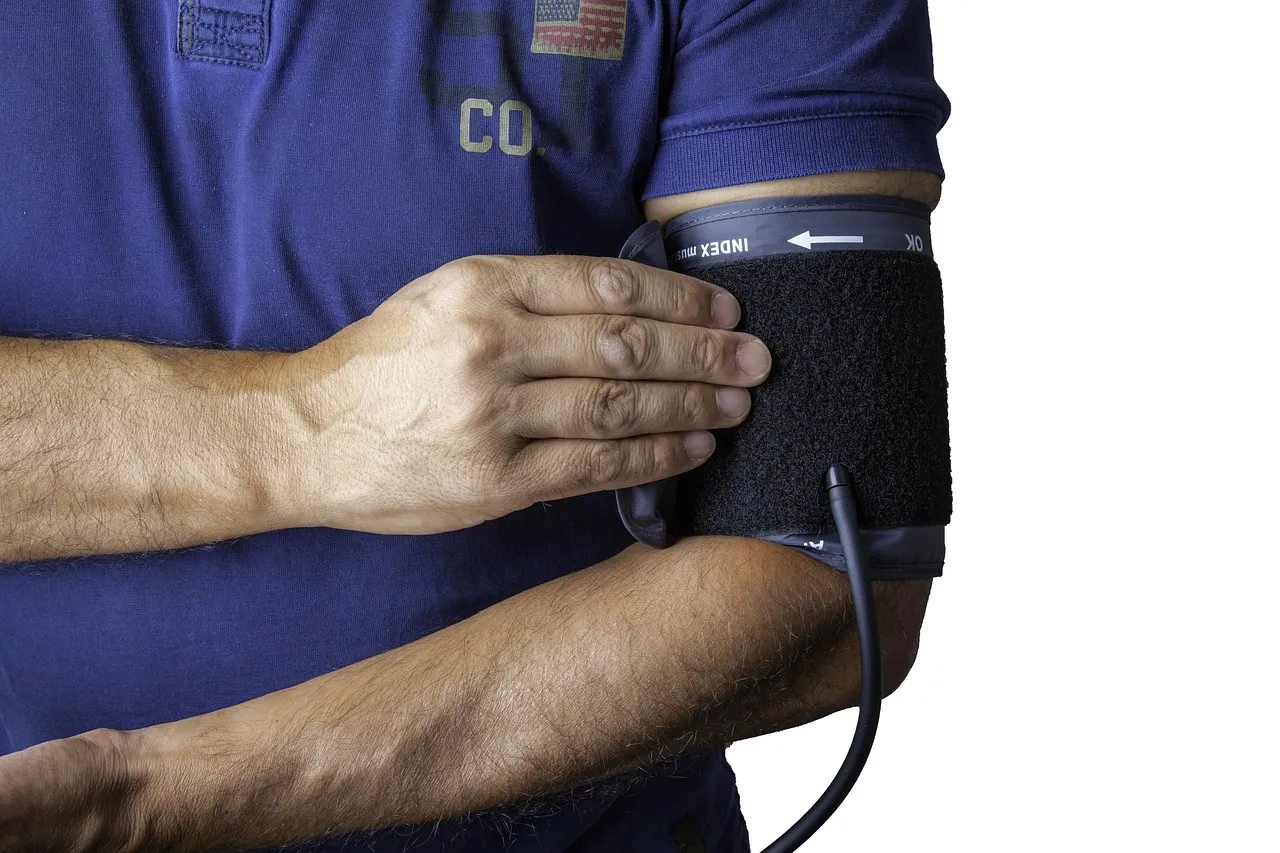
A reading of 135 over 85 makes you hypertensive in the United States. In Singapore it does not. In Taiwan it does again, and in Japan it has a different name from either.
Nothing about the person changes. What changes is which document the clinic in front of you follows, and those documents have been drifting apart since 2017.
Four bodies, four tables
The American guideline, replaced in 2025 but keeping the 2017 classification intact, runs:
| Category | Systolic | Diastolic | |
|---|---|---|---|
| Normal | under 120 | and | under 80 |
| Elevated | 120–129 | and | under 80 |
| Hypertension stage 1 | 130–139 | or | 80–89 |
| Hypertension stage 2 | 140 or above | or | 90 or above |
The European cardiology guideline of 2024 abandoned grades altogether and uses three bands: non-elevated below 120 and below 70, elevated from 120 to 139 or 70 to 89, and hypertension at 140 or 90. Its stated reason is that risk is continuous rather than binary.
The European hypertension society kept the older scheme in 2023 — optimal, normal, high-normal, then grades one to three — and said so in as many words, that the classification and the grades remain as before. The international society's 2020 guideline is similar but sets its high-normal floor at 85 diastolic rather than 80.
The World Health Organization publishes no staging table at all. Its 2021 guideline says outright that it does not address measurement or diagnosis; it is a treatment document. Anyone citing the WHO for a threshold is citing something that is not there.
The same word, two different ranges
Here is the trap that will catch a reader who compares two documents without checking definitions. Both the American and the 2024 European guidelines have a category called elevated.
The American one means 120 to 129 systolic and under 80 diastolic. The European one means 120 to 139 or 70 to 89. Different width, different diastolic floor, same word.
There is a second collision in the same field. The European hypertension society uses stages one to three for complications — stage one is uncomplicated hypertension, stage three has established cardiovascular disease — while the American guideline uses stage one and two for the numbers themselves. Identical vocabulary, unrelated meanings.
Five of six Asian guidelines kept the old line
| Country | Diagnosis at | Home | Main target |
|---|---|---|---|
| Singapore | 140/90 | 135/85 | under 130/80 at high risk |
| Malaysia | 140/90 | 135/85 | under 140/90 |
| Japan | 140/90 | 135/85 | under 130/80 office, 125/75 home |
| China | 140/90 | 135/85 | under 140/90, then 130/80 if tolerated |
| Korea | 140/90 | 135/85 | under 130/80 at high risk |
| Taiwan | 130/80 | 130/80 | under 130/80 |
The pattern is consistent and it is not the one the headlines suggested. Five of these six moved the treatment target towards 130/80 while leaving the diagnostic line at 140/90. Only Taiwan moved the line itself.
Malaysia's guideline is explicit about declining: although there is an attempt to redefine hypertension at 130 or 80, the committee recommends that the old recommendation remains. China's story is sharper still — a professional society proposed 130/80 in November 2022 and the national health commission publicly declined it two days later, on the ground that self-published society guidelines are not national diagnostic standards. The 2024 national revision reaffirms 140/90 in its own text.
Japan renamed its categories in 2025, with a result that inverts Western intuition: Japanese high-normal is 120 to 129, and 130 to 139 over 80 to 89 is called elevated — the band the Americans call stage one hypertension.
What Singapore actually follows
Singapore's most recent national guidance is not the 2017 ministry clinical practice guideline most often cited but an Agency for Care Effectiveness clinical guidance of December 2023. It sets grade 1 hypertension and above at 140 over 90, describes 130 to 139 over 85 to 89 as high-normal, and — the part that matters practically — starts acting from a clinic reading of 130 over 85.
Its targets are stratified: under 130 over 80 for high or very high cardiovascular risk, under 140 over 90 otherwise, and under 150 over 90 for frail patients or those over 80. It also sets a floor, instructing that blood pressure should not be lowered below 120 over 70.
Singapore's position is therefore a hybrid: the diagnostic line remains conservative, but the intervention threshold is not.
Thirty-one million people, four million prescriptions
The 2017 American change is usually reported as having made nearly half of American adults hypertensive. That is true and it is the less interesting half of the finding.
The analysis by the guideline's own authors put prevalence at 45.6% against 31.9% under the previous standard — 103.3 million people against 72.2 million, an increase of 31.1 million. But the proportion for whom medication was recommended moved only from 34.3% to 36.2%, or 77.7 million to 81.9 million. About 4.2 million more people were advised to take a drug; roughly 27 million were relabelled and advised to change what they eat and how much they move.
The largest single group newly classified was adults aged 20 to 44, at 13.9 million. Quoting the prevalence figure without the prescription figure describes something more dramatic than what happened.
Your home monitor uses a lower number for the same risk
Home and ambulatory blood pressure thresholds are set lower than office ones. They are equal-risk mappings rather than health targets: 135 over 85 at home is not healthier than 140 over 90 at the clinic, it carries the same cardiovascular risk.
| Office | Home | Daytime ambulatory | Night | 24-hour |
|---|---|---|---|---|
| 140/90 | 135/85 | 135/85 | 120/70 | 130/80 |
| 130/80 | 130/80 | 130/80 | 110/65 | 125/75 |
Notice the second row. Once the office threshold is 130 over 80, the home threshold is the same number — the offset disappears. The familiar "subtract five" is a property of the 140/90 framework, not a general rule about home monitors.
Night readings are lowest because blood pressure normally falls 10 to 20% in sleep. Taiwan, having moved its diagnostic line to the home reading, deliberately refused the offset: its guideline states that all three cut-offs are identical for home and office measurement, taken under a fixed protocol of two readings twice daily for seven days.
The cuff can move the answer further than the guidelines disagree
A randomised crossover trial of 195 people measured what happens when the cuff does not match the arm:
| Mismatch | Systolic error |
|---|---|
| Regular cuff on an arm needing a small one | −3.6 mmHg |
| Regular cuff on an arm needing a large one | +4.8 mmHg |
| Regular cuff on an arm needing extra-large | +19.5 mmHg |
Nearly twenty millimetres of mercury from a cuff, against a ten-point gap between the guidelines this whole piece is about. And the error is not symmetric in practice: undercuffing large arms accounts for the great majority of mismatches, so the systematic direction is overestimation.
Arm position introduces its own errors. Compared to a supported arm at heart level, resting the hand in the lap adds 3.9 mmHg and letting the arm hang adds 6.5 mmHg. An unsupported back adds 5 to 15, crossed legs 5 to 8. The guidelines ask for three to five minutes seated and no caffeine, exercise or smoking for thirty.
One reading is not a diagnosis, and the guidelines are blunt about it
The American guideline states that a single reading is inadequate for clinical decision-making and asks for an average of at least two measurements on at least two separate occasions. The international society asks for two to three visits at one to four week intervals.
For example, among people whose first reading was in the 140–159 over 90–99 range, 35% were below 140 over 90 once three measurements were averaged.
The exceptions differ and should not be merged: the American guideline allows diagnosis without follow-up readings at 160 over 100 or above, while the international one requires 180 over 110 and evidence of cardiovascular disease.
Both arms should be measured at the first assessment. A difference of 10 mmHg or more is significant, the higher arm is the one to use thereafter, and a gap above 20 warrants investigation.
Two beliefs worth correcting
The belief that the top number is the only one that matters is wrong for people under 50. In the Framingham cohort followed for twenty years, diastolic pressure was the strongest predictor below age 50; the three indices were comparable from 50 to 59; and from 60 pulse pressure was strongest, with diastolic pressure negatively related to coronary risk. A study of 1.3 million adults found both systolic and diastolic hypertension independently influenced risk, systolic more strongly.
The belief that white-coat hypertension is harmless is also wrong, though the risk has sometimes been overstated. A review of 27 studies found untreated white-coat hypertension carried a hazard ratio of 1.36 for cardiovascular events and 2.09 for cardiovascular mortality — while the treated white-coat effect showed no significant association. The 2025 American guideline is more cautious still, describing the risk as ranging from none to moderate and possibly confined to older adults already at high risk. Masked hypertension, the reverse pattern, carries risk similar to sustained hypertension.
Reading your own numbers
A number from an American source may be read against a diagnostic line your own clinic does not use. Knowing which document your doctor follows is more useful than knowing the American bands, and if you monitor at home, the threshold that applies is the home one rather than the office one.
Before any of that, though, the measurement itself deserves more suspicion than the threshold does. A cuff that does not fit can move a reading further than every guideline in this piece disagrees with every other.
The guidelines this was read from
The American bands and the out-of-office table are from the 2025 American Heart Association and American College of Cardiology guideline, which retires and replaces the 2017 one while keeping its classification; the European bands from the 2024 European Society of Cardiology guideline and the 2023 European Society of Hypertension guideline; the international bands from the International Society of Hypertension's 2020 global practice guidelines; and the absence of a classification from the World Health Organization's 2021 pharmacological treatment guideline, read for that purpose. Singapore is the Agency for Care Effectiveness clinical guidance of 15 December 2023, with the full band table from ministry clinical practice guideline 1/2017. Malaysia, Japan, China, Korea and Taiwan are their respective national guidelines. The reclassification figures are from the analysis in Circulation in 2018 by the guideline's own authors; the cuff figures from a 2023 randomised crossover trial in JAMA Internal Medicine; the arm-position figures from a 2024 trial in the same journal; the age-dependence from the Framingham analysis in Circulation in 2001 and the 1.3-million-adult study in the New England Journal of Medicine in 2019; the white-coat figures from the 2019 review in Annals of Internal Medicine. All were read on 18 September 2026.
Four things are held more loosely than the rest. The 2017 American guideline's own text could not be retrieved — its bands here come from the authors' analysis and from the 2025 guideline's table, which reproduces them with permission. The European hypertension society's out-of-office thresholds are inferred from its statement that they are unchanged plus their agreement with two other documents, rather than read from its own table. The Singapore guidance nowhere states that it supersedes the 2017 clinical practice guideline, so it is described here as the most recent rather than as a replacement. And the Chinese health commission's rejection is reported by national press rather than published on its own site, though the substance — that 140 over 90 remains the national standard — is confirmed by the 2024 revision itself.
This is a guide to why the numbers differ, not medical advice. The threshold that applies to you is the one your own clinician uses.

View author profile → · Editorial policy