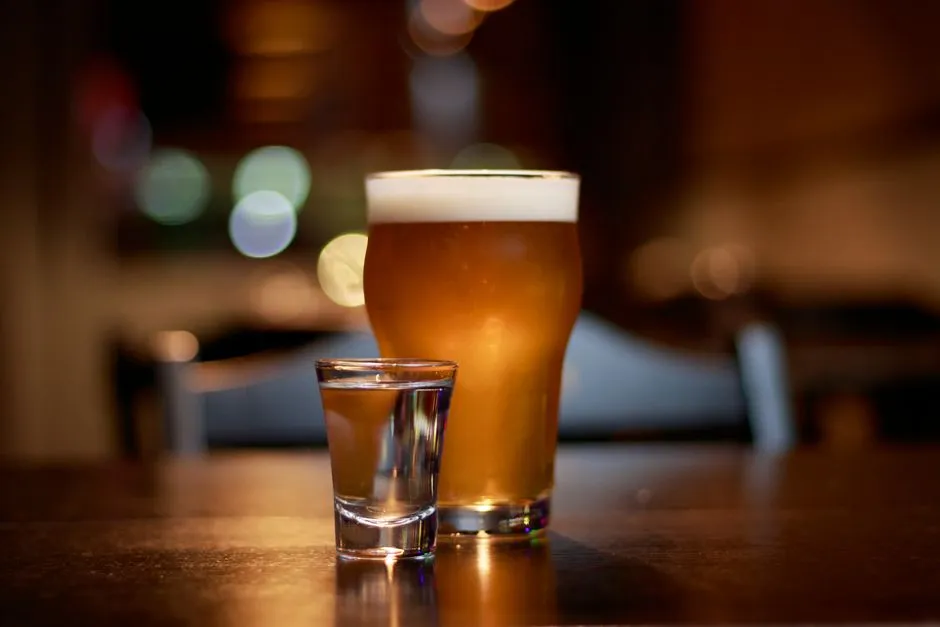
A 70 kg man drinks three regular beers over two hours, with food. That puts him at roughly 0.058% blood alcohol. Whether he has committed a criminal offence depends on which end of a bridge he is standing on.
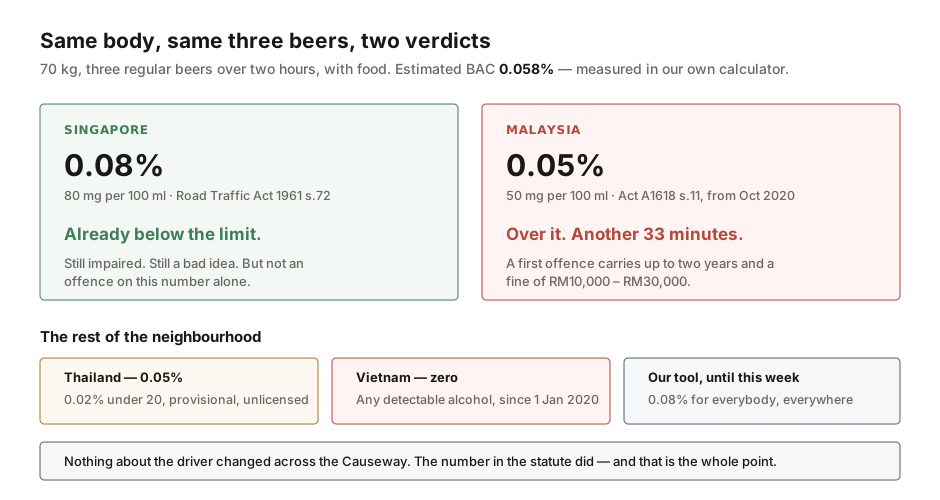
In Singapore he is under the limit. In Johor Bahru he is over it by a margin that takes another thirty-three minutes to clear. Nothing about the man changed. The number in the statute did.
What the statutes actually say
Singapore sets its prescribed limit in section 72 of the Road Traffic Act 1961: 35 microgrammes of alcohol in 100 millilitres of breath, or 80 milligrammes in 100 millilitres of blood. That is the 0.08% figure most people know.
Malaysia is where it gets interesting, because Malaysia moved. Section 11 of the Road Transport (Amendment) Act 2020 replaced the definition of "prescribed limit" in the Road Transport Act 1987 with a new one:
"22 microgrammes of alcohol in 100 millilitres of breath; 50 milligrammes of alcohol in 100 millilitres of blood; or 67 milligrammes of alcohol in 100 millilitres of urine."
Fifty milligrammes is 0.05%. The old figure was eighty. The Act received Royal Assent on 10 October 2020 and was gazetted twelve days later. It also raised the penalties: a first conviction now carries up to two years' imprisonment and a fine of RM10,000 to RM30,000.
Thailand works on a tier. The general limit is 50 mg/dL, but drivers under 20, drivers on provisional licences and drivers with no licence at all are held to 20 mg/dL. Vietnam does not have a limit in the usual sense: since January 2020 any detectable alcohol while driving is an offence, so the only lawful figure is zero.
Nobody told the internet
Malaysia's change is nearly six years old and a great deal of the web still quotes the old number. That includes, until this week, us.
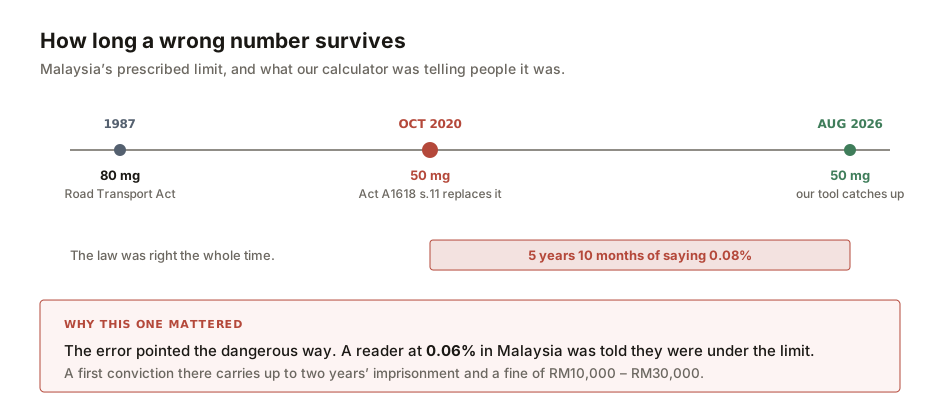
Stale numbers are usually harmless. This one was not, because it pointed the dangerous way. A tool that overstates a legal limit tells people they are safe when they are not. The cost of believing it is not a wrong number on a screen; it is a criminal record.
These numbers are not facts about alcohol. Impairment is continuous, measurable well below 0.05%, and does not consult the statute book. The limits are lines drawn by legislatures for prosecution, and those lines move.
The same logic runs through health thresholds
Drink-driving limits are the version with handcuffs attached, but the pattern is general. Many numbers that look like medical or scientific facts are decisions made by some authority, and different authorities decide differently.
BMI is the clearest case. Singapore's Health Promotion Board treats 23.0 as the point where risk starts and 27.5 as obesity; internationally those figures are 25 and 30. Most people assume WHO redefined the scale for Asian populations. It did not — it kept 25 and 30 as the international classification and published lower figures as action points for countries to adopt if they chose. We have written that story out in full in BMI, BMR and TDEE: what the numbers mean, so it is not repeated here. The point is structural: the threshold that matters is the one used by the health system assessing you.
Which is why the useful question for any threshold is not "what is the number" but "whose number, and as at when".
What this audit found in our own tools
Every guide here starts by reading the source of the tools it is going to link to. This one found three problems and all three were ours.
Our BAC calculator hard-coded 0.08% for the entire world. Its advisory said, in as many words, "Malaysia: 0.08% with new tougher 2017 penalties." The advice was six years stale and legally wrong — it told a Malaysian driver that 0.06% was under the limit when it is in fact over. The countdown had the same fault: "hours until below 0.08%" was computed for every user regardless of where they were.
The tool now asks where you are driving and applies that jurisdiction's statutory limit to the verdict, to the countdown and to the label above it. Thailand's under-20 tier is a separate option, because a tier that exists only in the footnotes is a tier the tool will get wrong. Zero-tolerance jurisdictions report the time to 0.00%, since there is no lesser limit to fall below. Every figure carries its statute in a source comment, and the panel now states the date the table was last checked — a legal limit with no date attached is unverifiable. That is exactly how our old number survived for so long. There is also a manual entry for jurisdictions we have not read, which we would rather offer than guess at.
Our waist-to-height tool called 23 and 27.5 "WHO Asian BMI thresholds", which is the misattribution described above. We reworded it to credit Singapore and to state that WHO kept 25 and 30.
Our BMI calculator's explainer asserted that four countries follow those thresholds in their national guidelines, and we could not produce a source for any of them. It also carried a sentence inside quotation marks with no attribution. That is a fabricated quotation, no matter how sincere the intent. The unsourced countries are gone and the quotation marks now sit around a real WHO finding, with a citation. We have verified Singapore, and we are not listing the others until we have read their guidelines.
Do not drive after drinking at all. That is the only advice on this page with no asterisk; every calculator, including ours, is an estimate with roughly twenty per cent of slack. If you are crossing a border, look up the limit on the other side before you go, because the one in your head is probably your home country's. For anything with legal consequences, read the statute or ask someone who has. Drink-driving limits are set by legislation and they change. And distrust any health or legal figure published without a jurisdiction and a date — ours lacked both until this audit, and that is precisely how it stayed wrong for five years.
- Malaysia's prescribed limit is quoted verbatim from the Road Transport (Amendment) Act 2020 (Act A1618), section 11, which substitutes the definition in subsection 45G(1) of the Road Transport Act 1987. Royal Assent 10 October 2020, published in the Gazette 22 October 2020. The penalties are from section 8 of the same Act. ⚠️ Section 1(2) provides that the Act commences on a date appointed by the Minister; that commencement notification was NOT retrieved, so while the limit is quoted from the Act, the date it took effect — widely reported as 23 October 2020 — is second-hand here.
- Singapore's prescribed limit — 35 microgrammes per 100 millilitres of breath or 80 milligrammes per 100 millilitres of blood — is quoted from section 72 of the Road Traffic Act 1961, read from Singapore Statutes Online on 1 August 2026.
- ⚠️ Thailand's limits (50 mg/dL, and 20 mg/dL for drivers under 20, provisional licence holders and the unlicensed, in force 20 September 2024 under regulations amending the Land Traffic Act B.E. 2522) were read from a Thai government public-relations release rather than from the regulations themselves.
- ⚠️ Vietnam's zero-tolerance rule (Law 44/2019/QH14, in force from 1 January 2020) was read from secondary legal commentary rather than from the law itself.
- The BMI material is summarised only; it is set out with its sources in our earlier guide, BMI, BMR and TDEE: What the Numbers Mean — and Why Asia Uses Different Cut-offs. The WHO position quoted there is from the WHO expert consultation, The Lancet 363 (9403): 157–163, 2004.
- The 0.058% figure and the 33-minute wait were measured in our own BAC calculator on 1 August 2026 after the fix described above. Full audit detail in docs/guide11-health-thresholds-sources.md.
General information about how legal and health thresholds are set, not legal or medical advice. Nothing here should be used to decide whether you are fit to drive: blood alcohol calculators estimate a population average and cannot account for your metabolism, medication, food, fatigue or genetics, and the only blood alcohol level that carries no legal or physical risk is zero. Every figure above carries the date it was read, because statutes are amended — Malaysia's was — and this article will go out of date the same way the number it corrects did.

View author profile → · Editorial policy