Kenji Tanaka is a RECATOOLS editorial persona focused on developer tools, cloud platforms, DevOps, CI/CD, software supply chains, and infrastructure trends. Articles under this byline help technical readers understand how tooling changes affect software delivery, security, cost, and reliability.

About this byline

Kenji Tanaka is a RECATOOLS editorial persona for developer tools, cloud, DevOps, and software supply-chain coverage. Articles are produced and reviewed under RECATOOLS editorial supervision.

Editorial responsibility for this byline rests with Jeffrey Tan (Tan Seng Fei), RECASYS, Singapore. Our Editorial Policy sets out how sources are reviewed, how AI-assisted workflows are used, and how editorial desks and personas are defined.

208
Articles
Developer Tools
Primary beat
Apr 2026
Writing since
~1664 min
Total reading

Articles · AI & ML Showing 21–30 of 53

Several bare hard disk drives stacked on a white surface with their circuit boards exposed, illustrating a report on the sale of a bankrupt company data archive.
AI & ML

Google Bought A Bankrupt Airline's Emails For US$10m, And Nobody Who Wrote Them Was Asked

100 million emails, 500 million Teams messages and 30 million lines of code, won at auction from Spirit Airlines' estate for AI training. Bankruptcy has become a supply channel for training data, and de-identifying conversation is not the same job as de-identifying a database.

19 Aug 2026 · 8 min read
A worker in a frost-covered jacket and heavy gloves aims a handheld barcode scanner at a cardboard box in a cold-storage warehouse, the scanner's red beam falling across the box while breath fogs the freezing air. Racking recedes into the dark blue background.
AI & ML

What You Are Trusting When You Download a Model

We checked the 1,000 most-downloaded models on the Hugging Face Hub. 99% ship a model card, so documentation is not what is missing — but only 20.5% declare their training data in a readable field, and counting prose too, roughly four in ten disclose it nowhere at all.

19 Aug 2026 · 6 min read
Three studio condenser microphones, illustrating a report on India-trained voice models for government-to-citizen services.
AI & ML

IBM and Sarvam Pair a Governance Layer With Models Trained in India

Sovereign AI usually means a data centre in the right country. This arrangement aims at the harder half: reasoning, language and voice models trained from scratch for the languages citizens actually use, with a joint hub in Lucknow.

18 Aug 2026 · 8 min read
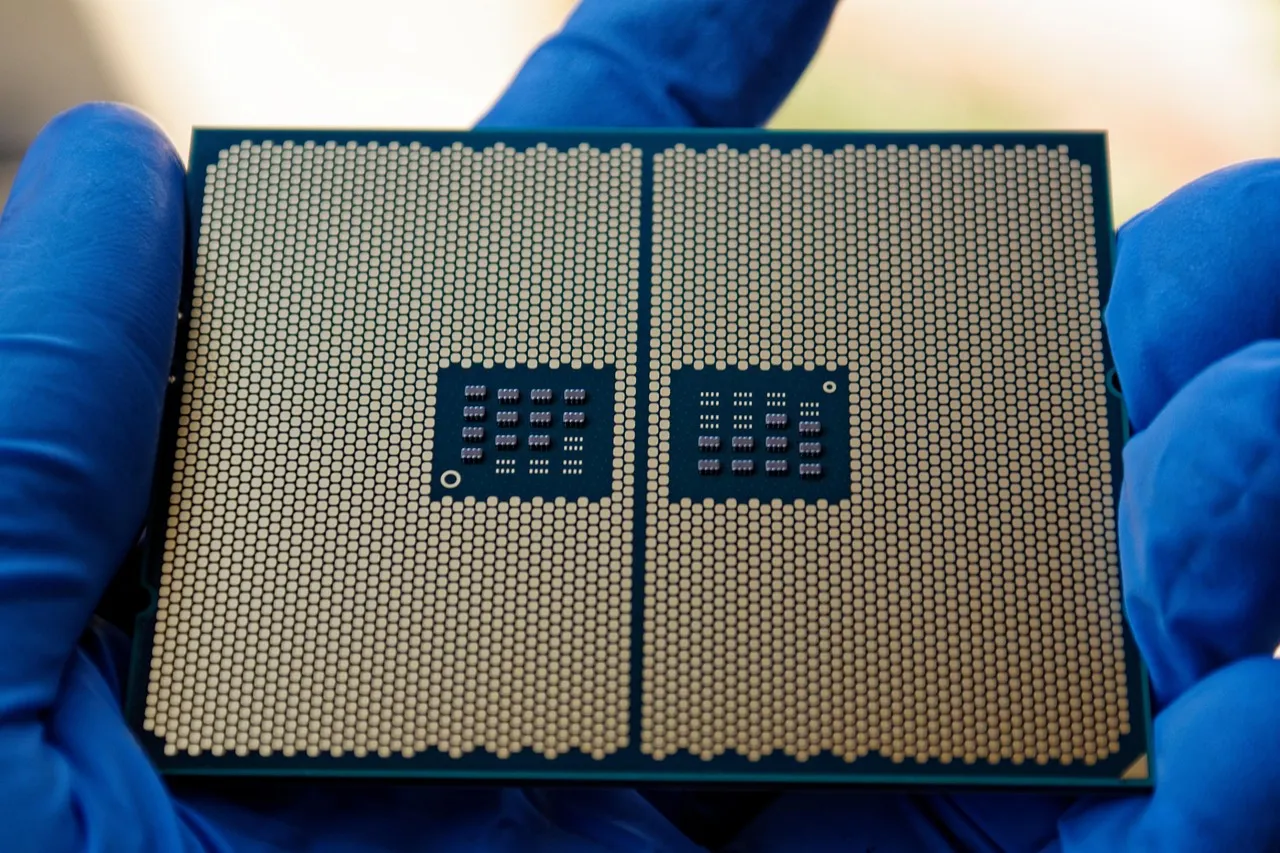
A single integrated circuit with gold pins under directional light, illustrating a report on China's domestic AI chip market.
AI & ML

TrendForce Sees China's High-End AI Chip Market Going Nine-Tenths Domestic

TrendForce expects domestic chips to take close to 90 per cent of China's high-end AI market this year, leaving about a tenth to Nvidia, AMD and everyone else. The first-half results filed underneath that forecast are what make it credible.

17 Aug 2026 · 8 min read
A close-up image of an open book with visible text, showcasing turning pages.
AI & ML

The Region's Best "Sovereign" AI Model Is Built on Gemma and Licensed by Google

Vietnam has made national language models a strategic product. Southeast Asia's most developed answer ranks #4 of 55 — and its own card says it is not safety-aligned.

4 Aug 2026 · 8 min read
An antique balance beam mounted on a wall beside a wooden measuring rod, its pan hanging empty — an instrument that only tells you anything when it is weighed against a known standard.
AI & ML

We Went Looking for What AI Is Bad At. We Found a Bill Instead.

Every business owner wants a map of where AI is reliable and where it is not. We built five task types — drafting to spec, retrieving from a long document, aggregating under two conditions, finding planted errors, and resisting the urge to invent errors in clean work — and ran a hundred controlled tests across two models, scored by script with no AI judge anywhere. Ninety-seven of ninety-eight were correct. We could not find the cliff. What we found instead was that the same models charge up to eighty-four times more to check work than to produce it, by wildly different factors per model. Twice, the model was more careful than our test. And our own guide had been asserting a weakness we later measured at 100%.

3 Aug 2026 · 10 min read
Close-up of vintage wooden letterpress blocks spelling 'pleasure' on paper.
AI & ML

Why AI Cannot Spell — What Image, Video and Voice Models Do Instead

A language model emits one symbol at a time, in order. An image model starts from noise and refines the whole canvas at once, in continuous values, with no symbols anywhere in the process. Almost every complaint about generated pictures falls out of that one difference: the model is not bad at spelling, it never performs the operation of spelling. That is also why Chinese, Thai and Jawi come out worse than Latin script, and why a six-fingered hand is the same failure as a fabricated citation. Auditing our own image tools found five correct and one with four wrong aspect-ratio labels — caught because the tool that computes its ratios disagreed with the tool that types them. Auditing our own publishing policy was less flattering.

2 Aug 2026 · 14 min read
Close-up of a vintage industrial control panel with multiple buttons and switches.
AI & ML

How to Spend Fewer Tokens — and Why That Is the Fourth Thing to Try

Every guide to controlling an AI bill opens by telling you to trim your prompt. We ran the arithmetic over all 27 models in our house rate card and the advice comes out in the wrong order. On a reference workload, deleting your entire system prompt saves 38% and halving every reply saves 25% — but switching model while sending byte-for-byte the same request saves 60%, and the spread across the full price list is a factor of 111. Caching the part of your prompt that never changes beats all of it for effort. Auditing the five tools behind this guide found the prices correct and four other things not: one price on the list rises 50% on 1 September and our own calculators were not saying so.

2 Aug 2026 · 12 min read
Wooden closed sign hanging on a shop window, with blurred background outside.
AI & ML

Do You Need Fine-Tuning? Two of the Big Three Are Taking It Away

The usual case against fine-tuning is that it is expensive. That case is wrong — a small training run costs about four dollars. The real case is that Google has removed fine-tuning from the Gemini API entirely and OpenAI says in its own documentation that it is winding the platform down, so for many developers the decision has already been made. We read four vendors' pages on the same day, checked AWS's claim that dedicated capacity is mandatory (its own documentation contradicts itself), and measured the one case that ought to be the exception — South-East Asian languages, where the best model on a regional benchmark turns out to be a general-purpose model nobody tuned for the region.

2 Aug 2026 · 17 min read
A Hong Kong road sign giving the same directions twice, in English and in Traditional Chinese.
AI & ML

Using AI in Your Own Language — What the Machine Can Actually See

The same sentence costs seven tokens in English and fifteen in Malay. That gap is usually explained as a money problem; this is the other half. We measured our own nine-language parallel corpus and found that 96% of English words survive as one token against 60% of Malay ones, and that more than a quarter of our Hong Kong copy reaches the model as byte fragments rather than characters — because every character carrying Cantonese grammar is missing from the vocabulary. Then we tested the complaint everyone makes, that models drift out of your language, and could not reproduce it.

1 Aug 2026 · 14 min read
Editorial Policy →