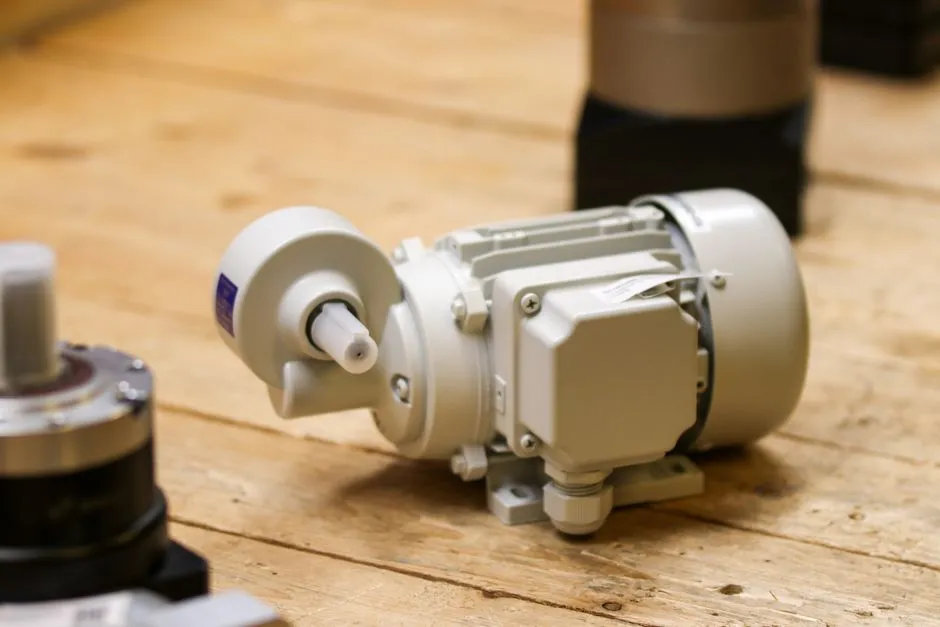
TOKYO, 21 AUG 2026 — TDK has launched edgeRX Pro, an industrial sensor node that runs AI on the device to watch machinery and flag problems before equipment fails. It combines vibration, acoustic, magnetic, temperature and rotational-motion sensing in an IP67 enclosure.
The key decision is where the inference happens — on the device itself — not just what the sensors measure.
The device
The node carries a six-axis inertial measurement unit, a magnetometer and a digital microphone. TDK describes it as processing much of its industrial data locally, reducing latency, bandwidth consumption and dependence on continuous cloud connectivity.
The stated application is condition monitoring in factories, power facilities and comparable industrial environments.
Predictive maintenance is an old idea with a new constraint
Watching a machine for signs of failure is not new. Vibration analysis has been a discipline for decades, and the physics is well understood: a bearing beginning to fail changes the frequency content of the vibration it produces long before anything is audible to a person.
The historical limit has not been sensing, but plumbing. Continuous high-rate vibration data is a large stream, one machine produces a lot of it, a plant has hundreds of machines, and shipping all of that to a server for analysis needs bandwidth, storage and a network that stays up.
Running the model on the sensor inverts the problem. By processing the raw stream locally, the device sends a conclusion instead of a continuous signal. This turns a data-transport problem into an occasional message — the reason on-device inference is more than just marketing boilerplate here.
The IP67 rating is easy to skim past, but it’s critical. Sealed against dust and temporary immersion means the node can sit on the machine rather than in a cabinet near it, and proximity is most of what determines whether vibration and acoustic sensing produce anything usable. A sensor mounted three metres away through a bracket is measuring the bracket. Industrial environments are also hostile in ways an office product never encounters: coolant mist, metal dust, washdown cycles, ambient temperatures that swing thirty degrees across a shift.
What the multi-modal sensing is for
Five sensing modes in one node is not feature accumulation. Different failures announce themselves differently, and a single mode produces false alarms.
Each mode targets different failures. Vibration analysis finds mechanical wear and imbalance in rotating parts. Acoustic sensing can catch leaks or electrical discharge that vibration misses. The magnetometer reads a motor's electrical behaviour, while temperature provides a crude but reliable indicator of friction and load. Finally, rotational motion gives the context for all the other signals; a vibration signature is meaningless without knowing the machine's speed.
This combination allows the device to distinguish a machine working hard from one that is failing. Making that distinction is the entire point of the product. A monitoring system that cries wolf gets switched off by the maintenance team within a month, and that is the usual fate of these deployments rather than a technical failure.
Why the connectivity argument lands here specifically
Southeast Asian manufacturing is where the local-processing case is strongest, and for unglamorous reasons.
Plants in industrial zones across Vietnam, Thailand, Indonesia and the Philippines frequently have connectivity that is adequate for enterprise resource planning and inadequate for continuous telemetry from hundreds of nodes. Many were built before anybody planned for that traffic, and retrofitting network capacity through a working factory is disruptive and expensive.
A device that decides locally and reports occasionally is deployable in that environment. A device that streams raw data is a network project first and a maintenance project second, and the network project is the one that does not get approved.
A second, less-discussed argument is commercial sensitivity. Machine telemetry is commercially sensitive — production rates, utilisation, downtime — and a contract manufacturer streaming that to a vendor cloud is exporting a picture of its customers' order volumes. Local processing keeps that inside the plant, which is a procurement argument as much as a technical one.
More than any technical specification, an organisational reality decides these deployments. Predictive maintenance only pays if somebody acts on the alert, and acting means taking a machine out of service before it has visibly failed — against a production schedule, on the word of a device. Plants that succeed with this have a maintenance function with the authority to stop a line. Plants that do not end up with an accurate monitoring system producing alerts nobody is empowered to act on, which is worse than no system at all because it has a budget attached.
The claim that needs evidence
The promise is identifying problems before equipment fails — a claim no specification sheet can substantiate.
Anomaly detection on machinery requires a baseline of normal behaviour, which takes time to establish on each individual machine and has to be re-established after maintenance, after a change in product, and after anything else that alters what normal means. A model trained in a laboratory does not arrive knowing what your particular twelve-year-old compressor sounds like when it is fine.
The meaningful measure is not detection rate, but the false alarm rate over months of operation. This is the number vendors in this category almost never publish. Anyone evaluating one of these should ask for it, ask over what period, and ask what happened to the deployments that were removed.
What we could not establish
Everything commercial. Price, availability, battery life, expected service interval and whether the device is sold outright or as part of a subscription are all absent, and battery life in particular determines whether this is a deploy-and-forget sensor or a maintenance task of its own.
TDK has not specified what models run on the device, or if they can be retrained in the field. Also missing are details on establishing a baseline, communication protocols, data export options, any published performance figures, and regional availability.
What to watch
Watch for a customer deployment with numbers attached. Condition monitoring is a category with many pilots and few published results, and a plant willing to say what it caught and what it missed would be worth more than any specification.
Then watch the pricing model. A sensor sold outright and a sensor sold as a subscription with analytics are different products with different lock-in, and the second is where this category has been heading.
Finally, watch whether the analysis stays on the device. Vendors frequently launch with local inference and then move the interesting work to a cloud service, because that is where the recurring revenue is. If that happens, the argument that made the product deployable in a poorly connected plant quietly disappears.

View author profile → · Editorial policy