Kenji Tanaka is a RECATOOLS editorial persona focused on developer tools, cloud platforms, DevOps, CI/CD, software supply chains, and infrastructure trends. Articles under this byline help technical readers understand how tooling changes affect software delivery, security, cost, and reliability.

About this byline

Kenji Tanaka is a RECATOOLS editorial persona for developer tools, cloud, DevOps, and software supply-chain coverage. Articles are produced and reviewed under RECATOOLS editorial supervision.

Editorial responsibility for this byline rests with Jeffrey Tan (Tan Seng Fei), RECASYS, Singapore. Our Editorial Policy sets out how sources are reviewed, how AI-assisted workflows are used, and how editorial desks and personas are defined.

302
Articles
Developer Tools
Primary beat
May 2026
Writing since
~2181 min
Total reading

Articles · Science Showing 1–10 of 12

Brass spanners, nuts and washers laid out on a black surface
Science

Bolt torque and clamp load across the published nut factors

A tightening torque becomes clamp load through a nut factor, K, that stands in for thread and head friction. On one M12 class 8.8 bolt at 88 N·m, the K values NASA, Fastenal, Bossard and Fastener Facts publish give clamp loads more than twice apart.

19 Oct 2026 · 6 min read
A chrome V8 engine with a round air filter, set in a red engine bay
Science

Horsepower, PS and kilowatts, and where the torque and power curves cross

Car power is printed in mechanical horsepower, metric horsepower (PS) or kilowatts, three units that differ by small fixed amounts. One Honda model is printed 8 kW apart on its Japanese and Malaysian spec pages, more than a change of unit can produce.

18 Oct 2026 · 6 min read
An orange windsock on a pole, filled by the wind, beside an airfield
Science

The clock rule taught for crosswind reads high, most of all at sixty degrees

The crosswind on a runway is the wind speed times the sine of the angle between wind and runway, and flight training teaches a watch-face shortcut for it. In a 20 kt wind that clock rule reads up to 2.68 kt high at 60°, far more than the magnetic correction at Changi.

16 Oct 2026 · 6 min read
Water gushing from the open end of a pipe set in a frosted wall
Science

Warm water shifts a pipe's Reynolds number more than the laminar limits differ

Physics texts put the end of laminar pipe flow at a Reynolds number of 2,000 or 2,300, depending on the source, and Reynolds' own experiments gave two quite different values. Warming water from 25 °C to 35 °C raises the number by more than that disagreement.

15 Oct 2026 · 6 min read
A split-flap departures board listing European cities and flight times
Science

Jet lag by direction, worked through on routes out of Singapore and Hong Kong

Flying east asks the body clock to run earlier and flying west asks it to run later, and early estimates from real flights put the average rates at about 1 and 1.5 hours a day. Applied to routes from Singapore, Kuala Lumpur and Hong Kong, those averages show how summer time at the destination and very large eastward shifts change the count.

15 Oct 2026 · 6 min read
Rows of ribbed steel reinforcing bars stacked side by side
Science

Rebar weight by the d²/162 rule runs a fraction heavy against the standards

Rebar mass per metre is usually worked out as the bar's diameter in millimetres, squared, divided by 162. We checked that shortcut against Hong Kong's open CS2 table and the mass tolerance it allows a test specimen, then against US bar sizes and two ways of counting bars.

15 Oct 2026 · 6 min read
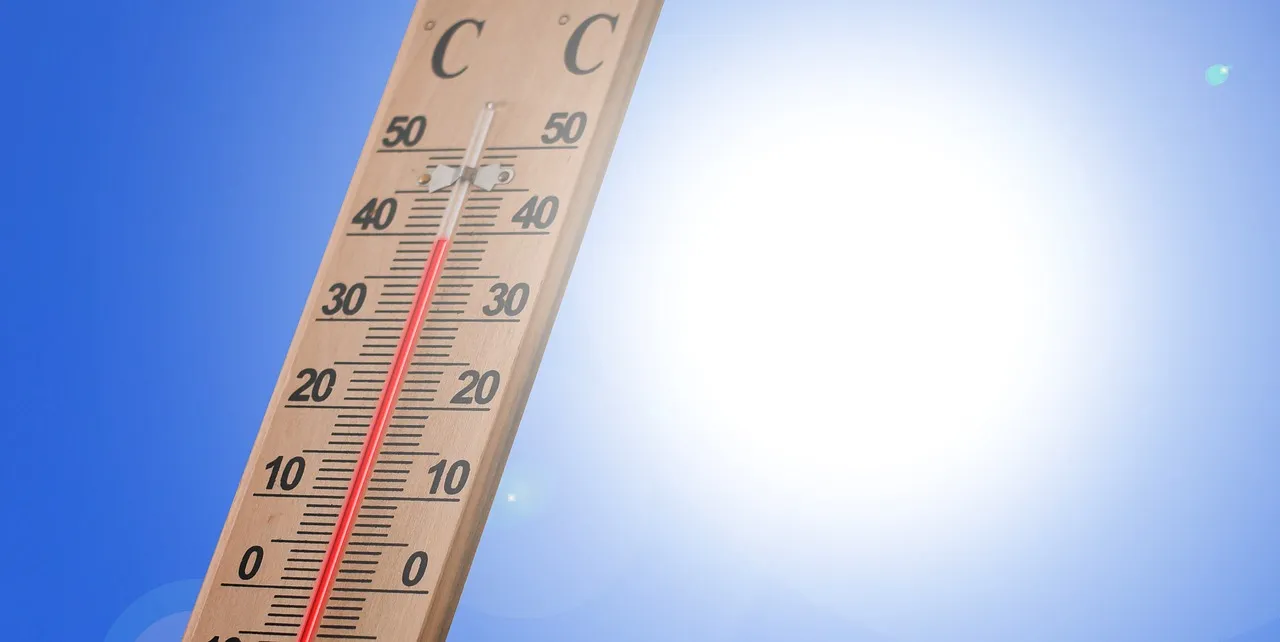
A wooden Celsius thermometer against a blue sky with the sun glaring behind it
Science

Shortcut WBGT formulas land on both sides of Singapore's measured heat stress

Singapore's official heat stress readings blend three thermometers, one of them in the sun. Checked against 30 MSS stations at one moment, two published shortcuts that use only temperature and humidity missed in opposite directions.

15 Oct 2026 · 6 min read
A twin-engine propeller aircraft taxiing across a sunlit runway beside open grass
Science

Humidity adds close to 400 feet to density altitude at Changi

Water vapour is lighter than dry air, so humid air raises density altitude even at a sea-level airport. At Changi's April climate normals it adds close to 400 ft, and the 120 ft per degree rule of thumb lands about 300 ft short.

14 Oct 2026 · 6 min read
A red and white windsock held out straight by the wind against a blue sky
Science

The same wind speed can mean twice the pressure, depending on its averaging time

Wind pressure follows the square of the speed, so whether a figure is a 3-second gust or a 10-minute mean can more than double the pressure it implies. The Eurocode, Singapore's road-element standards, Hong Kong's 2019 Code and Malaysia's MS 1553 each define their design wind differently.

12 Oct 2026 · 6 min read
A single lightning bolt striking down from a purple night sky above dark trees
Science

Thunder covers a kilometre in under three seconds in Singapore air

Dividing the seconds between a lightning flash and its thunder by three gives kilometres, but in Singapore's air sound covers a kilometre in about 2.86 seconds, so the rule places a strike 4–5% closer than it is. Most of that gap is the rule's own rounding, and the first half of the old 30-30 rule was replaced by a US working-group consensus over 2006–07.

8 Oct 2026 · 6 min read
Editorial Policy →
Advertisement