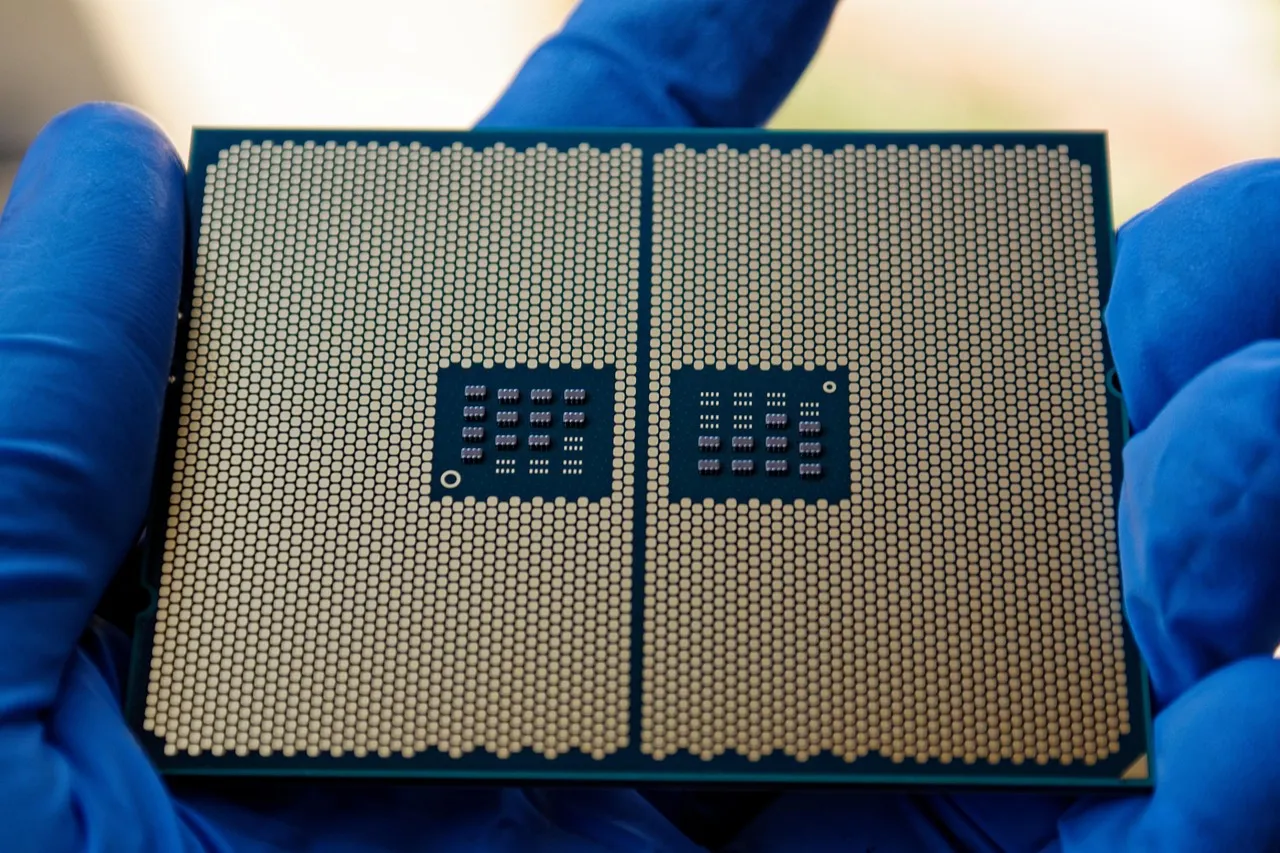
SANTA CLARA, 22 AUG 2026 — Nvidia is in early discussions with Rebellions, the South Korean designer of neural processing units for data-centre inference, over arrangements ranging from a technical partnership and investment to an outright acquisition. Jensen Huang met co-founder and chief executive Sunghyun Park at Nvidia's Santa Clara headquarters.
The talks are preliminary and may produce nothing. But the segment Rebellions occupies is exactly where Nvidia's position is least secure.
The company in question
Rebellions was founded in 2020 and designs neural processing units aimed at inference: running trained models against real-world data at scale, as distinct from the training runs that produce the models in the first place. Its investor list includes both Korean memory makers, Arm, and direct backing from the South Korean government.
Its chief financial officer had recently announced preparations for a listing on Korea's main exchange. Nvidia's timing is no coincidence. A company preparing to list publicly is a company whose price is about to become fixed.
Inference is where the moat is thinnest
Nvidia's dominance in training is close to total and rests on more than silicon. Years of accumulated CUDA tooling, framework integration and institutional familiarity make switching costly in engineering time rather than dollars, and training runs are infrequent, enormous and tolerant of expensive hardware because the alternative is not running them.
Inference has a different shape. It is a continuous workload, not an episodic one, and it dominates total compute once a model is deployed. Success is judged on cost and energy per token, not peak throughput. Those economics favour purpose-built silicon that does one thing efficiently over general-purpose accelerators that do everything well.
This is where the credible challenges have clustered. Hyperscalers, Arm-based designs, and independent NPU designers are all attacking this segment. The high switching costs that protect Nvidia's training business are much lower for inference, where the model is already trained and the only question is how cheaply it can be served.
Approaching an inference specialist shows Nvidia is acting from a position of exposure, not comfort.
The options are not equivalent
Partnership, investment and acquisition are being reported together, and they mean very different things.
A technical partnership is the cheapest and least binding. It buys visibility into a competitor's roadmap and can be abandoned. An investment secures a position and some information rights without control, and often serves mainly to keep the company from being bought by someone else.
An acquisition removes an independent inference designer from the market and absorbs its engineering team, which in this segment is the scarcer asset. Silicon designs age; the people who know how to build low-power inference parts do not become available often.
The reported range is wide enough that it probably reflects an open conversation, not a deal being papered. Early talks that reach a chief executive meeting have usually established mutual interest and not much else.
The price is not what makes this interesting
A valuation of around US$2.3bn is small against Nvidia. The gap matters because it changes how the approach should be interpreted.
At Nvidia's scale a company of this size is not a financial decision in any meaningful sense. Nothing about the purchase price would show up in its results. That removes the usual question of whether a target is worth the money and replaces it with a narrower one: what does owning this capability prevent, and what does it accelerate.
The point is not that Nvidia can afford Rebellions. It is that the company is spending chief-executive time on a target it could otherwise ignore. Firms with dominant positions generally do not court small competitors in segments they consider settled, and the effort itself is evidence about how settled Nvidia considers inference to be.
Scale cuts the other way on approvals, though. An acquirer of this size attracts competition scrutiny that a mid-sized buyer would not, and acquiring a competitor in the segment where its own position is weakest is the fact pattern regulators examine most closely.
The Korean state is a party to this whether or not it is at the table
Rebellions holds direct government backing, and Korea has treated domestic semiconductor capability as strategic policy rather than industrial preference for decades.
A foreign acquisition of a state-supported national champion in a segment Korea has explicitly targeted is a political question as much as a commercial one. It would also arrive against a domestic listing that the company was already preparing, and a listing keeps the asset Korean while an acquisition does not.
The investor list sharpens this further. SK Hynix and Samsung Ventures are both shareholders, and both parent companies supply the high-bandwidth memory that Nvidia's accelerators depend on. Any transaction touches relationships that matter well beyond the size of the company being bought.
None of this makes a deal impossible. It does mean that the commercial logic and the approval path are separate problems, and the second is harder.
What it says about the region
For readers across ASEAN, this matters because of where inference capacity gets designed and who controls its cost.
Every sovereign AI programme in the region — the Vietnamese national network, the Indonesian capacity targets, the Malaysian and Singaporean data centre build-outs — is ultimately buying inference capacity. The cost per token for serving a model determines whether these national programmes are affordable at scale, and that cost is set by a very small number of silicon designers.
Consolidation among inference designers therefore reaches regional budgets directly. A market with several independent NPU vendors produces price competition on exactly the workload these programmes run most. A market where the incumbent has absorbed the alternatives does not.
What remains unconfirmed
No deal exists. The talks are described as early and preliminary, no valuation, structure or size has been reported, and no timeline is attached. It is not established whether Rebellions is engaged with other potential partners or acquirers, whether its board or its government backers have been consulted, or what position SK Hynix and Samsung Ventures hold as existing shareholders.
Neither company has commented publicly on the substance of the meeting. The status of the planned Korean listing following the approach is not described, and no regulatory or foreign-investment review process has been reported as engaged.
What to watch for
The first signal is the listing. If Rebellions proceeds with its Korean flotation, the approach either failed or converted into something minor. If the listing is postponed, a transaction is being negotiated.
The second is whether the Korean government comments. Explicit ministerial interest would confirm that this is being handled as a strategic asset question rather than an ordinary acquisition.
The third is structure. An investment that leaves Rebellions independent and an acquisition that does not are opposite outcomes for anyone who buys inference capacity.

View author profile → · Editorial policy