7 SEP 2026 — Tata Consultancy Services' HyperVault subsidiary and its partners have committed up to 700 billion rupees to an artificial intelligence campus at Future City, Hyderabad, on more than 250 acres in Telangana. The capacity figure everyone is repeating is one gigawatt. Nothing about the announcement says one gigawatt will be built, and the inauguration date given is 2 June 2028.
What was actually announced
The investment is up to 70,000 crore rupees, about 7.4 billion dollars, from HyperVault and unnamed partners. The land is secured, the site is Future City on Hyderabad's southern edge, and the state expects around 7,000 direct and indirect jobs.
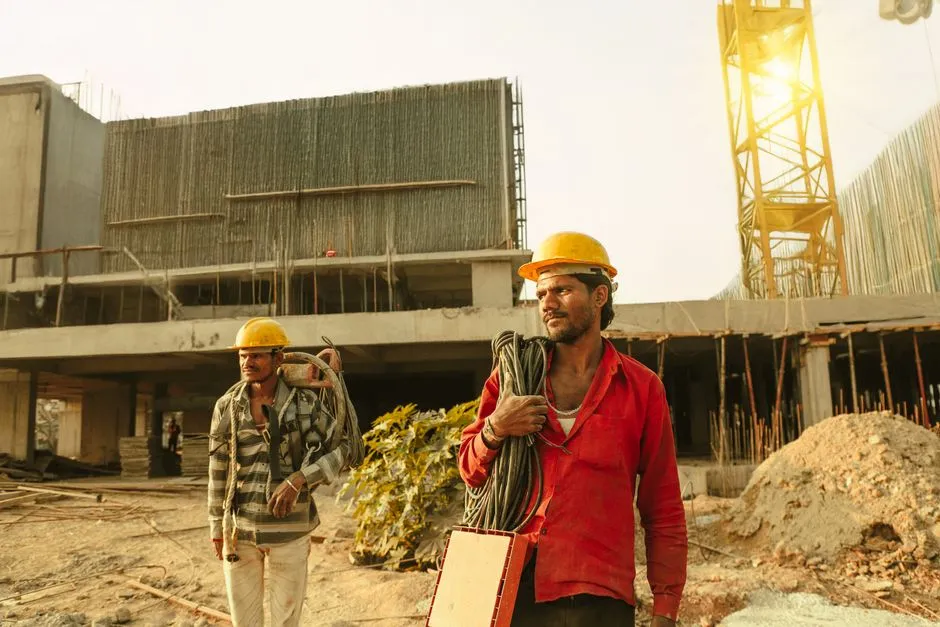
Construction is targeted for early 2027, running roughly 21 months to an inauguration on Telangana Formation Day in June 2028. OpenAI's chief technology officer appeared at the announcement by videoconference, which is the kind of detail that gets read as a customer commitment and is not one.
If it is built at the stated scale, it would be the largest AI campus in India. Most coverage skips over the condition.
A gigawatt is a ceiling, not a plan
Announced capacity for a data centre campus is the figure the site is designed to reach if every phase is built and every phase fills. It is not a construction commitment, and campuses routinely stop short.
The meaningful figure for a project like this is the capacity of its first phase in megawatts, and it has not been published. Neither has the phasing schedule, the contracted power, or the grid connection date, which is usually the binding constraint rather than the concrete.
We have watched that constraint bite elsewhere. Texas froze its interconnection queue at 474 gigawatts of requests, which we covered when ERCOT stopped taking them, and a queue that size is mostly announcements that will never energise. India's situation is different in detail, but the shape is the same. Announcing capacity is cheap; getting the interconnection is not.
Water-neutral has no meter behind it
The campus is described as using green energy and water-neutral design principles. Both phrases are unquantified in the announcement, and the second one is the weaker of the two.
Water-neutral has no agreed definition in Indian data centre practice. It can mean recycling most of what the site draws, or replenishing an equivalent volume somewhere else in the same basin, or buying credits against a watershed project. Those are very different commitments, and only one of them reduces what the campus draws from Hyderabad.
Europe has started to close that gap. The EU's delegated regulation 2024/1364 requires data centres above a threshold to report water use annually on a common basis, which does not cap consumption but does make the claim checkable. India has no equivalent, so a water-neutral assertion in Telangana is at present unfalsifiable.
The distinction matters here. Hyderabad sits on the water-stressed Deccan plateau, where a campus of this scale becomes a large industrial abstraction in a place agriculture and municipal supply already compete over. We looked at the equivalent argument in Malaysia when Gelang Patah residents turned out to be complaining about dust rather than water, and the lesson there was that the measured local cost is frequently not the one being debated.
What the state is actually buying
Seven thousand jobs is the figure that will be quoted in Telangana, and it combines direct and indirect roles. Data centres are capital-intensive and staff-light: a gigawatt campus employs a few hundred people once it is running, and most of the seven thousand is construction and the multiplier applied to it.
This is not an argument against the investment. It is a caution about which claims survive commissioning. Construction brings employment that is large and temporary, operations bring employment that is small and permanent, and the power and water draw is large and permanent.
The durable return to the state is the tax base, the anchor effect on other operators, and the possibility that Indian AI workloads run domestically rather than in Singapore or Virginia. These are reasonable goals for a state to hold. They are not the same as seven thousand jobs.
What to watch
Three numbers, none of which appeared this week. The first phase in megawatts and its energisation date, which converts an announcement into a project. The power purchase agreement, because green energy means nothing until somebody says what fraction is contracted renewable and whether it is matched hourly or annually.
And a water figure with a method attached: litres drawn, litres returned, and the basin against which neutrality is claimed. If that number is published on the EU's reporting basis without being required to be, HyperVault will have done something genuinely unusual for the region.
Until then this is a land parcel, a large intention and a date on a state holiday. It is a start. It is not a gigawatt.

View author profile → · Editorial policy