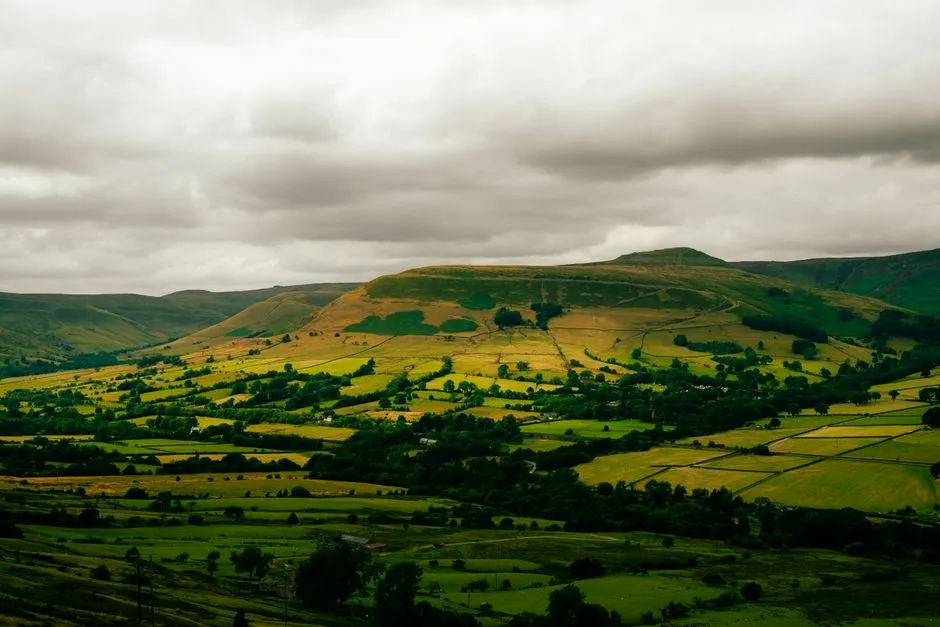
14 OCT 2026 — Lead locked into the tooth enamel of people buried in England's Peak District shows that the region was smelting lead again by the middle of the seventh century AD. By about 750, children growing up around the mining centre of Castleton were absorbing very high levels of the toxic metal. The study, published in Antiquity on 13 October, also hints that gender and status shaped who was exposed.
The Derbyshire Peak District was one of the largest lead-producing regions in medieval Europe, but written records of how its industry restarted after Roman rule are sparse. This study supplies the first absolute dates for the revival.
Why teeth
Enamel forms in childhood and does not change afterwards, so the lead it contains is a closed record of what a person absorbed between the ages of about four and 12. The team, led by Christopher Loveluck of the University of Nottingham, measured lead in the enamel of 17 people and radiocarbon-dated them. The burials came from three cemeteries: a seventh-century burial ground at Wigber Low and two in Castleton, Joule Yard and Spital Field, which together span the seventh to the early sixteenth centuries. Two Iron Age individuals provided a comparison from before large-scale mining.
Levels below about 0.5 parts per million are considered natural background. All but one of the 15 medieval individuals had more than 10, and four had more than 40.
From a few workers to a whole community
At Wigber Low, around 625 to 685, exposure varied sharply. A man buried with a sword had about 2 ppm, similar to people from non-mining regions of Britain. Two women had 69.1 and 13.2 ppm. The authors suggest that lower-status households produced lead for estate owners, while men buried with weapons may have benefited from the trade without working in it. Levels as high as the younger woman's have otherwise been found in Britain only at Castleton and in Industrial Revolution-era Coventry and Chelsea.
A generation or so later, at Joule Yard in Castleton, 48 km to the north, all five people sampled had more than 25 ppm. Most lived between the 680s and 880s. The authors read this as a specialist community of mining and smelting families living in a heavily contaminated environment by the mid-eighth century.
Peaks that match the records
Lead levels at Castleton stayed high for centuries. In the Spital Field cemetery, which dates from after the Norman Conquest, every individual had between 25 and 68 ppm. The two highest dated to the late twelfth to thirteenth centuries. That matches royal tax records showing Peak District output at its medieval height from about 1180 to 1215, and lead pollution in an Alpine ice core and Swedish lake sediments that peaked around 1200.
A possible toll on women
All three women in the sample died between the ages of 17 and 25, and both women at Wigber Low were buried close to young children. The authors note that pregnancy releases lead stored in bone, and that a recent study found an association between lead and earlier death. They describe this link only tentatively, as a possible "direction of association".
The limits of 17 people
The sample is small, and several of the social readings rest on one or two individuals. The authors present their findings as hints and a benchmark for identifying lead- and silver-producing communities elsewhere in Europe, not as settled conclusions. The University of Nottingham and a Nature research highlight summarised the study the same day.

View author profile → · Editorial policy