7 SEP 2026 — IFA 2026 ran at Messe Berlin from 4 to 8 September with more than 1,900 exhibitors, billed as the year embodied artificial intelligence arrived in the home. What shipped is robot vacuums, and the number they are being sold on is suction in pascals — 27,000 on one machine, 40,000 on three others.
What is actually on sale
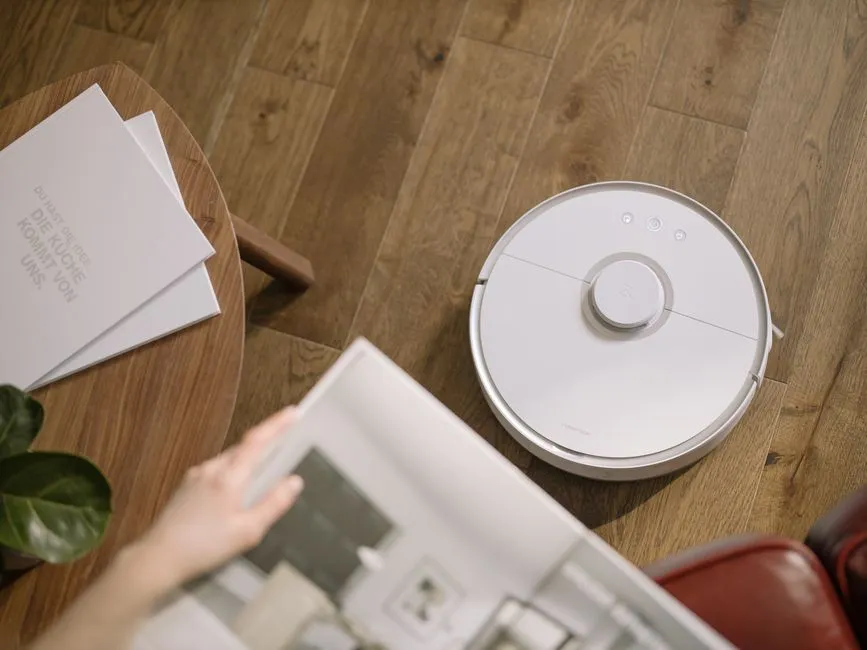
Ecovacs announced four machines with dates and prices attached. The DEEBOT X12S OmniCyclone at £1,199 with a bagless auto-empty station and 27,000 pascals, shipping 9 September. The T90S PRO OMNI at £699 with 40,000 pascals, shipping 24 September. The T90 MAX PRO OMNI at £549, also 40,000, shipping 9 September. And a window-cleaning robot, the WINBOT W2S PRO OMNI, at £529.
Dreame brought the Aqua20 Pro Ultra Roller X at £1,299, a steam robot vacuum heating to 180 degrees with 40,000 pascals, and a 55.9-gram wearable camera at £349.
The one machine that is not a floor cleaner is AnAn, a companion robot from Mind with Heart Robotics aimed at elderly support and child development, with full-body tactile sensing, priced between about £750 and £1,100 and going into distribution in Germany and Belgium.
Pascals are the new megapixels
A pascal is a unit of pressure, and the figure quoted is the maximum vacuum a machine can generate at the inlet with the airway sealed. It is measured in a condition that does not occur while cleaning a floor.
What determines whether dust leaves a carpet is airflow through the nozzle, brush agitation, seal quality and the path the machine takes across the room. Sealed suction is one input to that result, and it is the easiest to express as a single large number, which is why it became the number.
The trajectory gives it away. Flagship robot vacuums were quoted at 2,500 pascals in 2020 and are quoted at 40,000 now. Nobody claims these machines clean sixteen times better, and the specification has run far ahead of any outcome a buyer can perceive — the same course the camera megapixel race ran before it stopped mattering.
The cost not on the price tag
A base station is a consumables business attached to a robot. Dust bags, mop pads, side brushes and filters are proprietary, are replaced on a schedule the machine decides, and are ordered from the manufacturer.
That reframes the bagless auto-empty station on the £1,199 Ecovacs as something other than a convenience feature. Removing the bag eliminates a recurring purchase, a real saving for the buyer and a deliberate choice by a company that could have kept selling bags.
It is the sort of detail that decides ownership cost over five years and appears nowhere in a specification comparison, because it is a subtraction rather than a bigger number. Anyone comparing these machines on suction is comparing the figure the seller chose to compete on.
Where the AI actually sits
The AI in these products is for navigation and voice control, and both are real. Ecovacs quotes a voice assistant on the X12S and window-navigation software on the WINBOT; Dreame quotes a vision system for obstacle handling.
Navigation is what makes or breaks a robot vacuum. A machine that maps a home well, avoids cables and finds its way back cleans more floor per charge than one with more suction and a worse route, and that is a software problem.
It is also the capability nobody markets with a number, because there is no agreed measure of it. Suction has a unit and navigation does not, so the specification sheet advertises the less important of the two.
The companion robot is the interesting one
AnAn is the one product that might justify the embodied-AI framing, which is why it deserves to be considered apart from the vacuums. A tactile companion robot pitched at elderly support and child development, with a business version carrying behavioural-tracking dashboards for care providers, is a genuinely different category.
It is also the one that needs the most scrutiny and got the least this week. A device sold into elderly care that logs behaviour to a provider dashboard raises questions about consent, data retention and who reads the output — none of which a price and a launch market answers.
We have followed the same questions through wearable cameras, where Norway regulated the conduct rather than the product. A companion robot in a care home is that argument with a more vulnerable person in the room.
What a buyer should read instead
Ignore the pascals. The figures that predict satisfaction are battery runtime at the setting you will actually use, the size and emptying interval of the base station, whether the mop pad washes and dries or merely rinses, and how the machine behaves on the specific hazards in your home.
None of those is a single big number and all of them are knowable from a review that runs the machine for a fortnight. The specification sheet is optimised for a comparison table, and a comparison table is not how anyone experiences a floor.
The honest summary of IFA 2026 is that home robotics is now a mature, competitive, well-priced category selling on a metric that stopped being informative several thousand pascals ago.

View author profile → · Editorial policy