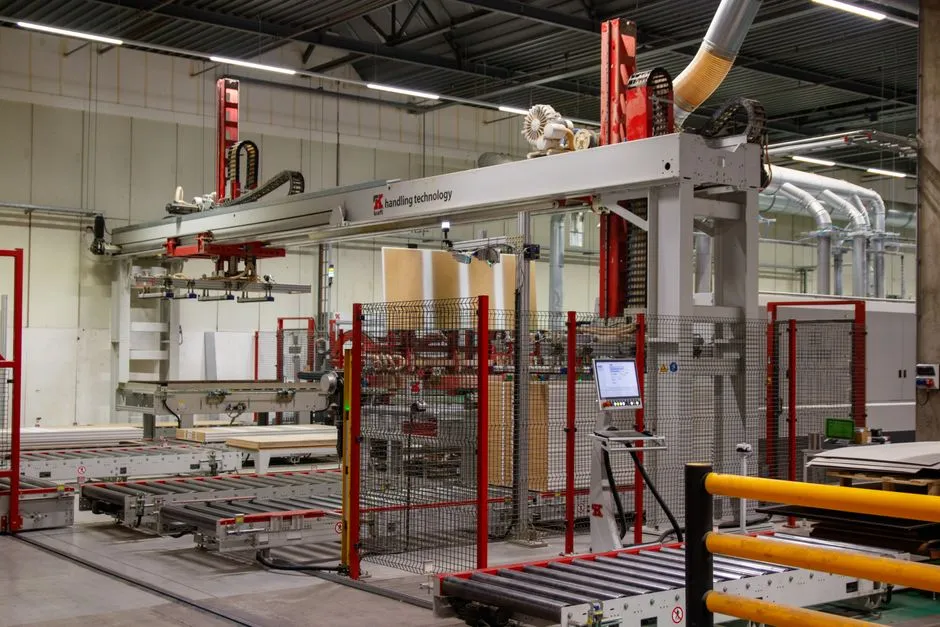
HOUSTON, 16 AUG 2026 — Apple opened an Advanced Manufacturing Center in Houston on Thursday. It is already shipping AI servers from the line, and it will build the Mac mini later this year — the first Mac assembled in the United States in a long time.
Tim Cook opened it alongside the United States Commerce Secretary, Howard Lutnick, which tells you what the building is for as clearly as anything made inside it.
What is actually there
The site also runs free training and lab sessions for small and medium-sized businesses, giving them access to equipment most could not justify buying.
The servers matter more than the Mac
The Mac mini gets the headline because it is a product people buy. The AI servers are the more significant half.
Those servers are for Apple's own use, running the infrastructure behind its AI features. A company that has spent two decades outsourcing hardware assembly is now building the machines that run its own services, in its own facility, on its own soil.
That is a different decision from onshoring a consumer product. Server capacity is a strategic input rather than a sellable good, and controlling where it is made removes a dependency that has become uncomfortable for every large technology company in the past three years.
It also fits a pattern we have been tracking all week. Apple built a separate AI model for China to satisfy a regulator there. It is now building AI servers in Texas. Both moves express the same instinct: if the politics of a market make a dependency risky, Apple builds its own way out.
Nine months is the number to notice
Hundreds of millions of dollars, from investment to a working line, in under nine months.
By the standards of semiconductor fabrication that is impossibly fast, which is the point — this is assembly and test, not wafer fabrication. Assembly plants can be stood up quickly because the hard, slow, capital-intensive part of the supply chain sits upstream in the fabs and the packaging houses, and none of that has moved.
The "made in America" label invites a conclusion the facility does not support. The Mac mini will be assembled in Houston. Its processor will still be fabricated by TSMC, its memory will come from Korea, and the advanced packaging that binds the dies together remains the industry's tightest constraint. Assembly is the visible end of a chain whose expensive end is elsewhere.
What "advanced" is doing in the name
The facility is called an Advanced Manufacturing Center rather than an assembly plant, and the distinction is not only marketing.
Onshoring assembly to a high-wage economy only works if the labour content falls, which means automation, robotics and machine vision doing what hands do elsewhere. The real technology transfer in a plant like this is the process for building the product with far fewer people, not the product itself.
It also explains the training programme. Equipment of that kind is useless without technicians who can run and maintain it, and that skill base does not exist at scale in a country that stopped doing this work decades ago. Apple is building the line and the labour market for it at the same time.
For a region whose manufacturing advantage has historically included labour cost, that is the development to watch rather than any single factory. Automation erodes the advantage wherever it is deployed, including here.
What this means for the region
The plant means less than the framing suggests, but it is not nothing.
Final assembly is a modest share of the value in a computer, and Southeast Asia's position in Apple's supply chain has never rested primarily on assembling finished Macs. Its position rests on components, testing, and increasingly on packaging — the parts of the chain that have not moved.
What would matter to this region is the upstream work moving, and there is no indication in this announcement that it is. A single assembly line in Houston does not relocate a supply chain; it relocates the last step of one, which is the step most visible to a politician and least significant to a cost model.
The medium-term risk is that onshoring assembly builds domestic capability and a political constituency, which tend to be followed by pressure to move more of the supply chain. The line in Houston is not itself a threat to Penang or to Ho Chi Minh City. The Houston plant establishes that the option exists and can be executed in nine months — a fact regional policymakers should factor into their competition for the next investment.
The training programme is the quiet part
Free access to advanced manufacturing equipment for small and medium-sized businesses reads like corporate citizenship, and it is also industrial policy by other means.
The barrier to advanced manufacturing for a small firm is rarely the idea. It is that the equipment costs more than the business is worth, so nobody can try anything. Removing that barrier for a few hundred firms, in one city, does not rebuild an industrial base. Repeated across enough sites, it is how a supplier ecosystem starts.
That is the thing to watch rather than the ribbon cutting. Apple cannot onshore what it cannot buy locally, and a domestic supplier base is the missing precondition for anything larger than assembly.
What we could not establish
The size of the investment beyond "hundreds of millions", the number of jobs, the planned production volume, and what proportion of Mac mini output Houston will represent.
Also unestablished: which components are sourced domestically and which are imported for assembly, the specification and quantity of the AI servers, whether any government incentives supported the facility, whether Apple intends further United States sites, and how the economics compare with assembling the same units in Asia. Several outlets attached large headline dollar figures to Apple's broader United States commitments; we could not tie those to this facility and have not used them.
What to watch
The first meaningful signal will be whether component sourcing follows. Assembly without a domestic supplier base is a symbolic win, and Apple has more leverage than anyone to change that if it chooses.
Watch also for a second site. One facility is a pilot with a photograph attached; a second would indicate the economics work without the politics.
And track whether any packaging or test capacity is announced domestically. That is the part of the supply chain Southeast Asia actually holds, and moving it would represent a material shift, not just a relocation of the final step.

View author profile → · Editorial policy