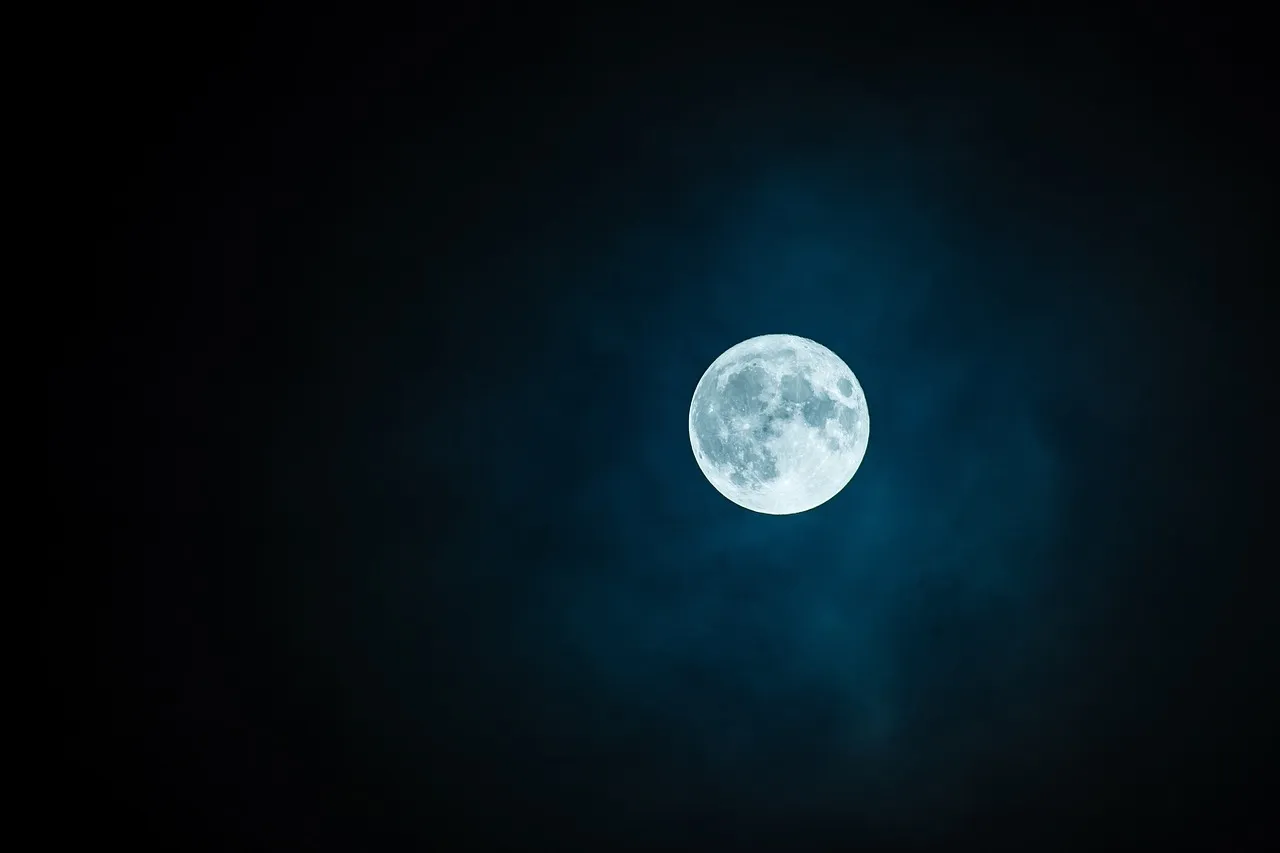
The Mid-Autumn Festival celebrates the full moon, and in 2026 the calendar and the sky are two days apart. The festival falls on 25 September; the moon reaches full at 00:49 on 27 September Singapore time. The gap is larger than usual, and you will not be able to see it. On the night of the festival the moon is 98.35% lit, which the naked eye reads as a perfect circle.
The festival is fixed to the calendar, not to the moon
中秋節 falls on the fifteenth day of the eighth lunar month, and that is a calendar rule rather than an astronomical one. The lunar month begins at the instant of new moon, and whichever calendar day that instant lands in becomes day one. Everything after it is counted off in whole days.
The moon does not count in whole days. It arrives at full whenever the geometry puts it opposite the sun, and that moment drifts against the day numbering. This year new moon came at 11:27 on 11 September Singapore time, so 11 September was day one and 25 September was day fifteen. The full moon then landed 15.56 days after the conjunction, which puts it on the twenty-seventh.
Why the fifteenth is not the full moon
The obvious guess is that half of 29.5 days is about 14.75, so day fifteen ought to be close enough. It usually is. The moon's orbit is an ellipse, not a circle, so its speed varies. Near perigee it moves quickly and can reach full sooner; near apogee it dawdles.
Across the range of possibilities the full moon arrives somewhere between roughly 13.8 and 15.6 days after the conjunction. This year it arrived at 15.56 — the far end. This accounts for the entire two-day gap between the festival and the full moon.
Where you are decides the answer
The full moon is a single instant everywhere on Earth: 16:49 UTC on 26 September. What changes is the date your clock puts on it.
At UTC+8 — Singapore, Malaysia, Hong Kong, Taiwan, mainland China, the Philippines — that instant is 00:49 on 27 September, two days after the festival. At UTC+7 — Thailand, Vietnam, Cambodia, western Indonesia — it is 23:49 on 26 September, one day after. The two answers are separated by eleven minutes of clock time. Anyone in Bangkok reading an article that says the moon is two days late is reading an article written for a different time zone.
You will not be able to see it
On the evening of the twenty-fifth the moon is 98.35% illuminated in Singapore and 98.46% in Bangkok. The missing sliver is about one and a half percent of the disc, spread thinly around one limb.
Nobody detects that by looking. A photograph with a long lens will show it if you know where to look along the edge; your eye standing in a car park will not. The moon will not look wrong on Mid-Autumn. The stranger, truer fact is that the calendar and the sky have drifted two days apart, and the drift is completely invisible.
The proverb was right, and smaller than it sounds
There is an old line for this: 十五的月亮十六圓, the fifteenth's moon is roundest on the sixteenth. It has been repeated for long enough that it reads as folk wisdom about disappointment, and it is actually a correct observation about calendar arithmetic. Day fifteen often is not the roundest.
What the proverb cannot tell you is how much roundest. This year the answer is one and a half percent, on a night when the difference between day fifteen and the true full moon is at close to its maximum. The saying describes a physical reality that sits below the threshold of vision, which is an unusual thing for a proverb to do.
How to check any year
Both halves are published for free. The Hong Kong Observatory puts its Gregorian-lunar conversion tables online as plain text, one file per year from 1901 to 2100 — and our lunar / solar date converter reads the same data. The fifteenth day of the eighth month is read straight off the table. The National Astronomical Observatory of Japan publishes the instant of full moon. Convert to your own time zone and compare.
Two details need attention. The observatory figures are given in their own local time, so a Japanese source quoting 01:49 on the twenty-seventh is quoting JST, and for Singapore that is 00:49 the same date. And the gap you are measuring is between a calendar day and an instant, so a moon that is full at ten past midnight is full on a different date from one that is full at ten to.
Where this comes from, and what will date
The festival date is from the Hong Kong Observatory's 2026 conversion table. The instant of full moon is from the National Astronomical Observatory of Japan, and it was independently recomputed from standard published algorithms as a check; the two agree to the minute. The illuminated fractions were computed the same way, and the calculation returns exactly 100% at the full-moon instant, which is what makes the other figures worth quoting.
The dates are specific to 2026 and will be wrong next year. The underlying mechanism, however, is permanent. Day one of a lunar month is an instant rounded to a day, the moon's speed varies around its orbit, and the two will keep coming apart on the same schedule.
One claim we checked and dropped. A two-day gap of this size is often described as rare, on the grounds that the previous one was 2017 and the next is 2043. The first half is quoted accurately from an observatory page and the inference does not hold: the same observatory's page for 2016 records a two-day gap that year as well, immediately before 2017. Whatever else it is, it is not a once-in-a-generation event.