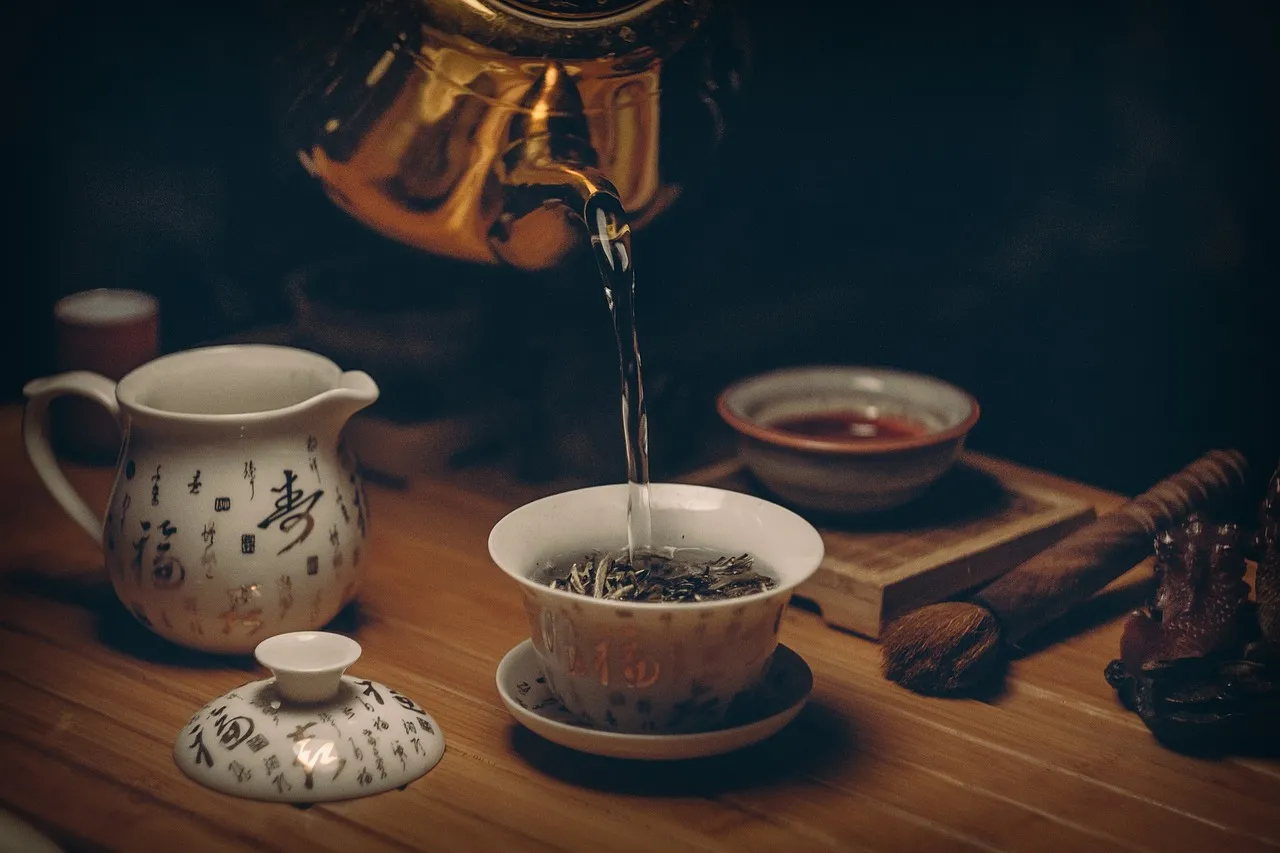
Good starting points for Chinese tea are about 80 °C for green tea, 85 °C for white, 95 °C for oolong and boiling water for ripe pu-erh and other dark teas. Black tea (紅茶, "red tea" in Chinese) is anywhere from 85 °C to a boil, depending on the tea. For short gongfu-style steeps, use about 5 grams of leaf per 100 ml of water and start with 10 to 20 seconds, adding a few seconds each time. For a cup or a mug, use about 2 grams per 100 ml and steep for 2 to 3 minutes.
Those figures are the middle of what 11 published sources recommend (four Chinese and Taiwanese tea experts and seven vendor brewing charts), which we compared cell by cell alongside the two standards for tasting tea. The sources agree closely on some teas and not at all on others, and the grading standards brew every tea, green included, at a full boil. Our tea brewing timer runs the steeps for each type, lengthening them as it goes.
| Tea | Water (middle of sources) | Range across sources | Gongfu leaf per 100 ml | First gongfu steep |
|---|---|---|---|---|
| Green 綠茶 | 80 °C | 70–100 °C | about 4.75 g | about 12 s |
| White 白茶 | 85 °C | 75–100 °C | about 5 g | about 17 s |
| Yellow 黃茶 | 84 °C | 80–95 °C | about 5 g | about 21 s |
| Oolong 烏龍茶 | 95 °C | 75–100 °C | about 5.75 g | about 11 s |
| Black 紅茶 | 90 °C | 80–100 °C | about 5 g | about 13 s |
| Dark and pu-erh 黑茶 | 100 °C | 95–100 °C | about 5.75 g | about 19 s |
Gongfu leaf and steep figures are the medians of the sources that give short steeps; only two sources gave a gongfu amount for yellow tea.
A card for each kind of tea
Green tea
Most sources put green tea near 80 °C, and eight of ten include that figure in their range. The reason is taste: hotter water pulls out bitterness faster from tender leaves. It is not damage. In a glass or cup, 2 grams per 100 ml for 2 to 3 minutes is the usual home brew; in a gaiwan with more leaf, start around 12 seconds.
White tea
White tea sits a little hotter, around 85 °C, with a wide spread: some sources use boiling water, especially for older, darker white teas. It also takes more steeps than green tea before it fades.
Yellow tea
Few guides cover yellow tea at all. The four that do range from 80 to 95 °C, so treat it like a gentle green tea and taste as you go.
Oolong
Oolong is the classic gongfu tea, using near-boiling water, a high proportion of leaf (one expert suggests 7 grams in 100 ml, or 1:15), and a series of very short steeps that lengthen with each round. Tightly rolled oolongs open slowly, so the first steep can be a little longer.
Black tea
Black tea is where the advice splits. For each pair of sources, we checked whether their temperature ranges overlapped at all: for dark tea every pair did, for green tea most did, and for black tea only 28 of 55 pairs did. One camp, including two Chinese tea experts and several vendors, uses boiling water. The other, including the Taiwan agriculture agency's advice and other vendors, uses 85 to 90 °C. A Yunnan vendor explains why both are right: bud-heavy black teas such as Dian Hong turn sour at a boil, while heavily roasted ones need it.
Dark tea and pu-erh
For ripe pu-erh, aged tea and other dark teas, every source's range includes boiling water, and many give the leaves a quick rinse first. Young raw pu-erh is the exception. Because it is closer in character to a green tea, several vendors brew it cooler, around 85 to 95 °C.
The grading standards are not recipes
Two standards for professional tasting often turn up in brewing discussions: China's GB/T 23776-2018 and the international ISO 3103. Both brew every tea, green included, in boiling water, with a fixed amount of leaf (about 2 grams per 100 ml). GB/T 23776 steeps green tea for 4 minutes and black, white and yellow for 5; ISO 3103 steeps black tea for 6 minutes and green for 5.
They are methods for tasting tea side by side, not for enjoying it. Every sample gets exactly the same treatment so that faults show, which is why a tea taster will happily pour boiling water on a delicate green tea that a drinker would brew at 80 °C. Quoting either standard as the right way to make a cup is a common mistake.
Rinsing, and what decides the caffeine
A quick rinse is common for pu-erh, other dark teas and compressed cakes, and optional for oolong; most people do not rinse green or white tea. It opens the leaves and washes off dust. It is often said to remove most of the caffeine, and the study usually cited for that, a 1996 paper by Hicks and colleagues, did not test a rinse at all: it measured three 5-minute brews, with about 69% of the caffeine coming out in the first.
How much caffeine ends up in a cup depends mostly on how much leaf you use and how long you steep it. A 2008 study of twenty teas found no consistent pattern by type, so "white tea is low in caffeine" is not a safe rule.
Brewing in the highlands
Water boils at a lower temperature the higher you go, about 1 °C lower for every 300 metres. In the Cameron Highlands, Baguio or Da Lat, at around 1,500 metres, it boils at about 95 °C; at Genting, about 94 °C; in Kunming, which grows and sells a great deal of pu-erh, about 94 °C as well. Advice to use 100 °C water is impossible to follow in these places. The solution is a longer steep, not more heat.
| Place | Altitude | Water boils at |
|---|---|---|
| Singapore | about 15 m | 99.9 °C |
| Cameron Highlands, Baguio, Da Lat | about 1,500 m | 95 °C |
| Genting Highlands | about 1,800 m | 94 °C |
| Kunming | about 1,890 m | 93.7 °C |
| Lhasa | about 3,650 m | 87.9 °C |
These boiling points come from standard air pressure at each altitude; weather moves them by a few tenths of a degree. The brewing figures are from the published sources named above, including the ISO 3103 standard and the brewing guides of vendors such as Yunnan Craft; the caffeine findings are from Hicks, Hsieh and Bell (1996) and Chin and colleagues (2008).

View author profile → · Editorial policy