
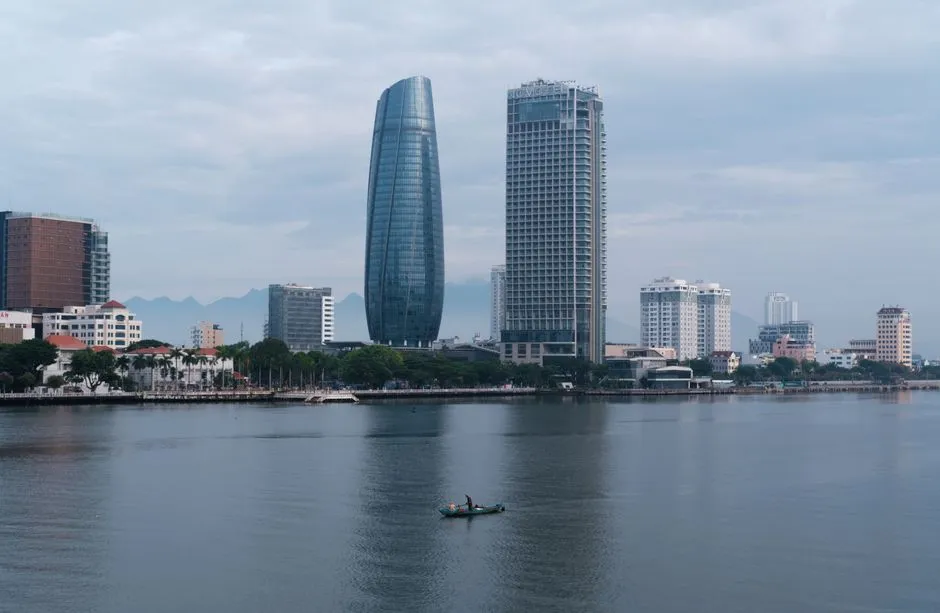
DA NANG, 21 AUG 2026 — A Vietnamese consortium plans a nationwide network of AI data centres with a designed capacity of 100 megawatts and about US$1 billion of investment, built in three phases beginning with 10 to 20 MW at Da Nang Hi-Tech Park.
The phasing is the interesting part, and it is the opposite of how these announcements usually work.
The plan
Create Capital Vietnam, listed as CRC, and Haimaker.ai have formed a joint venture called Vietnam Data Gen, with participation from several global strategic investors. The stated purpose is domestic infrastructure allowing data to be stored and processed inside Vietnam.
The network is to be developed in phases aligned with market demand rather than through a single upfront commitment.
Announcing the small number first is unusual and better
Most such announcements lead with the largest available figure: a programme total through 2029, a headline capacity that arrives only in the final phase, or a number that bundles capital, operating costs and options across several years.
This one publishes the increments. Phase one is 10 to 20 megawatts for US$100 to 200 million, which is a number somebody can be held to within eighteen months. The billion and the hundred megawatts are stated as the destination rather than the commitment, and the phases are explicitly conditioned on demand.
This is how such infrastructure is actually built, and admitting it trades a big headline for a verifiable plan. The question shifts from whether a billion dollars is real to whether Da Nang can fill 20 megawatts — a concrete proposition with a two-year answer.
The sovereignty argument is the whole rationale
Nothing about this network competes on price with capacity in Singapore or Johor. It is not meant to.
Vietnam has been building a legal framework that pushes data processing onshore, and we reported this month on Decision 33 and its high-risk AI list taking effect on 15 August. A regulated Vietnamese institution that must keep processing in-country cannot use a cheaper facility across a border, whatever the economics say.
So the market is defined by rules instead of by cost. That makes it dependable for as long as the rules hold, and only for that long. The customers are banks, government agencies, healthcare systems and the domestic platforms that serve them. These buyers are not price-sensitive in the usual way; their alternative to a domestic facility is non-compliance, not a cheaper supplier abroad.
It is the same argument we identified in the case for owning models rather than renting them, applied one layer down to the buildings. Sovereignty reads as a preference in markets where it does not bind and as a precondition where it does.
Here, "sovereign" is a technical term, not just marketing. A sovereign facility is not merely located inside a border; its operator, ownership and legal control must also be domestic. A foreign-owned building on local soil can still be subject to a foreign court order. Whether Vietnam Data Gen's structure satisfies that stricter test depends on the identity of the unnamed strategic investors, which is why that omission matters more here than it would in an ordinary financing.
Why Da Nang rather than Hanoi or Ho Chi Minh City
The choice of Da Nang points to the main constraint: power, not proximity.
Da Nang is neither of Vietnam's two commercial centres, and a facility there is further from most of the customers. Da Nang has a hi-tech park with industrial power, proximity to coastal cable landings, land available outside residential zones, and a municipal government that has spent a decade recruiting technology investment.
Placing phase one there rather than beside the demand is the same trade we described in European campuses moving 175 kilometres from hub cities in search of power. Vietnam is making it at a smaller scale and earlier, before congestion forces it, which is the cheaper time to make it.
The risk sits on the other side of the same trade. A facility away from the demand centres depends on domestic network capacity to serve customers in Hanoi and Ho Chi Minh City, and inter-city backhaul is not free.
There is one dependency the plan cannot phase around, and it is the hardest. A hundred megawatts of AI capacity needs accelerators, and Vietnam is buying them into the same constrained global market everyone else is, without the volume leverage of a hyperscaler and with export-control questions attached to the highest-performance parts. A building can be delivered in eighteen months. What goes inside it is subject to a queue and a licence regime the consortium does not control.
What 100 megawatts means in context
To be clear, this plan is about domestic capacity, not turning Vietnam into a regional hub.
A hundred megawatts fully built is roughly two thirds of the single Johor campus whose financing we covered this week, and a fraction of the gigawatt-scale programmes announced elsewhere in the region. As a national sovereign capacity for a country of a hundred million people it is a sensible starting number; as a competitive position against Singapore or Malaysia it is not one.
That is the right ambition for what this is. The market is domestic and the constraint is regulatory, so nothing here has to win an international siting contest in order to work.
Timing matters to the phasing argument as well. Announcing a first tranche during a period when everyone else is announcing gigawatts invites the comparison to be read as modesty, and modesty reads as weakness to some investors. Doing it anyway suggests the consortium expects to be judged on delivery rather than on ambition, which is a reasonable bet in a market where several large regional announcements from two years ago have still not broken ground.
What we could not establish
Whether the capital is committed. A joint venture with participation from unnamed global strategic investors is a structure, not a funding confirmation, and the phased design means only the first tranche needs to exist for construction to begin.
The announcement leaves several open questions: the identity of the global strategic investors; the source and contracting for phase one's power; a delivery timeline; any anchor customer commitments; the GPU procurement path under export controls; the network plan for serving Hanoi and Ho Chi Minh City; and the extent of any government support.
What to watch
Watch whether phase one breaks ground and on what date. A phased plan is credible precisely because its first step is small enough to verify, and that verification is available within a year rather than a decade.
Then watch for an anchor tenant. Sovereign capacity is built for named regulated buyers, and a bank or a ministry signing would confirm the thesis far more convincingly than the investment figure does.
Finally, watch whether other regional markets copy the phasing rather than the ambition. Announcing what you will actually build first is a discipline the sector could use, and unlike a gigawatt it costs nothing to adopt.