
MANILA, 22 AUG 2026 — Site development for Pax Silica, the United States-led artificial intelligence and semiconductor hub planned for New Clark City in Tarlac, is expected to begin within three to five years and to cover about 500 of the site's 1,620 hectares.
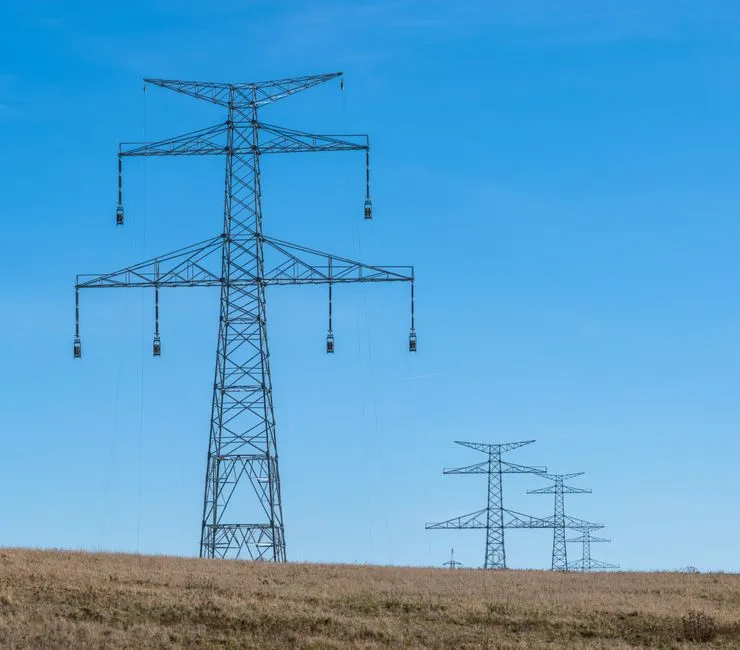
The published resource requirement for the full development is 3 gigawatts of electricity and 130 million litres of water a day. The first of those figures is equivalent to about 16 per cent of Luzon's current grid capacity, and it is the number the project will be judged on.
The project as described
Pax Silica is a United States-led coalition launched in December 2025 to secure supply chains for semiconductors, critical minerals and artificial intelligence. The Philippines joined in April as its thirteenth member, and the New Clark City zone sits inside the Luzon Economic Corridor. The intended activities are semiconductor assembly, testing and packaging, advanced manufacturing and AI infrastructure.
Three gigawatts against a grid that is already tight
Sixteen per cent of a grid's capacity for a single development is the kind of figure that reframes a project from an investment question into an energy-planning one.
The comparison offered alongside it is instructive: the output of three coal plants, or one nuclear facility. The Philippines has among the highest electricity prices in Southeast Asia, a history of tight reserve margins on Luzon, and no operating nuclear capacity. Adding load equal to a sixth of the island's grid is not a matter of connecting a customer. It requires the generation to exist.
The thirty-year horizon to full operation is what makes the number survivable, and it should be read as the mitigating fact rather than as a caveat. Luzon's grid in the 2050s is not Luzon's grid today, and demand of this size arriving gradually is an entirely different proposition from the same demand arriving at once. The projects that have caused difficulty elsewhere are the ones that requested interconnection at full scale immediately.
The risk is not that three gigawatts is impossible to add over thirty years. It is that the headline figure will be treated as a near-term commitment — by proponents as investment secured, and by opponents as load imminent.
Water is the constraint that gets less attention and deserves more
A hundred and thirty million litres a day, comparable to the consumption of six hundred thousand households, is the figure most likely to determine local acceptance.
Electricity can be generated somewhere else and transmitted. Water cannot be meaningfully imported, and it competes directly with agricultural and household use in the surrounding province rather than in the abstract. Central Luzon is a major rice-producing region, which means the competing use is not merely domestic but economic and politically organised.
Semiconductor packaging and data centre cooling have very different water profiles. Closed-loop cooling, for example, substantially reduces water consumption but uses more electricity. Whether the published figure assumes closed-loop or evaporative cooling is not stated, and the difference between those assumptions is large enough to change the number materially.
This is the specific technical question to put to the project now, not in five years.
Assembly and packaging is a deliberate position, not a consolation
The zone targets semiconductor assembly, testing and packaging rather than fabrication. This is a strategic choice, not a lesser outcome.
The Philippines already has a substantial electronics assembly base, and assembly and test is the segment where it holds genuine comparative advantage. It is also the segment that has become a bottleneck. Advanced packaging, not wafer fabrication, is the current constraint on high-bandwidth memory and accelerator supply.
A country positioning itself in advanced packaging in 2026 is positioning itself at the pinch point of the current shortage rather than at the glamorous end of the supply chain. That is a better read of the strategy than treating fabrication as the only ambition worth having.
Compare it with how Vietnam announced the same kind of thing
The useful contrast is not with Vietnam's ambition, but with its disclosure.
Vietnam's sovereign AI data centre programme was announced as a US$1bn, 100MW national network — and then published its first increment, 10 to 20 megawatts at Da Nang, as the thing actually being built. That structure makes the plan checkable inside two years, because there is a near-term number that either appears or does not.
Pax Silica has been announced the other way round. The headline figures describe the fully built end state across three decades, and the near-term commitment — roughly 500 hectares of site development beginning in three to five years — carries no capacity, capital or tenant figure at all. Both are legitimate ways to announce a programme. Only one of them can be falsified soon.
That is not a criticism of the Philippine project so much as a reader's instruction. When a thirty-year figure and a five-year figure appear in the same announcement, the five-year figure is the one that tells you whether it is happening.
Thirteen members and a coalition framing
Pax Silica is a supply-chain security coalition, and the framing carries implications the resource figures do not.
A project structured to secure supply chains is by design a project about who is excluded as well as who is included. Domestic groups have raised objections on military and environmental grounds, and the military dimension is not incidental to a United States-led economic security zone in Central Luzon.
For businesses in the region the practical consequence is that supply-chain participation here may come with alignment expectations attached, in the way that export-control regimes already do. That is a cost to price rather than a reason to avoid, but it should be priced.
What remains unconfirmed
No construction has begun and the three-to-five-year figure is for the start of site development, not for operation. No investors, anchor tenants or committed capital are named in the available reporting, and no funding structure is described.
The basis of the 3 gigawatt and 130 million litre projections is not published, including whether the water figure assumes closed-loop or evaporative cooling and at what stage of build the peak occurs. The US$200bn export projection is not attributed to a stated methodology. It is not established how the electricity would be generated, whether transmission upgrades are funded, or what the phasing of load would be across the thirty-year horizon.
What to watch for
The first thing worth watching is a generation plan. Three gigawatts of load with no named generation is an aspiration; the same figure accompanied by committed projects and a transmission upgrade is a plan.
The second is an anchor tenant. Economic zones of this kind live or die on the first committed operator, and none has been named.
The third is the water methodology. If the project publishes a cooling assumption and a source, local consent becomes negotiable on facts. If it does not, the 600,000-household comparison will do the arguing instead, and it will not do it accurately.