SUNNYVALE, 17 AUG 2026 — OpenAI is previewing a service tier that runs GPT-5.6 Sol at up to 750 output tokens per second, around 14 times the speed of standard processing. The model is not running on Nvidia hardware. It is running on Cerebras wafer-scale chips.
This is a major test for Cerebras, whose architectural argument is that the conventional, memory-bottlenecked approach to silicon is wrong. A frontier model from the largest AI laboratory is now being served commercially on its hardware.
What was announced
Ultrafast launched on 13 August as a limited preview in the OpenAI API, available to a small group of customers with access widening as capacity allows. On GDP-Val, a benchmark built around economically valuable knowledge work, Cerebras reports an end-to-end speedup of 5.6 times against standard processing with no degradation in quality.
The company also puts the tier at roughly five times the speed of Claude Opus 4.8 Fast and eleven times that of Claude Fable 5, comparisons made by the vendor rather than independently.
Why the hardware is the story
Conventional accelerator inference is bounded by memory bandwidth rather than arithmetic. The model weights live in high-bandwidth memory beside the chip, and generating each token means moving a large share of them across that link. The processor spends much of its time waiting.
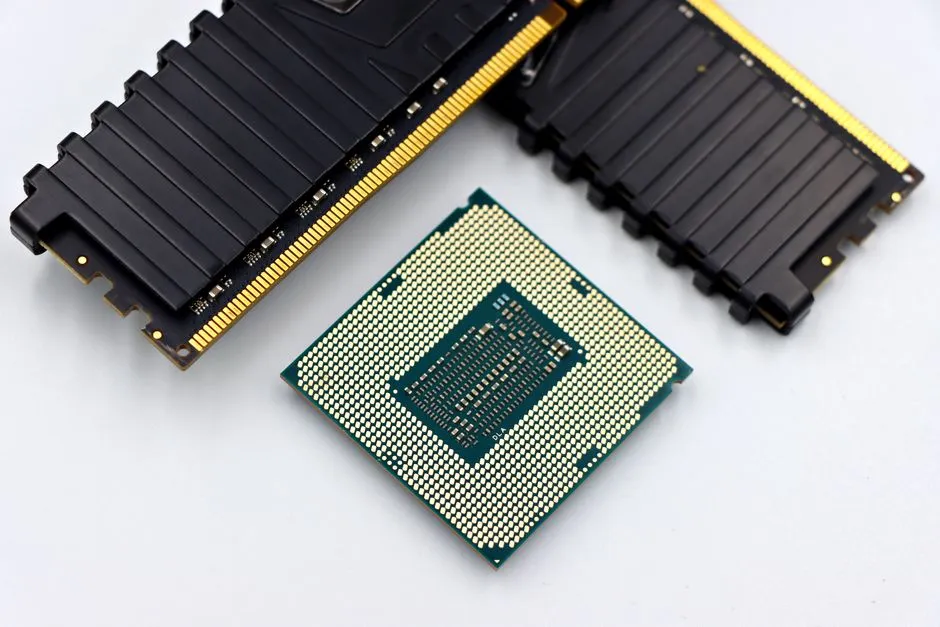
Cerebras builds a single processor the size of a wafer and keeps 44 gigabytes of weights in on-chip memory. Nothing is streamed from outside for each token, so the bottleneck the industry has spent years engineering around is absent by construction rather than mitigated.
The architectural claim is not new, but OpenAI selling capacity on the hardware is. That converts an argument about design into a commercial fact.
Latency is the product, not throughput
Speed in inference usually means throughput — total tokens served per dollar across many concurrent users. That is what makes a cheap model cheap, and it is what most pricing pages describe.
Ultrafast sells latency, not throughput. Seven hundred and fifty tokens per second to a single user makes new kinds of applications possible, not just existing ones more affordable. An agent that takes forty seconds to answer is a batch job with a chat interface. The same agent at three seconds is an interactive tool, and a person will use it differently.
The applications that turn on this are the ones nobody builds today: a coding assistant that rewrites a file while you watch, a support agent that holds a voice conversation without dead air, a multi-step research process that completes inside a page load. These are not just faster versions of current products. They are products that, until now, have not been viable.
What it means for Nvidia
One preview tier for one model does not remake a market, but it does prove something that was theoretical: a major AI lab will use a competing architecture for production traffic if the workload fits.
The context makes that sharper. We reported this week that Nvidia has arranged more than US$500 billion of third-party financing for infrastructure built on its own hardware, on the argument that compute is an investable asset class with usage-linked revenue. That argument depends on its hardware remaining the thing customers want to rent.
Inference is also where the market is going. Training is concentrated among a handful of laboratories; inference scales with every user of every product built on top, and it is the segment where latency, energy per token and cost per task decide purchases rather than raw training throughput. A challenger only has to win a segment, not the market.
Read the vendor's own numbers carefully
Cerebras reported second-quarter core revenue of US$209.9 million, up 103 per cent, with core cloud revenue of US$127.7 million, up 287 per cent. Full-year core revenue guidance is US$880 million to US$890 million, and remaining performance obligations stood at US$25.4 billion at the end of June.
Two things in that paragraph need care. The first is that "core" is a non-GAAP measure, and it is higher than the GAAP figure of US$180.1 million — an adjusted revenue line above the audited one is unusual and readers should know which number they are being quoted. The second is that US$25.4 billion of obligations against US$890 million of guided revenue implies extraordinary concentration in a small number of very large contracts, and the announcement this week is plainly connected to one of them.
Core gross margin was 41 per cent, an improvement of roughly 940 basis points year on year, and management has said core revenue should more than triple in 2027. The numbers show a company that is scaling, but one whose forward guidance rests on unnamed customers.
What this changes in this region
The practical consequence for buyers here is narrow and worth acting on.
If your use case is latency-bound rather than cost-bound — voice, interactive agents, anything a person waits for — the assumption that all frontier inference performs about the same no longer holds, and it is now worth testing tiers rather than choosing on price per token. That test is cheap and almost nobody runs it.
The strategic point is about optionality. Regional operators and enterprises are being asked to commit to hardware stacks for years, whether through financing arrangements or capacity contracts, at a moment when a Chinese domestic stack is consolidating and a wafer-scale challenger has just been handed a frontier model to serve. A market with three plausible inference architectures rewards buyers who kept their software portable and punishes those who did not.
What we could not establish
The price remains unknown. As a preview, Ultrafast has no published rate card, leaving the main commercial question unanswered: what does a 14x latency improvement cost? The answer will determine if this is a real product or just a demonstration.
Also unestablished: which customers have access and on what criteria; how much Cerebras capacity is deployed and where; whether the tier is capacity-limited by chips, by power or by contract; whether GDP-Val was run independently or by the vendors; and how the speed holds up under concurrent load rather than in a single-caller measurement, which is the number that matters in production.
One further caveat. Reporting refers to an earlier multiyear agreement between the two companies covering up to 750 megawatts of Cerebras inference systems deployed in stages through 2028. We could not confirm that figure from either company's announcement of this tier and have not relied on it.
What to watch
General availability and a published price come first. A preview that stays a preview is a marketing exercise; a preview with a rate card is a product line, and the price will tell you whether OpenAI sees this as a premium niche or as where inference is heading.
Then watch whether any other frontier laboratory does the same. One deal is a partnership. Two is a market forming, and it would mean the assumption that frontier inference implies Nvidia has stopped being safe.
Finally, watch Cerebras's customer concentration in the next filing. Twenty-five billion dollars of obligations is either the foundation of a durable business or a dependency on a handful of counterparties, and only the disclosure will say which.

View author profile → · Editorial policy