SANTA CLARA, 18 AUG 2026 — Marvell returned 181 per cent over the past year, outrunning both Broadcom and Nvidia. The part of the company that did it does not compute on data. It moves data between the chips that do.
While Marvell is best known for its custom AI silicon, its revenue growth is coming from interconnects. That gap is worth exploring ahead of the company's 27 August earnings report.
The numbers
Trailing twelve-month revenue is US$8.7 billion, up 34 per cent. The company is targeting US$16.5 billion for fiscal 2028, a figure it raised by US$1.5 billion just last quarter. Analysts expect roughly US$2.71 billion of revenue and non-GAAP earnings near US$0.93 a share when the second quarter of fiscal 2027 is reported.
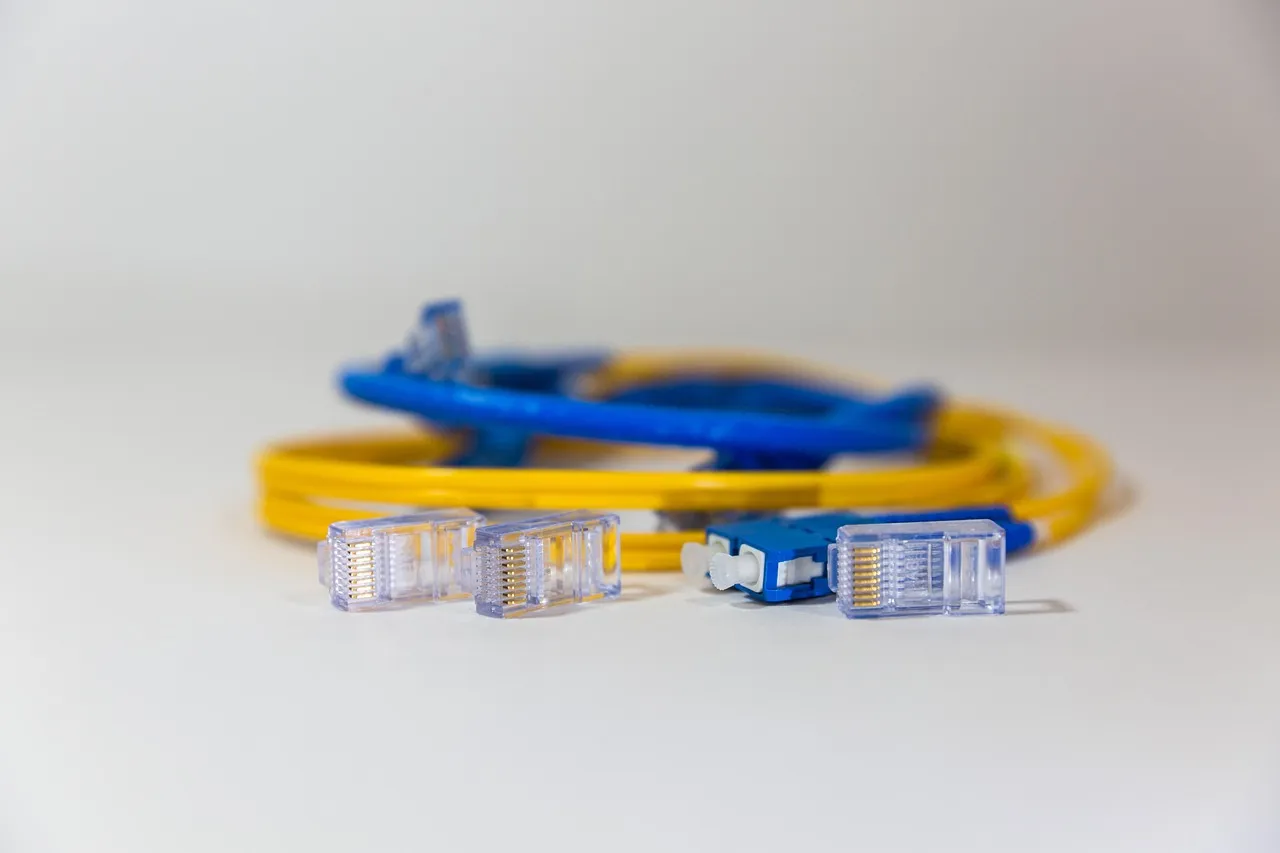
Interconnect here means optical digital signal processors, transimpedance amplifiers, drivers and pluggable modules for connecting data centres. Custom silicon means designing accelerators for other companies, where Marvell is estimated to hold 20 to 25 per cent of the co-design market, with work reported on Amazon's Trainium and Microsoft's Maia programmes.
Why the unglamorous half is winning
A custom accelerator is a multi-year engagement with one customer, and its revenue arrives when that customer's chip ships in volume. Interconnect sells into every cluster being built, regardless of whose silicon is inside it.
That difference decides the timing. The AI build-out is currently in its construction phase, and construction consumes the parts that connect things long before it consumes the finished designs commissioned two years ago. Guidance raised from 50 per cent growth to more than 70 in the same year is what that phase looks like from inside a supplier.
It also makes interconnect the more diversified business of the two. A custom programme concentrates a large amount of revenue in one customer's success. Optical components sell to whoever is building, which in this market is everyone.
Everything is a data-movement problem
This lands in the middle of a pattern we have been tracking for a fortnight, and it is the clearest instance yet.
We wrote that Kioxia is taking an optical SSD to customer trials because copper limits how far storage can sit from a processor. We wrote that Cerebras sells inference speed by keeping weights in on-chip memory, removing the bandwidth bottleneck rather than mitigating it. And we wrote that SK hynix is committing US$38 billion to memory fabs that feed accelerators which would otherwise sit idle.
In four different layers of the stack, the constraint is the same: the accelerators are fast enough, but getting data to them is the bottleneck. Marvell is the purest financial expression of that so far, because its market has voted for the part of the company that moves bytes over the part that processes them.
What a supplier sees that a buyer does not
This pattern shows up in a component supplier's numbers first for a reason that generalises to the whole market.
An operator buying capacity sees one line item for compute and treats everything around it as plumbing. A component supplier sees which plumbing is being ordered, in what quantity and how far ahead. When orders shift from the parts that process data to the parts that move it, the supplier finds out first, and the shift appears as a guidance revision months before anyone writes an architecture piece about it.
That makes component guidance an unusually early indicator for anybody planning infrastructure. A revision from 50 to more than 70 per cent on optical interconnect is a statement about how many clusters are being wired this year, and it is more reliable than the announced-capacity figures that circulate, because somebody has placed an order behind it.
What this says about the ASIC narrative
The industry has spent two years arguing that custom silicon erodes the general-purpose accelerator business, and we reported that China's domestic shift runs on a dual track of GPUs and proprietary ASICs.
Marvell's figures do not contradict that thesis; they date it. Custom silicon is expected to grow more than 20 per cent this fiscal year and more than double the next, which is a business arriving rather than a business failing. The correction is to the timing: the ASIC transition is a fiscal-2028 event at one of its main beneficiaries, not a 2026 one.
For anyone making procurement or investment decisions on this timing, the distinction is critical: the design wins exist, but the revenue has not yet arrived. The design wins exist. The revenue has not arrived.
The regional read
Optical interconnect is one of the few parts of the AI supply chain where Southeast Asia already has an industrial position.
Optical module assembly, photonics packaging and test are established activities in Malaysia, Thailand and the Philippines, and they sit in exactly the segment growing at more than 70 per cent. That is a more realistic place for regional manufacturing to capture value than accelerator fabrication, which requires capital and process nodes the region does not have.
The second consequence is for buyers. Regional data centre operators specify interconnect at design time and rarely revisit it, and the projects being planned now — including the ASEAN partnership specifying 800-volt distribution and liquid cooling — are choosing an optical generation they will live with for years. That decision deserves the attention usually reserved for the accelerator choice, and rarely gets it.
What we could not establish
The revenue split between interconnect and custom silicon. Growth rates for each have been disclosed and the absolute contributions have not, so it is not possible to say how much of the data centre business each represents, which is the number the whole argument would rest on.
We also could not establish several key details: which customers the custom programmes serve beyond Trainium and Maia; the margin difference between the two businesses; whether the raised fiscal 2028 target assumes unannounced design wins; and how much of the interconnect growth comes from price increases versus volume in a tight market.
The figures here are also drawn from analyst commentary published before the results, not from the company's filings. The second quarter of fiscal 2027 is reported on 27 August and will settle several of these questions.
What to watch
The key detail to watch for on 27 August is how the segments are reported. If Marvell breaks out interconnect and custom silicon separately, the argument above becomes checkable rather than inferred.
Watch whether interconnect guidance is raised again. A second upgrade in a year would suggest the AI build-out is running longer and hotter than the industry has been modelling.
Finally, watch when custom silicon revenue actually lands. Fiscal 2028 is the stated year, and a slip would be the clearest signal yet that designing an accelerator for somebody else is harder to convert into revenue than the design-win announcements suggest.