TAIPEI, 16 AUG 2026 — Kioxia used the Open Compute Project's Asia-Pacific summit in Taipei to say it will put a PCIe Gen6 optical solid-state drive in front of customers for trials. Cost and reliability still stand between the prototype and mass production.
At the Open Compute Project's Taipei summit, Kioxia announced customer trials for a PCIe Gen6 optical solid-state drive. The technology matters because the physical distance between storage and processors is becoming a binding constraint on the size of AI clusters.
What was said
Senior Fellow Ryuichi Fujimoto set out the development and testing plans. The company also took a Best of Show award at the FMS storage conference this month for its GP-Series drive.
Why replace copper with light
Inside a server, storage talks to the processor over copper. Copper is cheap, well understood and short-ranged: push the signal further and it degrades, so the drive has to sit close to the machine using it.
That constraint has shaped data-centre design for decades. AI workloads strain it by demanding that an enormous pool of accelerators have fast access to an enormous pool of data. With copper, you must either put storage in every rack or accept the latency and power cost of traversing network layers to reach a distant array.
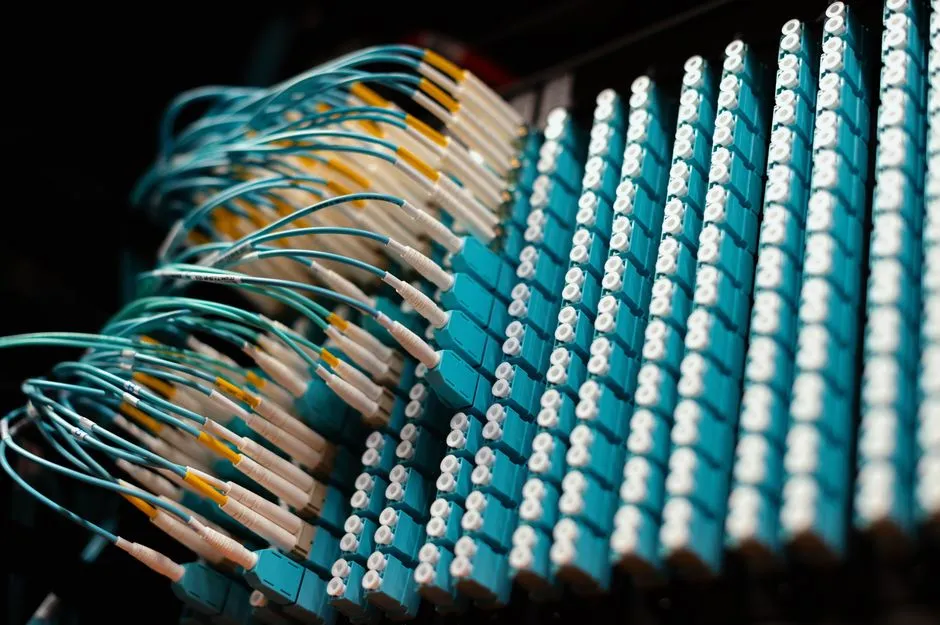
Optical changes the distance budget. Light carries a signal much further with less loss. In principle, this lets storage sit anywhere in the building and behave as if it were local, allowing operators to pool storage rather than replicating it in every rack.
There is a power argument too. A meaningful share of a data centre's electricity goes into moving data rather than computing on it, and optical links are more efficient over distance. In a market where power is the scarce input, that is not a footnote.
The honest part of the announcement
The interesting part of the announcement was the caveat.
Kioxia said cost and reliability remain obstacles to mass production. Kioxia's candour is unusual for a trade summit. The problem with optical interconnect has been economics and field reliability for years, not physics.
Optical modules involve lasers, precise alignment and components that fail differently from copper. A drive that must run for five years in a hot rack, handled by technicians who do not have a photonics background, is a harder problem than a working prototype on a bench.
A customer trial is a significant step because it moves the question from "can it work" to "does it survive contact with an operations team."
Storage is not usually the interesting part
A drive announcement is unusual fodder in AI, where storage is normally the least-discussed component.
Training a large model reads enormous volumes of data repeatedly, and the accelerators are fast enough that they can sit idle waiting for it. An expensive GPU doing nothing because data has not arrived is the most costly failure mode in the building, and it is a data-movement problem rather than a compute one.
That is why the industry keeps returning to interconnect: between chips, between racks, and now between the processor and the drive. The question at each distance is how to keep the accelerators fed.
Where this sits in a pattern we have been tracking
All week the constraint in AI hardware has turned out to be something other than the chip.
Foxconn named advanced packaging, not floor space, as the cap on its 2027. SMIC is raising prices because it cannot add capacity fast enough. Intel raised US$20 billion largely against packaging. South Korea aimed a five trillion won fund at materials and equipment rather than at its champions.
Optical storage interconnect belongs in that list. The bottleneck is not the accelerator chips. It is getting data to them, packaging the finished silicon, and powering the building — problems solved by suppliers who get much less attention.
Why Taipei, and why it matters here
The venue is not incidental. The Open Compute Project is where hyperscalers publish the designs they want their suppliers to build, and holding its Asia-Pacific summit in Taipei puts that specification conversation next to the manufacturers who will execute it.
For this region the relevant point is that data centre hardware standards are increasingly set in a room in Taipei rather than only in the United States. Regional operators and suppliers who follow the OCP specifications get compatible, cheaper hardware; those who do not end up buying bespoke.
There is a more direct exposure too. Southeast Asia is building data centres at pace — the Malaysian, Indonesian and Singaporean projects we have covered this year — and those buildings are being designed now for equipment that will be installed over the next several years. A technology that changes where storage can physically sit is a building-design question, not a procurement one, and it is much cheaper to accommodate in a plan than in a retrofit.
Nobody should redesign a facility based on a prototype. But an operator finalising a design this year is implicitly choosing whether the building can adopt pooled optical storage later. That choice is better made deliberately.
What we could not establish
Almost every specific. No performance figures, capacity, power consumption, expected cost premium over copper, trial customers, trial timeline or target production date were in the reporting we could read.
Also unestablished: what reliability problems specifically remain, whether the optical interface is proprietary or follows a standard, whether it requires changes at the host end, how it relates to the CM10 electrical drives in the same portfolio, and whether any hyperscaler has committed to evaluating it. A trade summit statement about future trials is a long way from a product.
What to watch
The first thing that would make this real is a named trial customer. Component makers announce prototypes routinely; a hyperscaler agreeing to test one in a live environment is the signal that the economics might work.
Then there is whether the cost premium is ever disclosed. Optical will be more expensive per drive, and the case rests on saving more elsewhere — in power, in pooled capacity, in rack density. Without a number, that trade cannot be evaluated by anyone outside.
The other thing to watch is whether OCP publishes a specification for optical storage attachment. A standard is what turns one vendor's prototype into a commodity, the step that matters most to buyers.

View author profile → · Editorial policy