18 SEP 2026 — Green SM put VinFast electric motorbikes on Jakarta's roads this week. The press release announcing it on 16 September calls Indonesia the company's first international market.
It is not. Green SM has operated in Laos, and it has run an electric taxi service in Indonesia since December 2024. What makes the launch worth attention is the financing being offered to drivers.
What actually launched
The service is motorbike ride-hailing using new VinFast Evo and Feliz II electric scooters, ridden by trained drivers on fixed fares. It sits alongside the electric car taxis Green SM already runs in the city. The company is adding two wheels to a four-wheel fleet it has operated here since 2024.
Launch promotions ran from 16 to 22 September — 75 per cent off a first ride, capped at IDR 10,000, then 25 per cent off subsequent rides up to the same cap. Both discounts expire with the promotional week.
The claim and the record
The "first international market" line reached readers through a newswire release reproduced, headline intact, by outlets from Manila to Nairobi. Reporting that carries its own detail says something different: Green SM had already established electric mobility operations in Vietnam and Laos, and it entered the Indonesian market in December 2024 with an electric taxi service.
Perhaps the claim is meant to cover the motorbike service alone. Even read that way, a press release is presenting as an international debut a country where the company has traded for nearly two years. The outlets carrying that sentence were reproducing a release, and identical headlines are not independent confirmation.
What drivers are offered
The driver terms are the substantive part. A driver can take a rent-to-own arrangement starting at IDR 39,000 a day and own the motorbike after two years, with earnings guaranteed up to IDR 160,000 a day. The alternative is a rental over three, six or twelve months with a deposit of IDR 150,000, guaranteed earnings of IDR 160,000 a day for the first two months, and performance bonuses after that.
Drivers also get up to five free battery swaps a day on the V-Green network, which removes charging time from the calculation and is the part a petrol motorbike cannot answer.
Acquisition cost, rather than the technology, is what has slowed electric two-wheelers across the region. A driver paid daily cannot put a year of income into a vehicle up front, and finance for that population is expensive where it exists at all. The operator can carry the capital cost because it, the vehicle manufacturer and the charging network all answer to the same parent group.
One group, three companies
Green SM, VinFast and the V-Green charging network are all Vingroup businesses, the Vietnamese conglomerate chaired by Pham Nhat Vuong. We reported on VinFast's Ngoc Hoi plant and its related-party financing yesterday, and the two stories are the same structure seen from opposite ends.
That vertical integration is not improper, and it matches how Vingroup has approached every market. It does shape how the launch should be read. The motorbikes move from one group company to another, so the fleet order stays inside the house rather than being won from a third party, and the guaranteed-earnings offer is underwritten by a group with reasons to seed the market that go beyond this service's own economics.
Why Jakarta rewards this
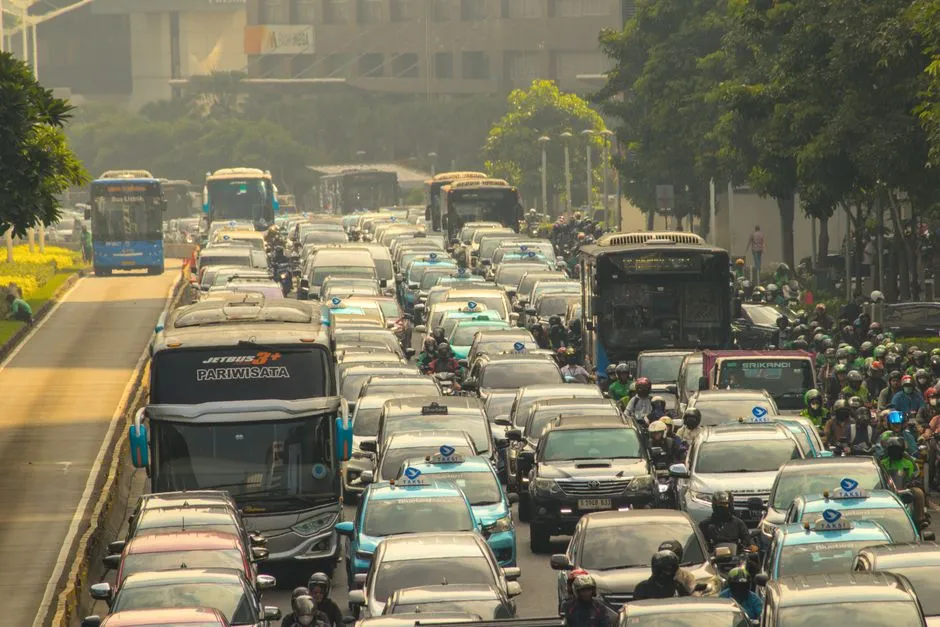
Indonesia is the largest two-wheeler market in Southeast Asia and Jakarta moves on motorbike hailing rather than cars, so entering with bikes puts Green SM into the mode the city runs on — against incumbents with a decade of local presence and far larger driver pools.
Indonesia's regulators have also shown they will set terms for foreign platforms, as with the representative-office requirement applied to social platforms. Transport operators face a different regime, but the pattern is the same.
What is still unpublished
Green SM has not published its Jakarta fleet size. The company has said it is in Jakarta without saying how many motorbikes are on the road, and a launch discount says nothing about scale. The 850 million rides it reports globally are a group-wide total spanning every market and both vehicle types.
Watch the guarantees. Guaranteed daily earnings and a two-year path to ownership are subsidies. What they cost per driver, and how long they last after the promotional period closes, determines whether this is a business or a customer-acquisition campaign.
The terms still cannot answer whether drivers will complete the two years. Daily-payment vehicle finance in this region has a history of working better for the provider than the driver. The full contract — total payable, consequences of a missed day, what happens if a driver leaves at eighteen months — has not been published.