MOUNTAIN VIEW, 11 AUG 2026 — Google will now let a parent in the United States put money on a phone for a child under 18 and watch every dollar of it move. It is a stored balance inside Google Wallet, not a bank account, and Google is explicit about that being the selling point.
"It's a practical way to teach children smart money habits and give them independence, all without needing to open a bank account," the company said in announcing it on 6 August.
What it is
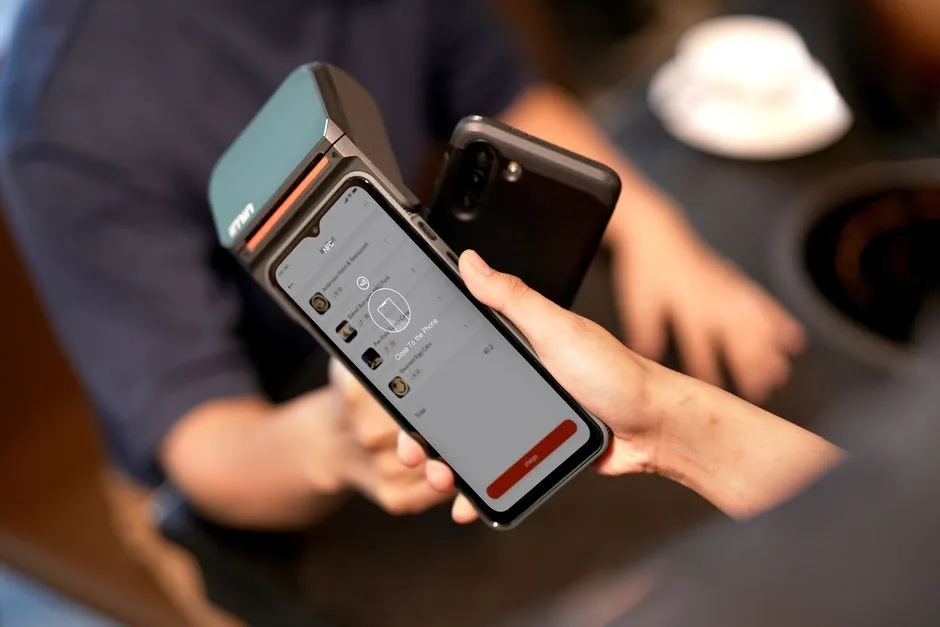
A parent creates a balance for a supervised child, transfers money into it from their own account, and the child taps to pay in shops using an NFC-capable Android or Wear OS device. Control sits in Family Link, the parental-controls product Google already ships.
Parents can set spending limits, see transactions in real time, and instantly lock the balance for a lost device or what Google calls a "spending timeout." Scheduled recurring transfers are described as coming soon, which is pocket money on a timer.
The part worth reading twice
"Without needing to open a bank account" is doing a lot of work in that sentence, and it cuts both ways.
For the parent, this removes the friction of opening a minor's bank account: the paperwork, the identity documents, the branch visit, and the fact that most banks are ambivalent about tiny balances.
What it also removes is the regulatory furniture that comes with a bank account. A stored balance held by a technology company is a different legal object from a deposit. A bank deposit answers certain questions by default: Is the money protected if the provider fails? What happens if the account is closed? Who is the counterparty? Which regulator is in charge? A stored balance answers these questions by contract, not by regulation.
Google has not named a banking partner in the announcement. That is not evidence of a problem — these products usually sit on a partner bank or a money-transmitter licence — but it is a thing a parent cannot look up from the launch material, and it is the first thing anyone would want to know about where their child's money is.
Supervision is the product
The features — real-time transaction visibility, spending limits, push notifications, instant lock — are described as being for safety. Functionally, they are a monitoring system for a teenager.
This is simply what the category has become. In the same week a court in New Mexico ordered Meta to give parents and minors time limits, defaults and visible warnings on teen accounts, Google shipped a product whose entire value proposition is granular parental oversight. The industry is converging on the same answer from two directions, one voluntary and one under court order.
The financial-education argument is sound. Money visibly leaving a balance is a better teacher than cash, and adjustable limits let a parent cede control in increments.
The counterpoint is that parents should make this decision deliberately, not by default. A young person who has never made an unobserved purchase has not practised the thing the product claims to teach. The limits are adjustable for a reason; the useful ones loosen.
What it means outside the United States
Nothing yet. These announcements tend to travel further than the features do.
Payments features are the slowest thing Google ships internationally, because each market means a different licensing posture, different rules on minors holding value, and a different set of card schemes and local rails. Regulators in this region would also want to establish exactly what a stored balance held for a minor is, and who stands behind it, before it went anywhere near a launch.
So treat this as a US product with a plausible path elsewhere and no announced timetable.
What to watch
The main thing to watch is whether a banking partner or licence is named. That single disclosure would answer most of the questions this announcement leaves open.
Watch what happens to the balance and transaction history when the child turns 18, and whether that data follows them into an adult account.
And whether the scheduled-payments feature arrives with an interest or savings component. A balance that only spends is a wallet; a balance that also grows starts looking like the account this was designed to avoid, and that is the point at which regulators elsewhere will take an interest.

View author profile → · Editorial policy