18 SEP 2026 — Japan's SBI Group has anchored the round that completes a US$25 million Series A for dtcpay, a Singapore payments firm that moves money in stablecoins.
The investment came through two vehicles, and the round it closes has been open for some time.
Who put in what
SBI invested through SBI Ventures Asset Pte Ltd and through the SBI-NTU-Kyobo Digital Innovation Fund, a vehicle that pairs the Japanese group with Nanyang Technological University and Korea's Kyobo. Genedant Capital joined, and the Singapore businessman Kwee Liong Tek, already on the register, participated again.
Vertex Ventures Southeast Asia and India led the earlier tranche. The accounts differ on what that tranche was: The Block describes a US$16.5 million pre-Series A closed in June 2023, while trade coverage of this week's announcement describes US$10 million raised in March as the first part of the Series A now completed. We give both rather than reconcile them.
Founder and chief executive Alice Liu framed the purpose in the widest available terms: "We raised it to fundamentally change how money moves across borders." Chairman Band Zhao was narrower, saying the next chapter is about scale.
What the company actually does
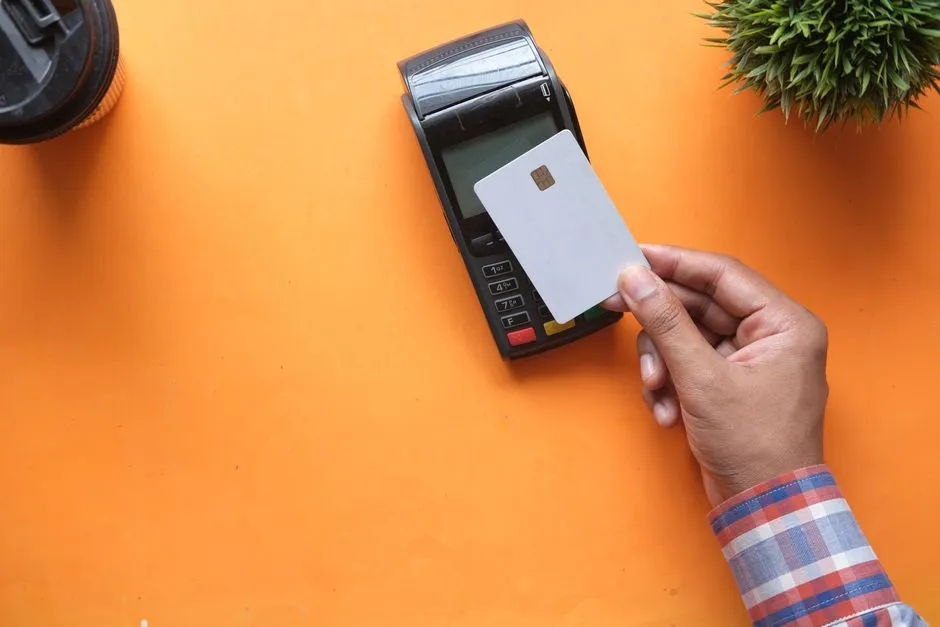
dtcpay was founded in 2019 and sits between digital assets and ordinary banking, letting businesses and individuals accept, hold and transact in stablecoins. It runs a digital payment token point-of-sale service and has partnered with Visa on a card that spends stablecoin balances as fiat in Singapore.
That last product is the useful description of the category. The customer holds a stablecoin; the merchant receives money in the currency they bank in; the conversion is somebody else's problem. Nothing about the transaction requires the merchant to know or care what a stablecoin is, which is the point.
The licences are the moat
The firm holds a Major Payment Institution licence from the Monetary Authority of Singapore and an Electronic Money Institution licence in Luxembourg.
In this category the licences matter more than the technology. Stablecoin payment rails are not difficult to build, but they are very difficult to operate legally at scale. A Singapore MPI licence plus an EU-facing e-money licence is a specific claim about which corridors a company can serve without a partner bank taking the regulatory risk.
It also explains SBI's interest. The Japanese group has been assembling regional stablecoin positions rather than building one platform, including a yen-stablecoin arrangement in Indonesia earlier this year. An investor accumulating licensed operators in several jurisdictions is making a different bet from one backing a single product.
What was not disclosed
No transaction volume. No merchant count. No customer numbers, no revenue, no valuation.
For a payments company those figures establish whether the licences are being used. Their absence is worth stating plainly, not reading either way. A round anchored by a strategic investor at an undisclosed valuation tells you someone with sector knowledge was willing to buy in. It does not tell you at what price or against what traction.
The money is earmarked for the product suite and the merchant network, a revamped business portal for enterprise customers, and new consumer features in the app.
What to watch
Watch the corridors first. A Singapore licence and a Luxembourg licence describe an intended route between Southeast Asia and Europe, and whether volume actually flows along it is the test of the thesis. Singapore's institutions have been building their own rails in parallel, including a tokenised Singapore dollar settling between the three local banks, and a startup's economics look different depending on whether it competes with those or connects to them.
Second, watch whether any operating figure ever appears. Companies in this category disclose volume when it flatters them, so the timing of the first published number will say as much as the number.
Third, look at the shape of the funding market. Singapore fintech funding has been concentrated in very few deals, and a US$25 million round assembled across two years and several investors is what the middle of that market now looks like.